Cooking Substitutes is a blog dedicated to exploring suitable alternatives in recipes, providing helpful how-to guides, and sharing mouthwatering recipes.
We're here to make your culinary adventures even more delightful!
Glass vs Stainless Steel Air Fryer: Which Is Better?
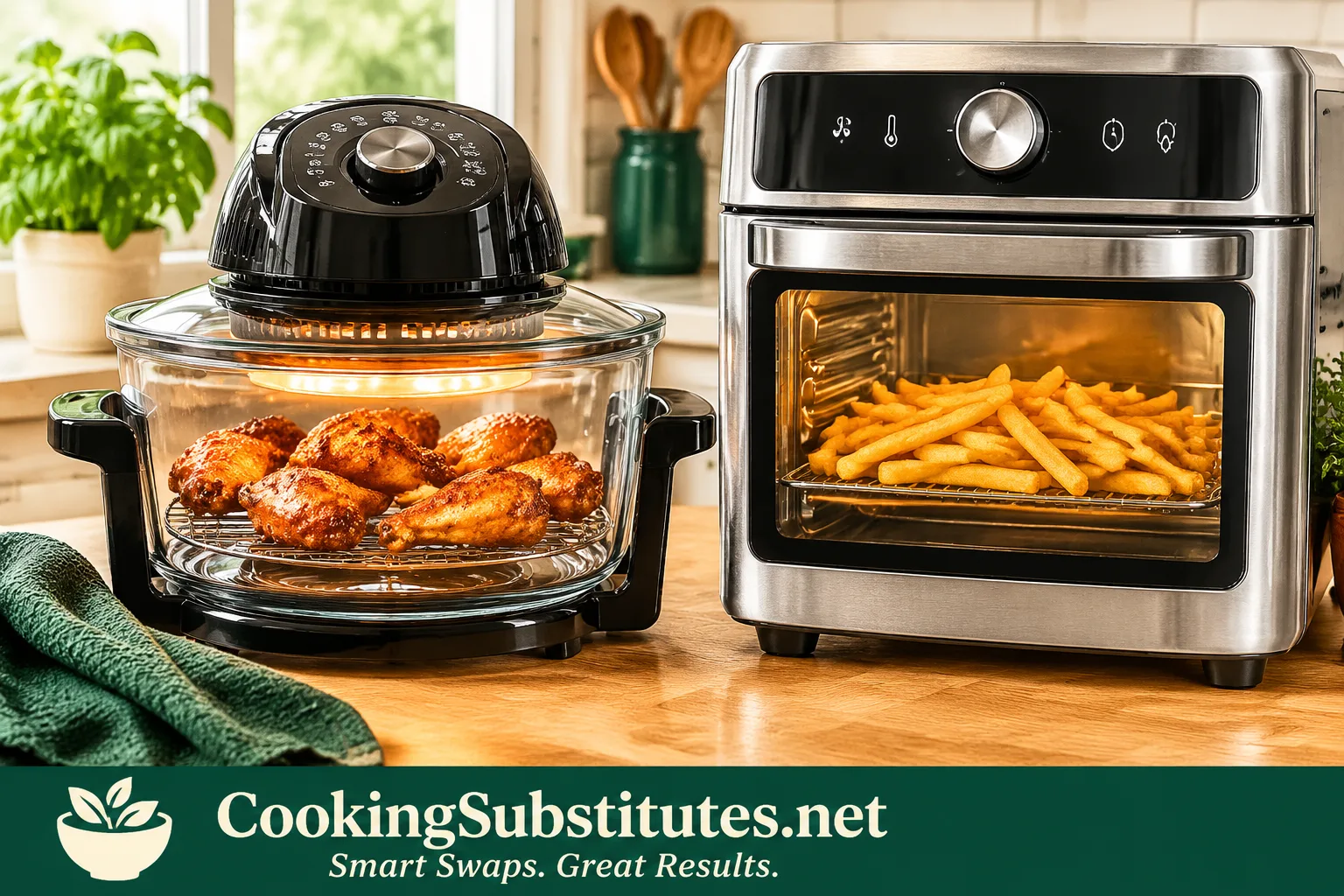
The glass vs stainless steel air fryer question lands in my inbox every single week. One side lets you watch your fries turn golden without opening anything. The other side is the tough, no-nonsense metal our mothers trusted in every pot and pan. Both promise the same thing: crispy food with no coating worries.
So I cooked in both, I washed both, and I dropped… well, I almost dropped one. Here is my honest answer: glass wins on watching and washing, steel wins on strength and heat — and both hide a small trap I will show you below. Then I will share the 4 models I trust most: 2 glass, 2 steel.
As an Amazon Associate, I earn from qualifying purchases.
Quick Verdict: The Whole Fight on One Table
| Feature | Glass | Stainless Steel |
|---|---|---|
| What touches your food | A glass bowl or container — no coating at all | Bare metal basket, rack, or oven walls |
| Coating worries | None on the glass itself (but check the crisper plate!) | None on the steel parts (but check trays and pans!) |
| Watching food cook | Yes — full view, no opening, no heat lost | Only through a small oven window, if it has one |
| Top heat | Often 400–450°F | Usually 450°F, some reach 480°F |
| Sticking | Food can grip a little; glass is not nonstick | Food can stick; needs preheat + a little oil |
| Durability | Strong, but one bad drop or shock can crack it | Excellent — dents, but keeps working for years |
| Cleaning | No stains, no smells; heavy bowl to lift | Dishwasher-safe racks; baked grease needs a soak |
| Price | About $85–$200 | About $185 and up for true steel models |
Short on time? If you love watching food cook and hate stained baskets, go glass. If you want one machine for the next ten years, go steel. Now the details.
What a Glass Air Fryer Really Is
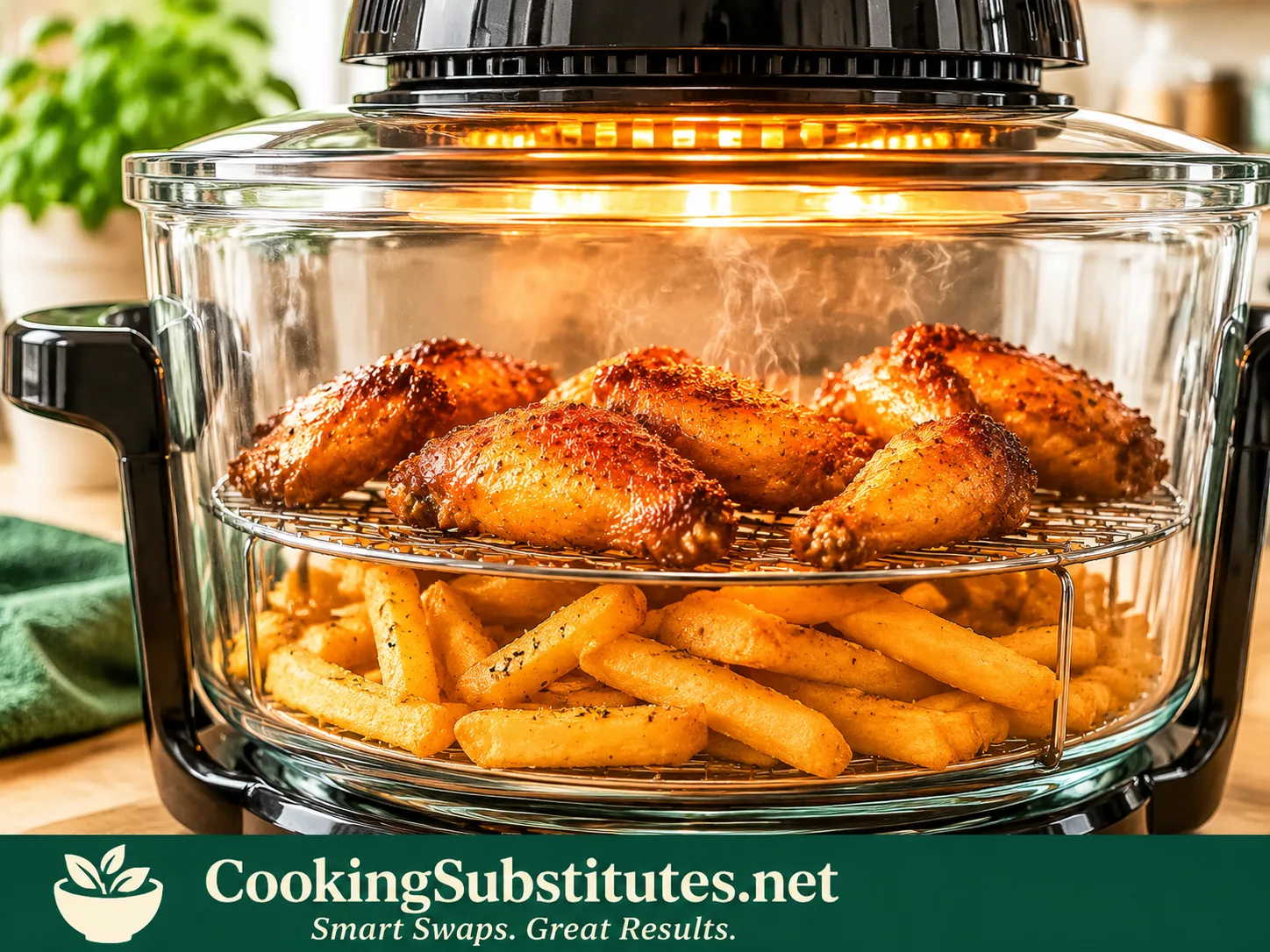
A glass air fryer cooks your food inside a clear glass bowl or glass container instead of a coated metal basket. No nonstick layer. No paint. Just glass, hot air, and a front-row seat.
That clear view is not a toy — it is a real cooking tool:
- You see the exact moment cheese melts, wings brown, or cookies spread — without opening the basket and dumping all the heat out.
- Glass does not hold smells or stains. Cook fish tonight, muffins tomorrow; the bowl does not remember.
- Glass is naturally free from PTFE and PFAS. There is simply no coating to scratch, peel, or wonder about.
Now the part nobody prints on the box: not all glass is the same.
- Borosilicate glass is the lab-grade glass (the classic Pyrex material). It handles sudden temperature changes very well — hot bowl, cool counter, no drama. Ninja states in its listing that the Crispi containers are borosilicate.
- Tempered glass is regular soda-lime glass made stronger with heat treatment. Most glass bowls, like the Fritaire bowl, are tempered. Strong — but it still hates shock: cold water on a screaming-hot bowl is how cracks happen.
The good guides I trust say the same thing. The Zero Waste List non-toxic air fryer guide lays out exactly what touches your food on each model, and it is the first page I check when a new “glass” model launches.
Watch Out: Old Halogen Ovens Wear the Same Glass Bowl
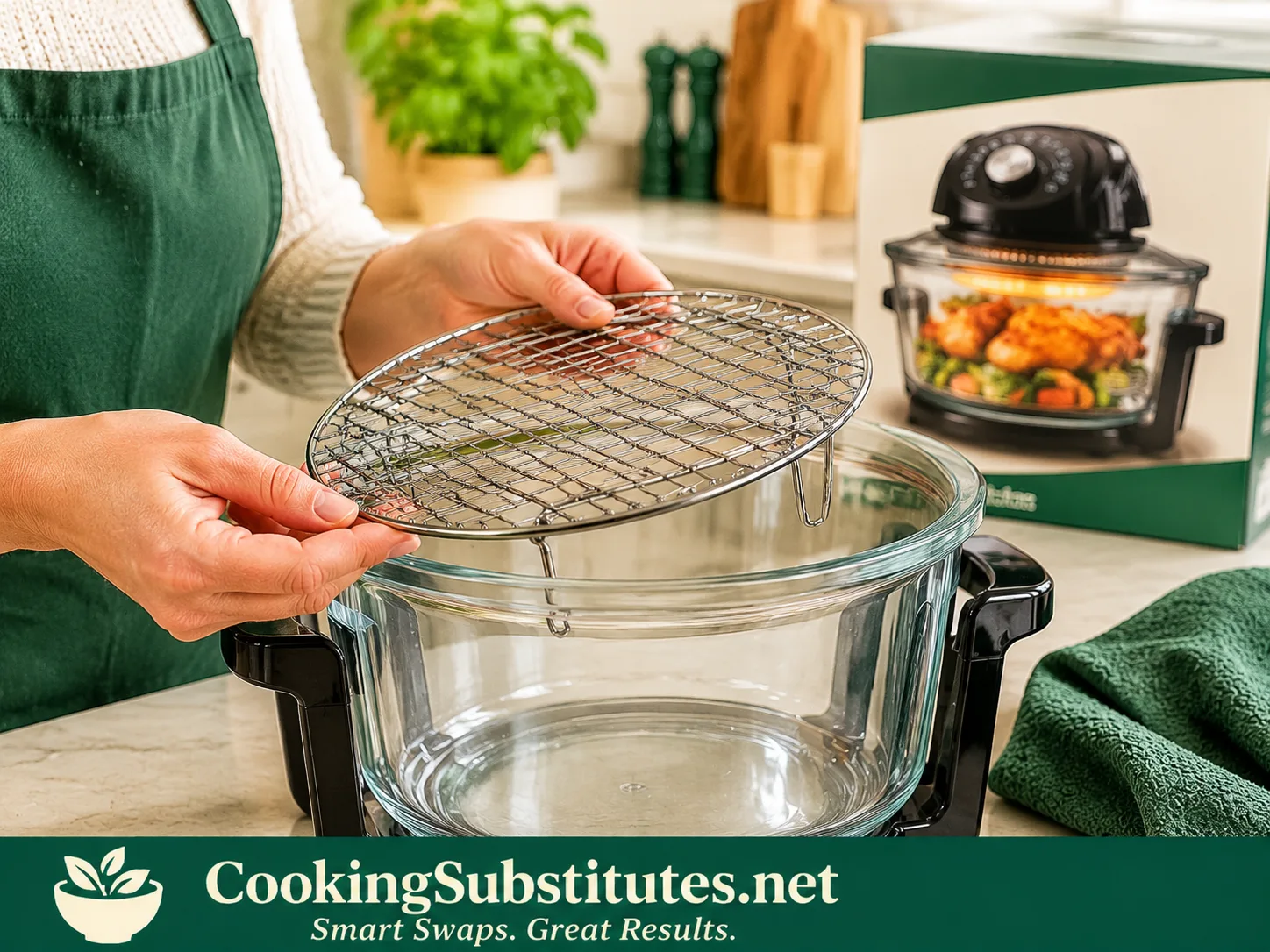
Here is a trap from the other direction. Some big glass-bowl cookers — the classic Big Boss style — are not modern air fryers at all. They are halogen ovens: a bright halogen lamp in the lid does the cooking. They are big, slow, and cook less evenly than a modern fan-and-coil machine.
A modern glass air fryer (Fritaire, Ninja Crispi, Cuisinart ClearView) uses a real heating element and a strong fan, just like a normal air fryer — the bowl is simply glass. Quick test before you buy: if the “air fryer” has a giant lamp lid and a simple timer dial, it is a halogen oven in a costume. Walk away.
What a Stainless Steel Air Fryer Really Is
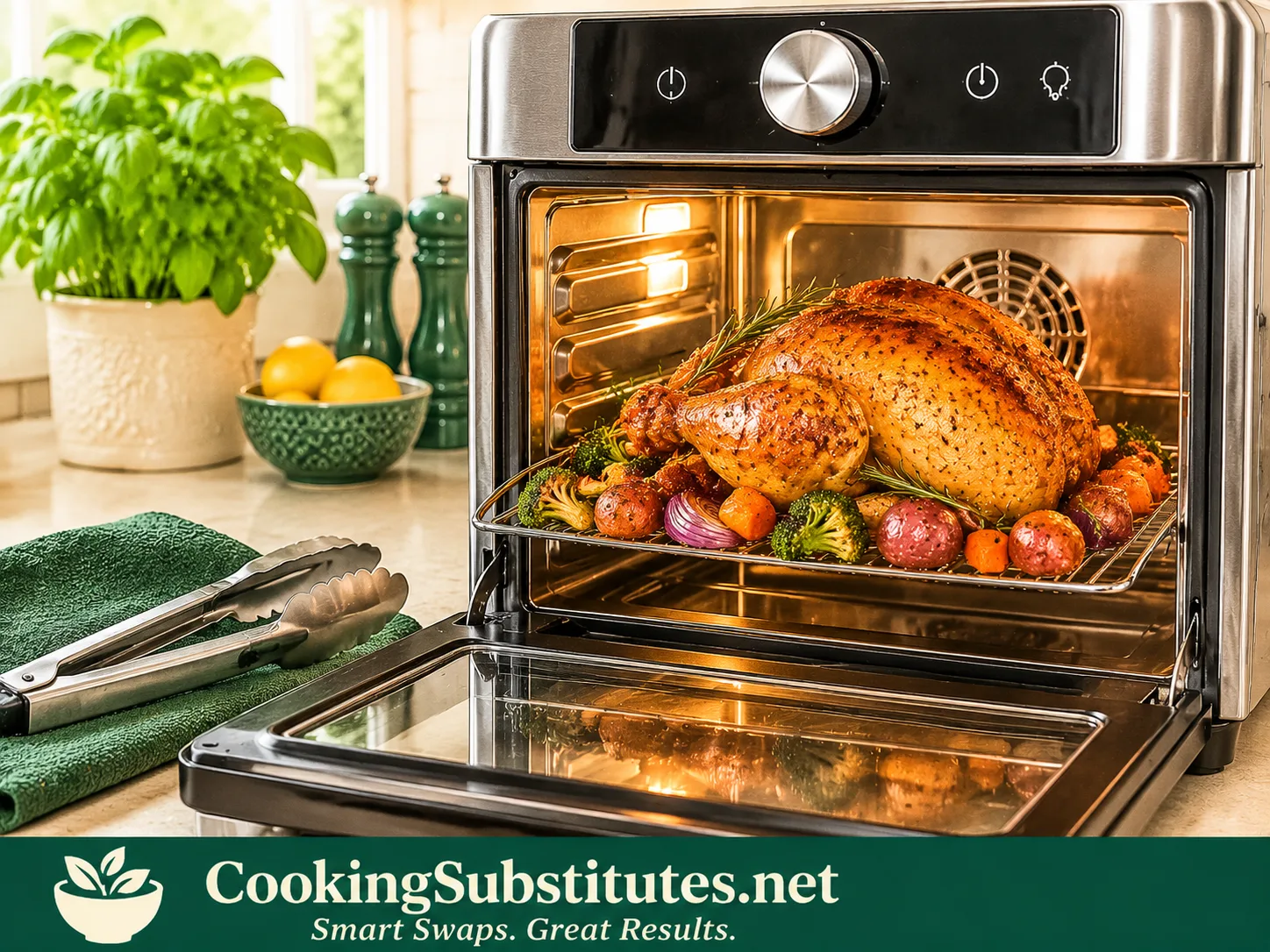
A stainless steel air fryer cooks on bare metal with no coating — a steel mesh basket, a steel rack, or a full stainless steel oven interior. It is the oldest idea in this whole series, and still one of the best.
The steel to look for is food-grade 304 stainless steel (also written as 18/8 or 18/10). It does not rust easily, it does not react with tomato or lemon, and you can scrub it like you mean it.
The honest trade-offs:
- Food sticks more than on any nonstick surface. The fix is the same one from my steel guide: preheat, oil the food (not the basket), and let a crust form before you move anything.
- Most true steel models are oven-style — a compact countertop oven — because almost nobody sells a drawer fryer with a bare steel basket. That means more counter space, but also toast, bake, and roast in the same box.
- Steel is heavy-duty but not magic: it shows fingerprints and water spots, and baked-on grease still needs a soak.
If steel is pulling your heart, my full steel-versus-coating comparison in Stainless Steel vs Ceramic Air Fryer goes even deeper on the steel side of life.
The Big Trap: “Glass” and “Steel” Models Both Hide Coated Parts
This is the section to read twice, because this time both sides play the same trick.
On glass models: the bowl is glass, yes — but what about the crisper plate your food actually sits on? On some glass models that plate is a coated metal tray, and on at least one famous glass system the brand does not clearly state the plate material at all. Some cheap “glass” fryers also hide plastic parts close to the heating element. The Kitchenware Sets glass air fryer testing notes caught exactly that problem on a few popular models.
On steel models: a stainless steel outside can still hide a coated basket inside — I showed this trick in my steel vs ceramic guide. And even honest steel ovens often include one coated extra: an enamel or ceramic-coated baking pan in the box.
So here is my 10-second check, updated for both materials:
- Find the words for the part that touches the food — bowl, plate, basket, rack — not the body.
- For glass, ask: borosilicate or tempered? And: what is the crisper plate made of?
- For steel, look for 304 stainless steel on the food-contact parts.
- If the listing will not say it clearly, skip it. Honest brands print it loud. The CupIndy non-toxic air fryer guide has a checklist in the same spirit, if you want a second pair of eyes.
Round by Round: Where Each One Wins
Watching the food — Glass wins, no contest. You see everything, all the time, and the heat stays inside where it belongs. Steel ovens give you a small dark window at best.
Safety — Tie. Both cook on coating-free main surfaces. Glass is inert and calm at cooking heat; steel is inert and calm at cooking heat. The danger zone is never the bowl or the basket — it is a hidden coated extra you did not check. Check the extras and both are safe picks.
Crisp and speed — Steel wins, but glass is catching up. Most steel ovens reach 450°F with strong fans, and my fries and wings crisp a touch faster in them. Most glass bowls top out at 400°F. The exception is the little Ninja Crispi — its small glass chamber gets food very crisp, very fast.
Durability — Steel wins, big. Drop a steel rack and it clangs. Drop a glass bowl and you are sweeping. Glass also has one enemy steel will never meet: thermal shock. Treat glass kindly and it lasts for years — but steel forgives everything.
Cleaning — Glass wins on stains, steel wins on toughness. Glass never stains, never smells, and the Fritaire even cleans itself with hot soapy water inside the bowl. But the bowl is heavy (one popular glass bowl alone weighs about 4.4 lb) and needs two dry hands. Steel racks go in the dishwasher and take a hard scrub — but baked cheese means a soak first.
Price — About even. Glass runs from about $85 for a simple bowl model to $200 for the Fritaire. True steel ovens start around $185. No cheap winner here — only honest ones.
My score: Glass 2 rounds (watching, cleaning), steel 2 rounds (crisp, durability), 2 ties. It truly comes down to how you cook. So here are the picks.
My 4 Picks: 2 Glass, 2 Steel
1. Fritaire 9-in-1 Glass Air Fryer — Best Glass Bowl (and the Purest Materials)
If your whole goal is “nothing coated touches my food,” this is the one I point to first. The Fritaire cooks in a 5-quart tempered glass bowl, and every accessory — the rotisserie spit, the tumbling fry basket, and the air stand — is 304 stainless steel. Fritaire states no PTFE, PFAS, or BPA on any food-contact surface. You watch everything from every side, and when dinner is done, the self-cleaning cycle runs hot soapy water inside the bowl so you do not scrub grease.
My honest notes: the top heat is 400°F, so steel ovens crisp a little faster; the lid unit is heavy to lift; and the warranty is on the short side, so keep your receipt.
| Spec | Detail |
|---|---|
| Capacity | 5 Qt glass bowl |
| Food-contact parts | Tempered glass bowl; 304 stainless steel rotisserie, tumbler, and stand |
| Temperature | Up to 400°F |
| Power | 1,300 W |
| Functions | 9 (Air Fry, Bake, Roast, Broil, Reheat, Dehydrate, Rotisserie, and more) |
| Special feature | Self-cleaning cycle; 360° view |
| Price | Around $180–$200 |
Pros
- Glass bowl + steel accessories — no coating anywhere near the food
- Watch cooking from every angle
- Self-cleaning cycle does the greasy work
- Rotisserie and tumbling basket included
Cons
- Max 400°F — a touch slower to crisp than 450°F ovens
- Heavy lid; bowl needs careful two-hand handling
- Short warranty
What buyers say: Owners love the clear view and the self-clean cycle most, and many bought it exactly to escape coatings. The common complaints are the heavy lid and slower crisping at big loads.
2. Ninja Crispi 4-in-1 (FN101) — Best Glass for Small Kitchens and Meal Prep
The Crispi is a clever little system: a PowerPod lid that sits on borosilicate glass containers — a 4-quart and a small 6-cup — and crisps right inside them. When dinner is done, snap on a lid and the same container goes in the fridge. Cook, store, reheat, all in one dish. The glass is free from PFAS, PTFE, and nonstick coatings, and the containers are dishwasher, freezer, and microwave safe.
My honest note, because I always check the plate: Ninja does not clearly state what the crisper plate is made of. If “zero coating anywhere” is your rule, the Fritaire above is the stricter pick — or ask Ninja before you buy.
| Spec | Detail |
|---|---|
| Capacity | 4 Qt + 6-cup glass containers |
| Food-contact parts | Borosilicate glass containers (crisper plate material not clearly stated) |
| Temperature | Up to 450°F |
| Power | 1,500 W |
| Functions | 4 (Max Crisp, Air Fry, Bake, Recrisp) |
| Special feature | Containers double as storage with snap lids |
| Price | Around $150–$180 |
Pros
- Borosilicate glass handles temperature swings better
- Cook and store in the same container — less washing
- Very fast, very crisp for its size
- Small footprint, easy to put away
Cons
- Crisper plate material is not clearly stated
- Small batches — not a big-family fryer
- Fewer functions than oven-style models
What buyers say: Owners rate it about 4.6 stars and praise the speed and the cook-and-store idea most. The size is the usual complaint — great for 1–3 people, small for a crowd.
3. Our Place Wonder Oven — Best Stainless Steel for Most Homes
On the steel side, this is the friendly one. The Wonder Oven has a stainless steel interior with no PFAS, two rack levels in a compact 13-quart body, and a trick nobody else here has: steam infusion, a little shot of water that keeps chicken juicy and brings day-old pizza back to life. It preheats in about 2–3 minutes, fits a 4.5 lb chicken, and looks good enough to leave on the counter.
My honest note, same as always: the air fry basket and rack are chrome-plated steel, and the baking pan in the box is ceramic-coated. I air fry on the basket and rack, and treat the pan as a bonus, not the main stage.
| Spec | Detail |
|---|---|
| Capacity | 13 Qt (12 L), 2 rack levels, fits a 4.5 lb chicken |
| Food-contact parts | Stainless steel interior; chrome-plated steel basket and rack; ceramic-coated bake pan |
| Temperature | Up to 450°F |
| Functions | 6 (Air Fry, Bake, Roast, Toast, Broil, Reheat) + steam infusion |
| Special feature | Steam infusion for juicy food and revived leftovers |
| Price | Around $185 |
Pros
- Real stainless steel interior — no coating on the walls
- Steam feature is genuinely useful, not a gimmick
- Fast preheat; compact for an oven-style model
- Pretty enough to live on the counter
Cons
- Bake pan is ceramic-coated (cook on the basket/rack for a coating-free setup)
- Too small for big families
- Premium price for its size
What buyers say: Owners praise the fast preheat, the steam trick, and the all-steel interior most — many bought it to replace a coated drawer fryer. Size is the common complaint.
4. Instant Omni Plus 18L — Best Big Stainless Steel Oven
Feeding a crowd? This is the steel workhorse. The Omni Plus is a 10-in-1 oven with EvenCrisp airflow, room for a 12-inch pizza or 6 slices of toast, and a rotisserie for Sunday chicken. Your food cooks on a stainless steel oven rack and air fry basket, both dishwasher safe, and owners rate it about 4.7 stars.
My honest note: the baking tray in the box is enamel-coated. Enamel is a tough, glass-like coating and a fine tray — but if you want the purest setup, cook on the steel rack and basket like I do.
| Spec | Detail |
|---|---|
| Capacity | 19 Qt / 18 L (fits 12″ pizza, 6 toast slices) |
| Food-contact parts | Stainless steel oven rack and air fry basket; enamel baking tray |
| Temperature | Up to 450°F |
| Power | 1,800 W |
| Functions | 10 (Air Fry, Bake, Roil, Roast, Toast, Reheat, Warm, Dehydrate, Convection, Rotisserie) |
| Price | Around $200–$250 |
Pros
- Big family size with true two-level cooking
- Steel rack and basket — dishwasher safe
- Rotisserie included
- Trusted brand, strong 4.7-star owner rating
Cons
- Baking tray is enamel-coated
- Takes real counter space
- Steel basket needs the preheat-and-oil trick for sticky food
What buyers say: Owners love the size, the even cooking, and how much kitchen work it replaces. The footprint and the learning curve on times are the usual complaints.
Amina’s Hacks: Happy Glass, Happy Steel
For glass (keep it whole and clear):
- Let the bowl cool down before you wash it. Cold water on hot glass is how cracks are born — this one rule saves more bowls than any other.
- Lift with two dry hands. A greasy glass bowl is a slippery glass bowl.
- Put a folded towel in the sink before you wash the bowl. One soft landing pad, zero chips.
- Cloudy film on the glass? A baking soda paste and a soft sponge bring back the shine.
For stainless steel (stop the sticking):
- Preheat the empty basket or rack for 3 minutes — hot steel grabs less.
- Oil the food, not the steel. A light toss in oil is enough.
- Do not move food too early. It lets go on its own once the crust forms.
- Burnt bits on steel? Hot soapy soak for 15 minutes, then scrub without fear — steel can take it. That is the joy of it.
So, Which One Should YOU Buy?
- You love watching food cook and hate stained, smelly baskets → Glass. Start with the Fritaire.
- You meal-prep and cook for 1–3 people → Glass. The Ninja Crispi was made for you.
- You want one pretty machine that replaces your toaster oven → Steel. Start with the Wonder Oven.
- You cook for a crowd and keep things for years → Steel. The Omni Plus is your workhorse.
- You are still not sure → Ask yourself one question: “Am I careful with my dishes, or am I… enthusiastic?” Careful → glass. Enthusiastic → steel.
Or skip the guessing completely: my free Air Fryer Finder asks your budget, your family size, and which material you trust — then points you to the right guide. And if coatings are your main worry, my Best Air Fryers Without Teflon walks through every coating-free route in one place.
Questions People Ask Me
Is a glass air fryer better than a stainless steel one?
Neither wins for everyone. Glass is better for watching your food and for stain-free, smell-free cleaning. Stainless steel is better for strength, top heat, and long life. Pick by your habits: careful cook → glass; rough-and-ready cook → steel.
Can a glass air fryer bowl break?
Yes, it can — glass is strong, not magic. The two dangers are dropping it and thermal shock (cold water or a cold wet counter under a very hot bowl). Let it cool before washing, lift it with two dry hands, and a good bowl will serve you for years.
What is the difference between borosilicate and tempered glass in an air fryer?
Borosilicate is a special glass recipe that handles sudden temperature changes very well — it is the glass used in lab gear and classic oven dishes. Tempered glass is regular glass made much stronger with heat treatment, but it still dislikes shock. Both are safe for cooking; borosilicate is simply more forgiving.
Does food get as crispy in a glass air fryer?
Almost. Steel ovens that reach 450°F crisp a little faster, and most glass bowls top out at 400°F. But small glass systems like the Ninja Crispi crisp very well because the chamber is tiny and the heat is close. In real dinners, the difference is a minute or two — not a different meal.
Which is easier to clean, glass or stainless steel?
Glass, on most days. It does not stain or hold smells, and one glass model even cleans itself with hot soapy water. Steel racks can handle harder scrubbing and the dishwasher, but baked-on grease needs a soak. Glass asks for gentle hands; steel asks for patience.
Is a glass bowl air fryer the same as a halogen oven?
No — and this mix-up costs people money. Old glass-bowl cookers with a halogen lamp in the lid are halogen ovens: big, slow, and uneven. A modern glass air fryer uses a heating element and a strong fan, like any good air fryer, and cooks much faster. Check for the lamp lid before you buy a cheap “glass air fryer.”
Final Thoughts
Your kitchen, your rules. If you want my one-line answer to the glass vs stainless steel air fryer question, here it is: buy glass if you cook with your eyes and wash with care, buy steel if you cook hard and keep things forever — and on both sides, check the plate, tray, and pan your food actually touches. That one habit protects your money better than any label on the box.
Pin this post so the comparison is one tap away on your next shopping day. 📌
— Amina 🍳
P.S. Tell me in the comments — are you Team Glass or Team Steel? I read every reply, and I love a good kitchen debate.
Affiliate Disclosure: CookingSubstitutes.net is a participant in the Amazon Services LLC Associates Program, an affiliate advertising program designed to provide a means for sites to earn advertising fees by linking to Amazon.com. When you buy through a link on this page, I may earn a small commission at no extra cost to you. Thank you for supporting the kitchen!