
Cooking Substitutes is a blog dedicated to exploring suitable alternatives in recipes, providing helpful how-to guides, and sharing mouthwatering recipes.
We're here to make your culinary adventures even more delightful!
Stainless Steel vs Ceramic Air Fryer
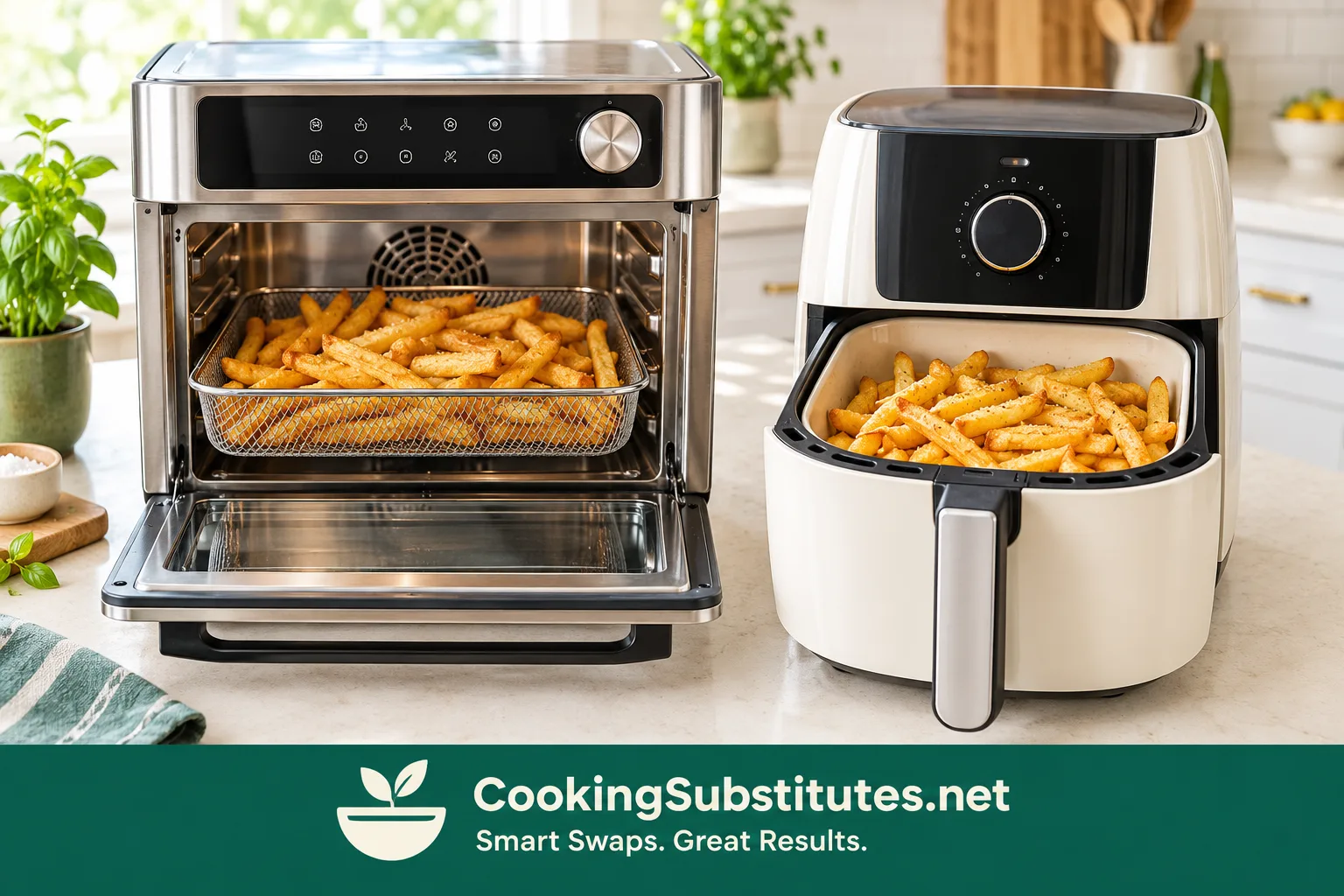
If you are standing in the store (or scrolling on your phone) stuck on the stainless steel vs ceramic air fryer choice, I have been exactly where you are. Both sound safe. Both sound strong. And both boxes shout big words at you until your head spins.
So I did what I always do. I cooked in both, I scrubbed both, and I made notes like a school kid. Here is my honest answer: there is no single winner — there is only the right one for your kitchen. Steel is the “buy it once, use it for years” pick. Ceramic is the “easy dinner, easy cleanup” pick. Let me show you why, round by round, and then I will share the 4 models I trust most — 2 steel, 2 ceramic.
As an Amazon Associate, I earn from qualifying purchases.
Quick Verdict: The Whole Fight on One Table
| Feature | Stainless Steel | Ceramic |
|---|---|---|
| What touches your food | Bare metal, no coating at all | A smooth ceramic coating over metal |
| Coating worries | None — nothing to chip or peel | PFAS-free and PTFE-free, but still a coating |
| Sticking | Food can stick; needs preheat + a little oil | Very nonstick when new; food slides off |
| Durability | Excellent — can last for decades | Good — slowly wears over 1–3 years of heavy use |
| Metal utensils | Yes, no problem | No — wood or silicone only |
| Cleaning | Dishwasher safe; stuck bits need a soak | Fast wipe when new; hand wash to protect it |
| Price | Usually higher | Usually lower |
| Best for | Buy-it-for-life cooks | Busy cooks who hate scrubbing |
Short on time? If you hate washing up, go ceramic. If you hate replacing things, go steel. Now let me explain what you are really buying.
What a Ceramic Air Fryer Really Is
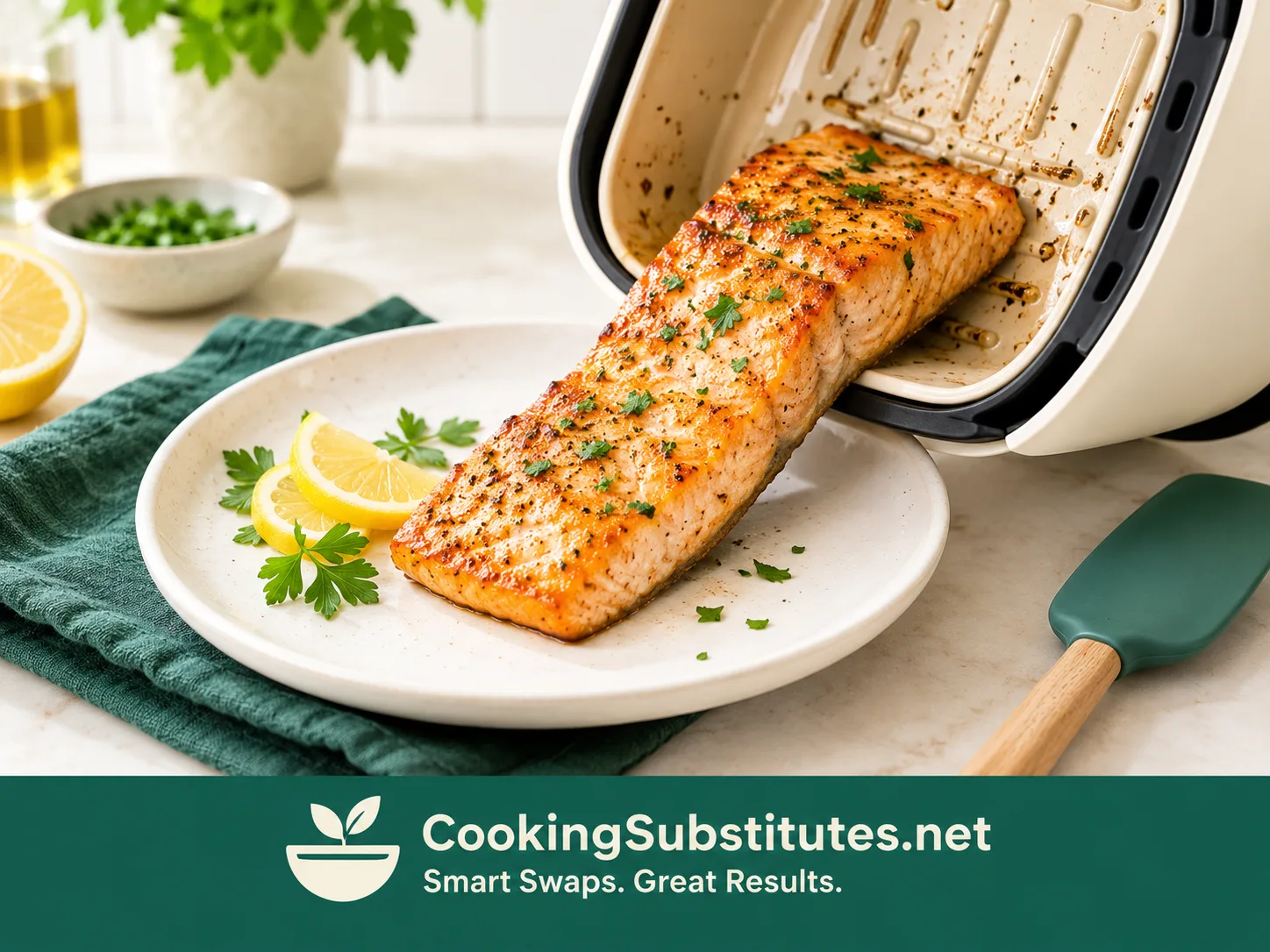
Here is the part most people miss: a “ceramic” air fryer basket is not a solid ceramic pot. It is a metal basket (usually aluminum) covered with a thin ceramic coating. The coating is made with a method called sol-gel — think of it as a glass-like skin baked onto the metal.
That skin is why I like it on busy nights:
- It is naturally nonstick, so eggs, cheese, and sticky sauces slide off.
- It is free from PTFE and PFAS — no Teflon family chemicals.
- It handles high heat well and does not give off fumes at normal cooking temperatures.
But a coating is a coating. It slowly gets less slick over time, faster if you use metal tools, hard scrubbers, the dishwasher every night, or cooking sprays that leave a sticky film. Treat it gently and it treats you well. One warning from my own reading: some cheap brands spray a very thin ceramic layer over a normal nonstick base and still print “ceramic” in big letters. The Kitchen Troop PFAS-free air fryer guide explains this trick nicely — always check that the listing clearly says PTFE-free too.
If easy cleanup is your love language, you will also enjoy my full list of the Best Ceramic Air Fryers — every pick there passed the same checks.
What a Stainless Steel Air Fryer Really Is

A stainless steel air fryer is the simple one. The basket, rack, or tray that touches your food is plain steel with no coating on top. Nothing to chip. Nothing to peel. Nothing to wonder about at 450°F.
The good steel to look for is food-grade 304 stainless steel (you may also see it written as 18/8 or 18/10). It does not rust easily, it does not react with tomato sauce or lemon, and you can attack it with metal tongs and a scrub brush like it owes you money.
The honest trade-off? Food sticks more. There is no slick layer, so cheese and battered foods grip the steel. The fix is easy and I use it every time: preheat the empty basket for 3 minutes, brush the food (not the basket) with a little oil, and do not move the food too early — it releases on its own once it crisps. I share more of these tricks in Amina’s Hacks below.
Most true steel models are oven-style air fryers (a small countertop oven with a steel mesh basket), because big brands rarely make a drawer-style fryer with a bare steel basket. The Kitchenware Sets stainless steel air fryer roundup shows the same pattern — the steel side of this fight is mostly oven-style.
The Big Trap: “Stainless Steel” on the Box Can Mislead You
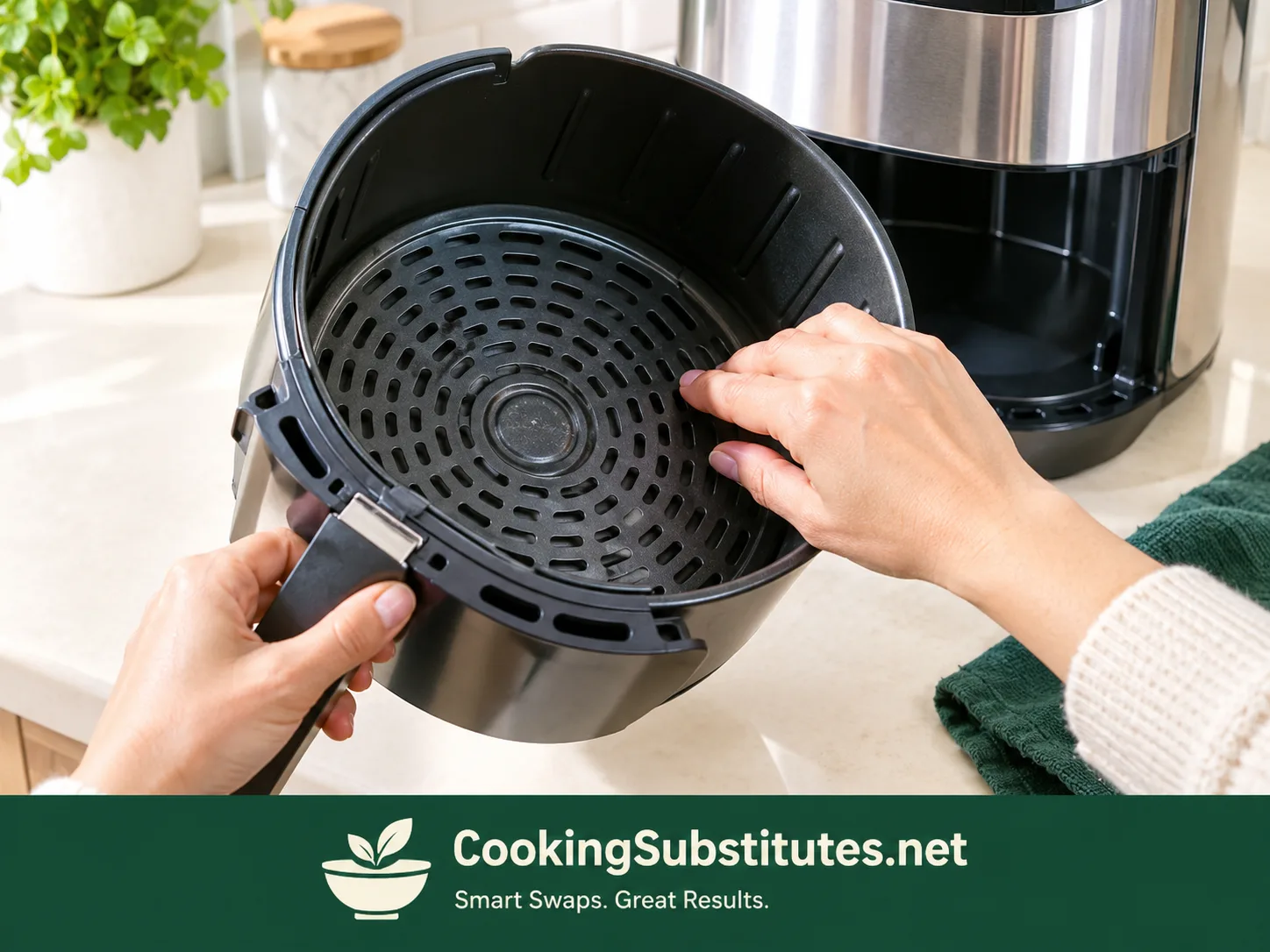
This is the section I wish someone had shown me before my first purchase. Please read it slow.
A stainless steel outside does not mean a stainless steel basket. Many fryers wear a pretty steel body like a jacket, while the basket inside is coated — sometimes with ceramic (fine, if it is honest about it), sometimes with a regular nonstick coating. I have even seen a fryer sold as “The Stainless Steel” model whose basket is ceramic-coated. The steel was only the shell.
The trap works the other way too. Some oven-style steel air fryers give you a steel basket and rack, but the baking pan or the inside walls carry a nonstick finish. That may be fine for you — but you should know it before you pay, not after.
So here is my 10-second check before buying any “steel” or “ceramic” fryer:
- Find the words that describe the basket and crisper plate — not the body.
- For ceramic, demand the words PFAS-free and PTFE-free in writing.
- For steel, look for 304 stainless steel on the food-contact parts.
- If the listing is vague, skip it. Honest brands say it clearly.
The CupIndy non-toxic air fryer guide has a similar checklist, and it is worth a read if you want a second opinion. And if your main worry is Teflon itself, my guide to the Best Air Fryers Without Teflon walks through every coating-free route step by step.
Round by Round: Where Each One Wins
Safety — Tie. Both skip the Teflon family. Steel wins on paper because there is no coating at all, but a good PFAS-free ceramic coating is also a safe, calm choice. The real danger zone is a scratched, peeling basket of any kind — replace those.
Sticking and everyday cooking — Ceramic wins. Fries, wings, and reheated pizza release cleanly, and you can cook with almost no oil. On steel, delicate fish and cheesy foods need the preheat-and-oil trick.
Durability — Steel wins, big. A steel basket can outlive the machine around it. A ceramic coating is at its best in year one and slowly fades; with daily use and rough care, many people replace the basket (or the fryer) in 1–3 years.
Cleaning — Ceramic wins on busy nights, steel wins on lazy Sundays. Ceramic wipes clean in a minute while it is new. Steel can go in the dishwasher and survive a good scrub, but burnt cheese means a hot soapy soak first.
Price — Ceramic wins today, steel can win over time. Ceramic basket fryers start around $50. Steel oven models cost more up front ($160 and up), but you buy them once. If you replace a $90 ceramic fryer every 2 years, the steel oven wins the money fight by year 4.
My score: Steel 2 rounds, ceramic 2 rounds, 1 tie. Told you — it really does come down to your kitchen habits. So let me make it easy with the picks I trust.
My 4 Picks: 2 Steel, 2 Ceramic
1. Cuisinart TOA-70 AirFryer Toaster Oven — Best Stainless Steel Pick for Most Homes
This is the steel pick I point friends to first. The TOA-70 is an 8-in-1 countertop oven — air fry, bake, broil, grill, toast, and more — with a stainless steel air fry basket and rack, so your food cooks on bare steel, not on a coating. It fits a 4 lb chicken or a 12-inch pizza, and it replaced the toaster oven on my counter without a fight.
One honest note, because I always check: the included baking pan on some bundles has an easy-clean finish, so if you want a fully coating-free setup, cook on the steel basket and rack (like I do) and treat the pan as a drip tray.
| Spec | Detail |
|---|---|
| Capacity | 0.6 cu ft (fits 4 lb chicken, 12″ pizza, 6 toast slices) |
| Food-contact parts | Stainless steel air fry basket and oven rack |
| Temperature | Warm–450°F |
| Power | 1,800 W |
| Functions | 8 (Air Fry, Bake, Convection Bake, Broil, Grill, Toast, Warm, Low) |
| Warranty | 3 years |
| Price | Around $160–$190 |
Pros
- Real steel basket and rack — nothing to chip or peel
- Big, flexible oven that toasts, bakes, and air fries in one body
- Simple dials — no app, no fuss
- Strong 3-year warranty
Cons
- Oven-style takes more counter space than a drawer fryer
- Steel basket needs the preheat-and-oil trick for sticky foods
- Most parts prefer a hand wash
What buyers say: Owners love the size and the simple controls, and many say it fully replaced their toaster oven. The common complaint is the learning curve for sticking in the first few cooks.
2. Breville Smart Oven Air Fryer Pro — Best Premium Stainless Steel
If your budget is bigger and your family is hungry, this is the steel heavyweight. The Breville fits a 14 lb turkey, toasts 9 slices at once, and runs 13 functions with smart heating elements that move power to where the food needs it. The air fry basket is a stainless steel mesh tray, and the whole machine feels like a small professional oven.
My honest note again: like many premium ovens, the inside walls have an easy-clean finish, so check the current listing if a 100% coating-free cavity matters to you. The basket your food sits on is steel.
| Spec | Detail |
|---|---|
| Capacity | 1 cu ft (fits 14 lb turkey, 9 toast slices, 9×13″ pan) |
| Food-contact parts | Stainless steel air fry mesh basket |
| Temperature | 80–480°F |
| Power | 1,800 W |
| Functions | 13 (Toast, Air Fry, Bake, Roast, Dehydrate, Slow Cook, and more) |
| Warranty | 2 years |
| Price | Around $300–$400 |
Pros
- Huge capacity — a true second oven
- Very even cooking with smart element control
- Super convection crisps fast for an oven-style model
- Steel mesh basket handles metal tools
Cons
- Premium price
- Big and heavy — needs real counter space
- Parts are mostly hand wash
What buyers say: Owners rate it about 4.7 stars across thousands of reviews and praise the even cooking most. The price and the size are the usual complaints.
3. COSORI TurboBlaze 6 Qt — Best Ceramic Pick (and My Weeknight Favorite)
On the ceramic side, this is the one I reach for most days — it also leads my Best Air Fryers Without PFAS list. The TurboBlaze has a PFAS-free ceramic basket and crisper plate, a fast DC motor with 5 fan speeds, and a square 6 Qt basket that fits more food in one layer than round baskets do. Fries come out crisp, chicken stays juicy, and the basket wipes clean in minutes.
| Spec | Detail |
|---|---|
| Capacity | 6 Qt (serves 3–5) |
| Basket | PFAS-free ceramic coating (basket + crisper plate) |
| Temperature | 90–450°F |
| Power | 1,725 W |
| Functions | 9 |
| Price | Around $90–$120 |
Pros
- Fast, even cooking with 5 fan speeds
- Ceramic basket and plate are dishwasher safe (hand wash lasts longer)
- Quiet for a basket fryer
- Fair price for the size and power
Cons
- Ceramic coating needs gentle care — no metal tools
- Big families may want an 8 Qt instead
- Coating will slowly lose slickness over the years
What buyers say: Owners rate it about 4.8 stars and praise the speed, the quiet fan, and the easy cleanup.
4. Dash Ceramic Tasti-Crisp 2.6 Qt — Best Budget Ceramic for 1–2 People
Small kitchen? Small budget? This little Dash is your ceramic starter. The ceramic version has a ceramic nonstick basket, digital controls, and 3 presets. It makes a perfect small batch of fries, nuggets, or veggies for one or two people, and it stores anywhere.
One warning from me: Dash also sells a regular Tasti-Crisp with a PTFE coating. Only buy the one with Ceramic in the name.
| Spec | Detail |
|---|---|
| Capacity | 2.6 Qt (serves 1–2) |
| Basket | Ceramic nonstick |
| Temperature | 200–400°F |
| Power | 1,000 W |
| Functions | Digital, 3 presets, auto shut-off |
| Price | Around $50–$70 |
Pros
- Lowest price on this list
- Tiny footprint, easy to store
- Simple controls, auto shut-off
Cons
- Too small for families
- Fewer functions than bigger models
- You must pick the ceramic version, not the regular one
What buyers say: Owners rate it about 4.5 stars and praise the size, the price, and the fast cleanup.
Amina’s Hacks: Make Both Materials Behave
For stainless steel (stop the sticking):
- Preheat the empty basket for 3 minutes — hot steel + cold food sticks less.
- Oil the food, not the basket. A light brush or toss is enough.
- Do not flip too early. Food lets go of steel once a crust forms.
- Burnt bits? Soak the basket in hot water with a spoon of baking soda for 15 minutes. It wipes off like a dream.
For ceramic (make the coating last):
- Wood or silicone tools only. One metal fork habit can kill a coating.
- Skip aerosol cooking sprays — they bake into a sticky film that ruins the slick feel. Brush on plain oil instead.
- Hand wash with a soft sponge when you can, even if the box says dishwasher safe.
- Let the basket cool a little before washing. Sudden cold water on a hot coating is not its friend.
So, Which One Should YOU Buy?
- You cook every day and hate scrubbing → Ceramic. Start with the COSORI TurboBlaze.
- You buy things once and keep them for years → Stainless steel. Start with the Cuisinart TOA-70.
- You cook for 1–2 people on a small budget → Ceramic. The little Dash was made for you.
- You want one machine to replace your oven → Stainless steel oven-style. The Breville Pro is the big gun.
- You are still not sure → Ask yourself one question: “Do I baby my pans, or do I throw them in the dishwasher and forget them?” Baby → ceramic. Forget → steel.
Or skip the guessing completely: my free Air Fryer Finder asks which coating you want and what your budget is, then points you straight to the guide that fits your kitchen.
Questions People Ask Me
Is stainless steel or ceramic better for an air fryer?
Neither wins for everyone. Stainless steel is better for durability and zero coating worries. Ceramic is better for easy release and fast cleanup. Pick based on whether you value long life or easy nights more.
Do stainless steel air fryer baskets stick?
Yes, they can — steel has no nonstick layer. Preheat the basket, brush a little oil on the food, and let a crust form before you move it. With those 3 steps, sticking becomes a small problem, not a big one.
Is a ceramic air fryer really safe?
Yes, a true ceramic coating is made from a silica-based (sand-like) material, with no PTFE and no PFAS. It does not give off fumes at normal cooking heat. Just make sure the listing clearly says PFAS-free and PTFE-free, because “ceramic” alone is not a regulated word.
How long does a ceramic air fryer basket last?
With gentle care — soft tools, hand washing, no spray oils — many people get 2–3 good years, sometimes more. With metal tools and daily dishwasher runs, the coating can fade in under a year. A steel basket, by comparison, can last for decades.
Can I use metal utensils in my air fryer?
On stainless steel, yes — that is one of its best perks. On ceramic, no. Metal scratches the coating and shortens its life. Keep a pair of silicone tongs next to a ceramic fryer.
Is every “stainless steel” air fryer steel on the inside?
No — and this is the biggest trap in this whole topic. Many models are steel only on the outside body. Always check the basket material in the listing. If the basket description does not clearly say stainless steel (or ceramic), assume it is a coated basket and ask the brand before you buy.
Final Thoughts
Your kitchen, your rules. If you want my one-line answer to the stainless steel vs ceramic air fryer question, here it is: buy ceramic for easy nights, buy steel for long years — and whichever you pick, check the basket, not the box. That one habit will save you money, stress, and at least one scratched-coating headache.
Pin this post so you can find this comparison fast on your next shopping day. 📌
— Amina 🍳
P.S. Tell me in the comments — are you Team Steel or Team Ceramic? I read every reply, and I love a good kitchen debate.
Affiliate Disclosure: CookingSubstitutes.net is a participant in the Amazon Services LLC Associates Program, an affiliate advertising program designed to provide a means for sites to earn advertising fees by linking to Amazon.com. When you buy through a link on this page, I may earn a small commission at no extra cost to you. Thank you for supporting the kitchen!