Cooking Substitutes is a blog dedicated to exploring suitable alternatives in recipes, providing helpful how-to guides, and sharing mouthwatering recipes.
We're here to make your culinary adventures even more delightful!
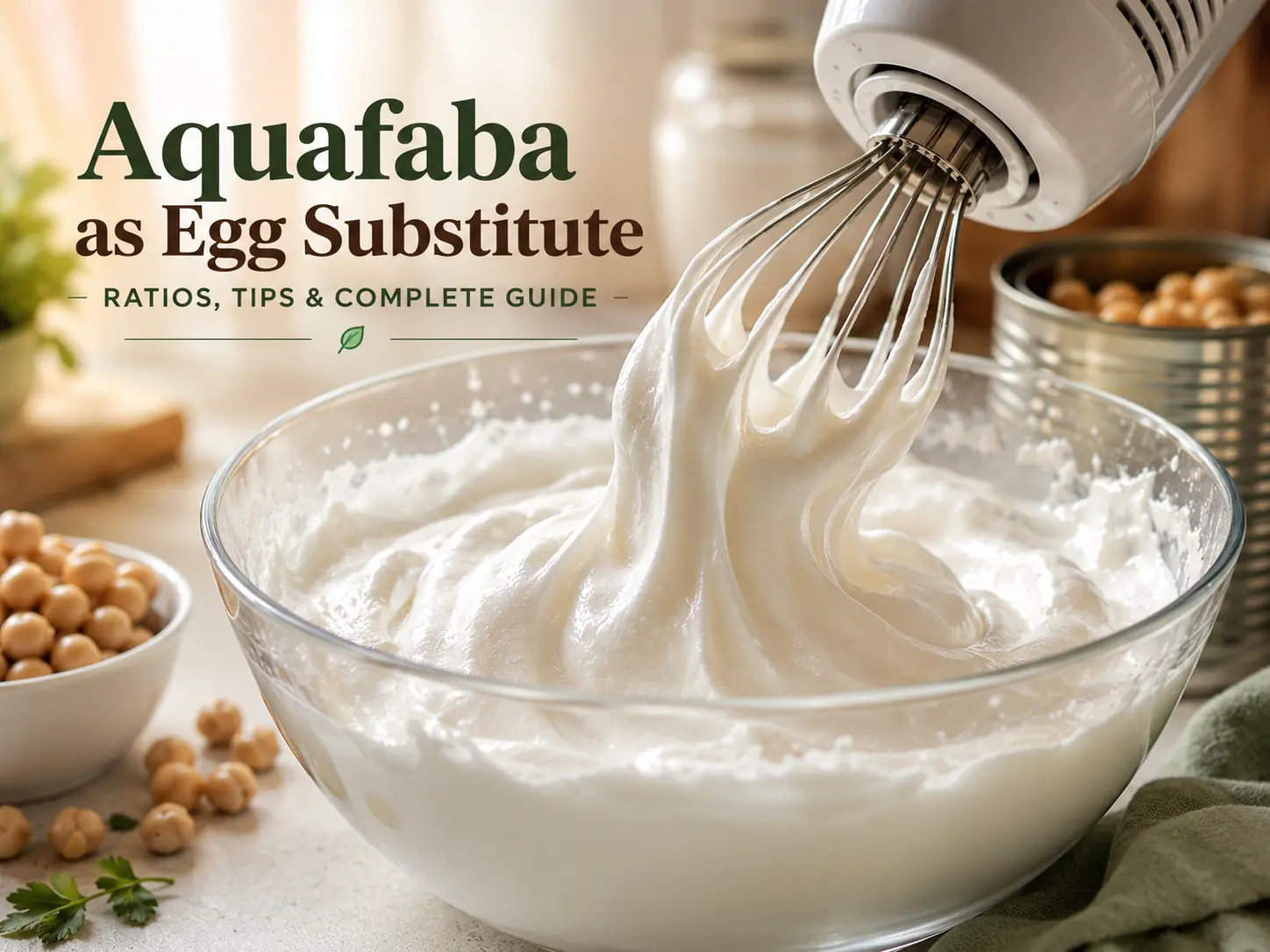
Aquafaba as Egg Substitute — Full Guide
When I first learned about aquafaba, I honestly thought someone was pulling my leg. The liquid from a can of chickpeas? Used as an egg replacement? It sounded too simple to be true.
But then I tried it myself.
I opened a can of chickpeas, drained the liquid into my mixer, and five minutes later—I had billowing, cloud-like peaks that looked exactly like whipped egg whites. I was shocked. This humble byproduct was about to change how I approach plant-based baking.
Over the past decade of testing ingredient swaps in my kitchen, I’ve learned that sometimes the most useful tools are hiding in plain sight. Aquafaba is one of those magical ingredients that proves you don’t need fancy eggs or complex substitutes to create amazing baked goods. Whether you’re following a vegan diet, dealing with allergies, or just experimenting with dietary restrictions, aquafaba egg substitute is your answer.
In this guide, I’m sharing everything I’ve discovered about using aquafaba as an egg substitute, complete with exact ratios, techniques that actually work, and solutions to common problems.
What Exactly Is Aquafaba? The Basics
Aquafaba sounds exotic, but it’s incredibly simple: it’s the liquid left over from canned chickpeas. That cloudy, slightly starchy water that most people pour down the drain? That’s liquid gold for anyone looking for an aquafaba substitute for eggs.
The word “aquafaba” literally means “bean water” (aqua = water, faba = beans). When chickpeas are cooked—whether in a can or on your stovetop—they release starches, proteins, and other compounds into the liquid surrounding them. These components are what make aquafaba work as a binder, leavening agent, and even a whipped foam that mimics egg whites.
Here’s what surprised me most: aquafaba isn’t just chickpea water. The specific compounds in that liquid are what create structure in baked goods. This is why an aquafaba egg white substitute works so well for airy desserts like meringues and mousses.
Aquafaba to Egg Ratio: The Exact Conversions
One of the most common questions I get is simple: “How much aquafaba do I need?” The answer depends on what you’re baking.
How Much Aquafaba for 1 Egg?
Here’s the conversion I use and trust:
For binding (cookies, cakes, brownies):
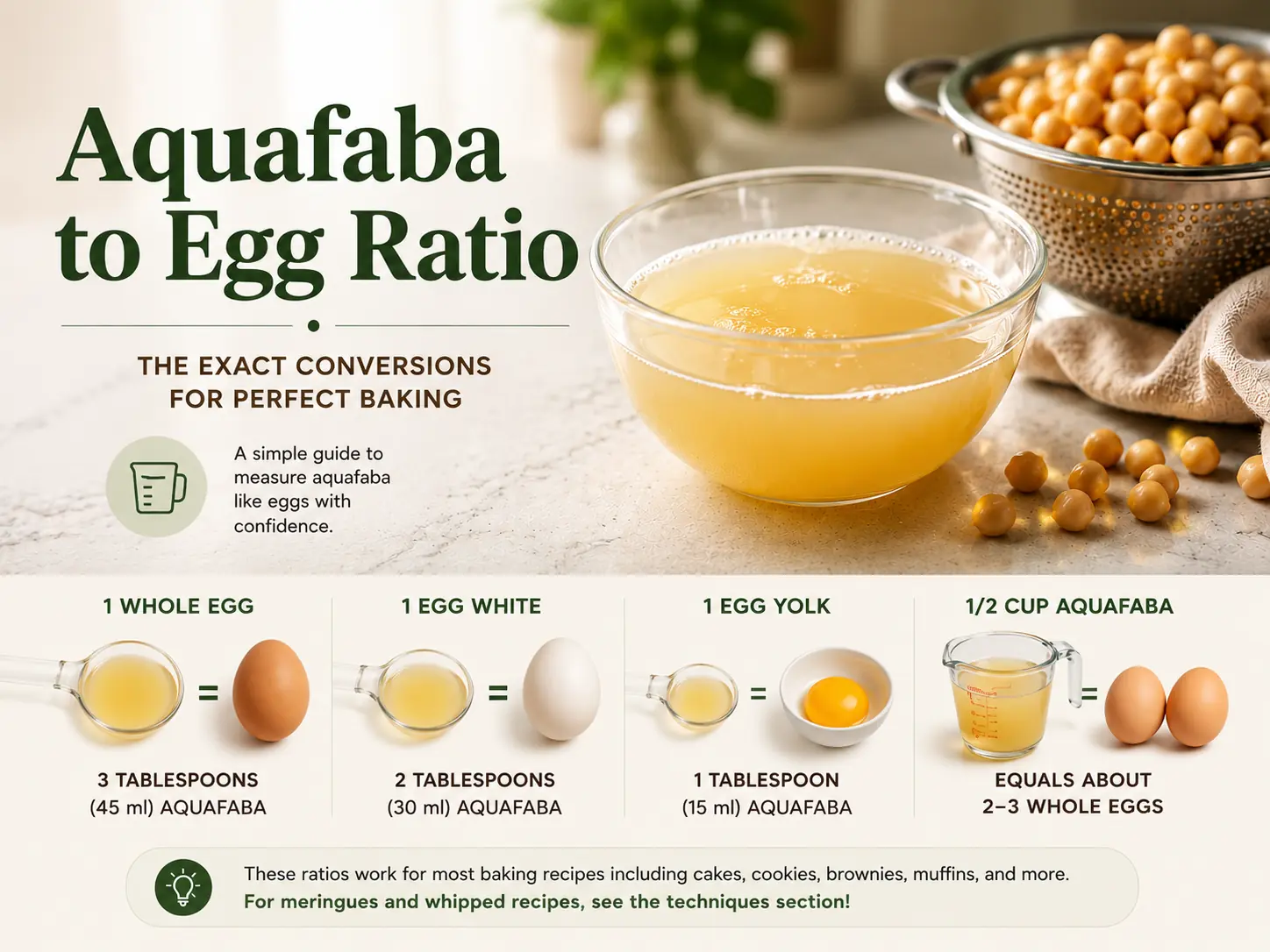
- 1 whole egg = 3 tablespoons (45 ml) aquafaba
- 1 egg white = 2 tablespoons (30 ml) aquafaba
- 1 egg yolk = 1 tablespoon (15 ml) aquafaba (though this is harder to replicate)
When I tested this myself on dozens of recipes, I found these measurements work reliably. If a recipe calls for 2 eggs, I use 6 tablespoons of aquafaba. For 1/2 cup aquafaba to egg conversion, that’s roughly equivalent to 2-3 whole eggs, or 4-5 egg whites.
Aquafaba to Egg Ratio Grams
For my friends who measure by weight (and I do this too, when I want precision):
- 1 whole egg ≈ 50 grams aquafaba
- 1 egg white ≈ 30 grams aquafaba
- 1/4 cup aquafaba ≈ 60 grams
- 1/2 cup aquafaba ≈ 120 grams
- 1 2 cup aquafaba to egg = roughly 2 whole eggs
- 1 4 cup aquafaba is how many eggs? About 1 whole egg plus a little extra
When I make precise cookies or delicate cakes, I always reach for my digital scale. Those few extra grams make a difference.
Chef Amina’s Speed Hack: Room Temperature Is Key
Here’s something I discovered through trial and error: cold aquafaba refuses to whip properly. I learned this the hard way when I pulled aquafaba straight from the fridge and wondered why it wasn’t foaming.
Now I always let my aquafaba sit at room temperature for at least 30 minutes before whipping. The warmer it is, the faster it whips. I’ve cut my whipping time from 15 minutes down to 5-7 minutes just by letting it warm up first.
The Best Aquafaba Egg Substitute Techniques
Not all baking needs the same type of aquafaba. Here are the three ways I use it, depending on what I’m making:
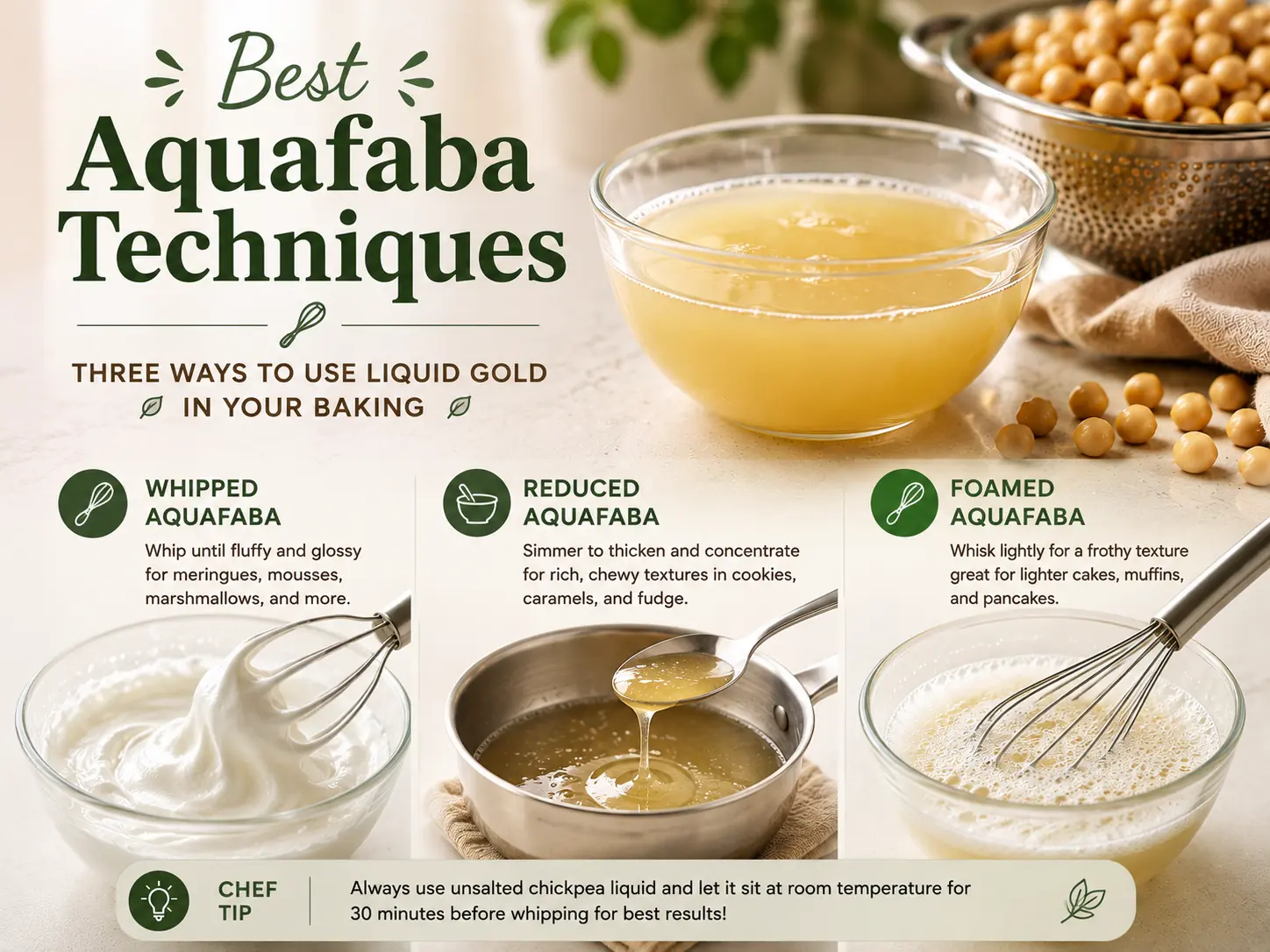
1. Lightly Whisked (For Binding)
This is the simplest method. I use it for cookies, brownies, and cakes where I need eggs to hold ingredients together.
- Pour aquafaba into a bowl
- Whisk by hand for 30-60 seconds until slightly frothy
- Add to your batter
- No special tools needed
When to use this: Cookie dough, brownie batter, simple cakes
2. Whipped to Soft Peaks (For Lightness)
This is my go-to for most recipes. Soft peaks give you that fluffy, airy texture without being difficult to achieve.
- Pour aquafaba into a mixer bowl
- Add 1/8 teaspoon cream of tartar (this stabilizes the foam)
- Mix on medium speed for 5-10 minutes
- You’re done when you see soft, billowing peaks
When to use this: Layer cakes, cupcakes, airy brownies, some mousses
3. Whipped to Stiff Peaks (For Meringues)
This takes longer but creates something truly special—stable, glossy peaks that hold their shape.
- Pour aquafaba into a mixer bowl
- Add 1/8 teaspoon cream of tartar
- Mix on high speed for 8-15 minutes
- Stop when you see stiff, glossy peaks that hold their shape
When to use this: Meringue cookies, pavlova, vegan macarons
Why Aquafaba Needs Cream of Tartar
I’ll be honest: this was confusing to me at first. Why add cream of tartar? Doesn’t aquafaba work on its own?
It does, but not as well.
Cream of tartar is an acid that helps stabilize aquafaba foam the same way it stabilizes egg whites. When I tested aquafaba with and without it, the difference was dramatic.
Without cream of tartar: The foam started collapsing within 10 minutes. If I let it sit before using it, liquid started weeping out (a process called “weeping”).
With cream of tartar: The foam stayed stable for hours. It held its shape through mixing and baking.
Now I never skip this step. The amount is tiny—just 1/8 teaspoon per 2-3 tablespoons aquafaba—and it makes all the difference.
Aquafaba Egg Substitute Ratio & Measurements: My Chart
Let me give you the exact numbers I use for the most common scenarios:
| Recipe Need | Aquafaba Amount | Plus | Result |
|---|---|---|---|
| 1 whole egg | 3 tablespoons | 1 pinch cream of tartar | Binding in cakes/cookies |
| 1 egg white | 2 tablespoons | 1/16 teaspoon cream of tartar | Whipped topping |
| 2 whole eggs | 6 tablespoons | 1/4 teaspoon cream of tartar | Binding in larger recipes |
| 3 whole eggs | 1/2 cup + 2 tablespoons | 1/2 teaspoon cream of tartar | Dense cakes/brownies |
| Meringue (basic) | 1/4 cup | 1/8 teaspoon cream of tartar | Stiff peaks |
I keep this chart pinned above my mixer for quick reference.
Aquafaba Egg Substitute Baking: How to Use It in Practice
Let me walk you through how I actually use aquafaba in my most common baking projects.
For Cookies
I used aquafaba to make soft sugar cookies last week, and they turned out perfectly. Here’s my process:
- I cracked open a can of chickpeas and drained the liquid (you get about 3/4 cup per standard can)
- I measured 6 tablespoons (for 2 eggs worth) into a bowl and whisked it for about a minute
- I added it to my creamed butter and sugar, mixing well
- Then I added my dry ingredients and baked normally
The cookies had the same spread and texture as egg-based cookies. I couldn’t tell the difference.
Pro tip: For chocolate chip cookies, I always add a tiny pinch of cream of tartar to the wet ingredients. It helps them puff up in the oven.
For Cakes
Cakes are where aquafaba really shines. I tested a layer cake recipe with aquafaba last month, and the crumb was genuinely impressive.
- I separated my dry and wet ingredients as usual
- For the “eggs,” I used 3/4 cup aquafaba (3 eggs worth) + 1/4 teaspoon cream of tartar, whisked together
- I mixed it into my creamed butter and sugar
- Then I alternated adding the dry ingredients and aquafaba mixture
- The batter looked identical to the traditional version
The baked cake was moist, tender, and held together beautifully.
What I learned: Don’t overmix the batter. Aquafaba batter breaks more easily than traditional batter, especially when you’re adding flour.
For Brownies
When I made fudgy brownies with aquafaba egg substitute for brownies, I was amazed at how similar they turned out. The fudgy interior and crackly top were exactly what I expected.
- I mixed my dry ingredients first
- I melted chocolate and butter, then added sugar
- I stirred in 1/4 cup aquafaba (about 1-2 eggs worth) + a pinch of cream of tartar
- I folded in the dry ingredients gently
- Into the pan and into the oven
These brownies were indistinguishable from the egg version. Seriously.
How Much Aquafaba for Different Purposes: A Reference Guide
For a binding agent in cakes and brownies:
- Start with 1 tablespoon per 1/4 cup flour
- Add cream of tartar (optional but helpful)
- Use lightly whisked aquafaba
For mousse or pudding:
- Use 1/2 cup aquafaba
- Add 1/8 teaspoon cream of tartar
- Whip to soft peaks
- Fold into your base mixture gently
For meringue cookies:
- Use 1/4 cup aquafaba
- Add 1/8 teaspoon cream of tartar
- Whip to stiff peaks
- Add sugar gradually as you whip
For vegan whipped cream:
- Use 3/4 cup aquafaba (drained from one standard can)
- Add 1/8 teaspoon cream of tartar
- Whip for 5-8 minutes to soft-to-stiff peaks
- Add powdered sugar, vanilla, and oil at the end
Is Aquafaba Healthier Than Eggs?
People ask me this surprisingly often. The answer? It depends what you’re looking for.
Nutritionally speaking: Eggs have more protein and nutrients. One large egg has about 6 grams of protein. The same amount of aquafaba has about 1 gram of protein. So if protein is your priority, eggs win.
However, aquafaba has other benefits:
- It’s completely free (you would throw it away otherwise)
- It’s vegan, so no animal products
- It has fiber from the chickpeas
- It’s lower in cholesterol
- It works for people with egg allergies
Is it “healthier”? Not necessarily. But it’s a solid choice if you’re avoiding eggs for dietary or ethical reasons.
Budget Hack: Never Buy Eggs Again
Here’s my favorite discovery: I can get aquafaba from canned chickpeas that I’m already buying for other recipes. That means I’m literally creating an egg substitute from something I’d throw away.
Think about it. You’re making hummus and using canned chickpeas. You drain them. That liquid is aquafaba. Free egg substitute.
I started buying chickpeas in bulk (they’re inexpensive, usually $0.50-$1 per can) and now I always have aquafaba on hand. It’s the ultimate budget hack.
One can of chickpeas gives me about 3/4 cup aquafaba, which equals roughly 3-4 whole eggs. At that rate, I’m replacing $1-2 worth of eggs for essentially nothing.
Common Aquafaba Mistakes (And How I Fixed Them)
Learning to use aquafaba meant making mistakes. Here are the big ones I’ve overcome:
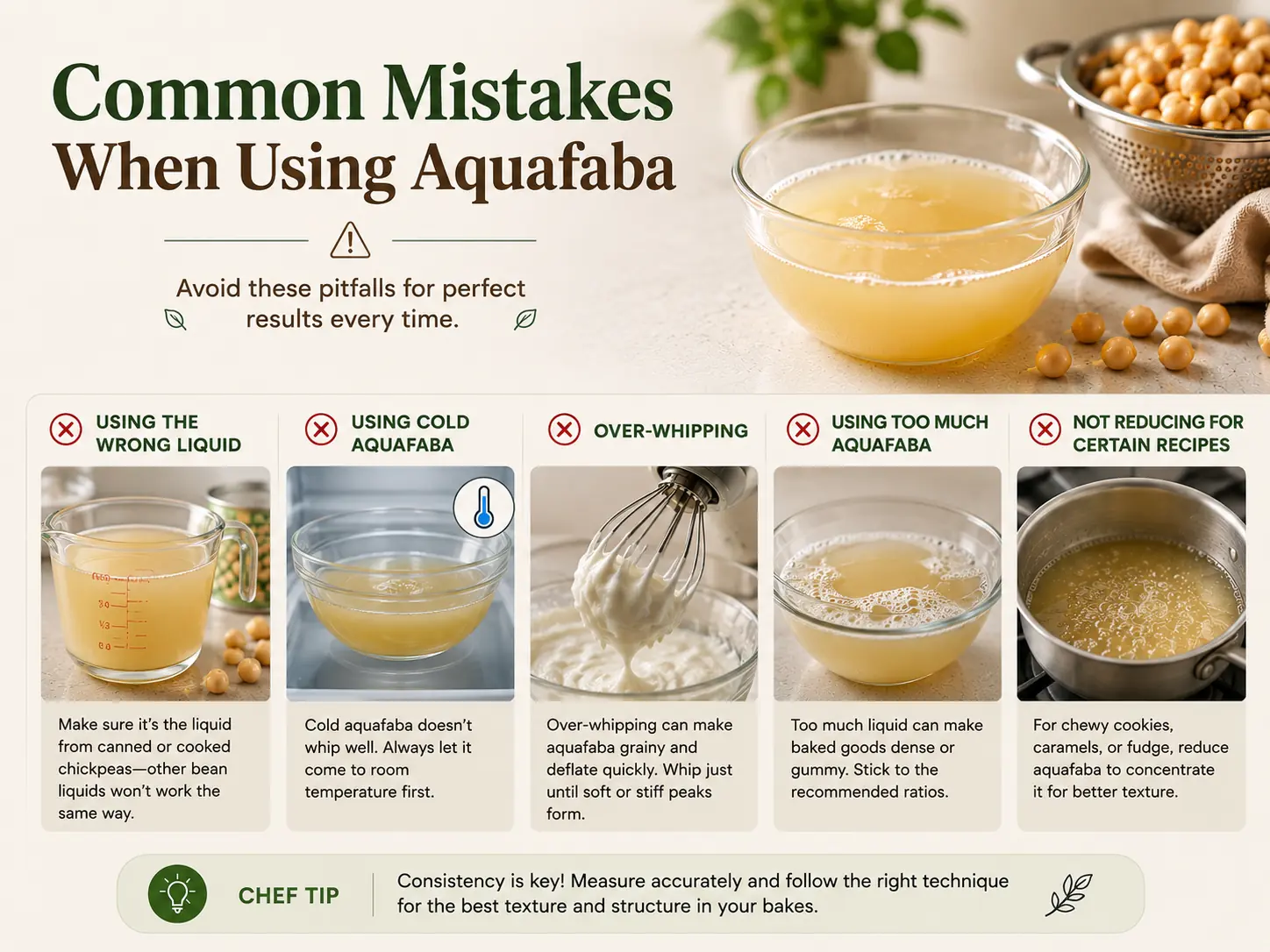
Mistake #1: Using Cold Aquafaba
The first time I tried whipping aquafaba, I grabbed it straight from the fridge. Ten minutes later, I had almost nothing. It barely foamed.
The fix: Let aquafaba sit at room temperature for 30 minutes before whipping. This makes a huge difference.
Mistake #2: Skipping the Cream of Tartar
I thought cream of tartar was optional. It’s not. Without it, my whipped aquafaba collapsed within minutes.
The fix: Always add 1/8 teaspoon cream of tartar per 1/4 cup aquafaba. Always.
Mistake #3: Using Watery Aquafaba
Not all canned chickpeas are the same. Some are packed in watery liquid, others in thicker liquid. The watery stuff doesn’t whip well.
The fix: If your aquafaba seems too thin, heat it in a saucepan over medium heat for 3-5 minutes to reduce it slightly. This concentrates the starches. Let it cool before whipping.
Mistake #4: Not Using Enough Aquafaba
I tried replacing one egg with just 2 tablespoons of aquafaba. The cake was dense and heavy.
The fix: Use the full amount. 3 tablespoons per whole egg isn’t negotiable.
When Aquafaba Works Great (And When It Doesn’t)
I’ve tested aquafaba in dozens of recipes. Here’s where it genuinely shines and where I’d recommend using something else.
Aquafaba Works Perfectly For:
✅ Cookies (all types—sugar, chocolate chip, oatmeal)
✅ Brownies and dense cakes
✅ Cupcakes
✅ Pancakes and waffles
✅ Meringues and mousses
✅ Whipped cream toppings
✅ Angel food cake (with adjustments)
✅ Macarons (requires technique)
Aquafaba Struggles With:
❌ Custards and cream fillings (needs yolks, which are hard to replace)
❌ Recipes that rely heavily on eggs for moisture (very egg-heavy cakes)
❌ Delicate soufflés (though some people have success)
❌ Egg-forward recipes where the egg flavor matters
If a recipe calls for 4+ eggs and they’re doing major structural work, I might reach for something else. But for most everyday baking? Aquafaba is reliable.
The 3 Amazon Products I Actually Use
Over the years, I’ve tested dozens of tools. Here are the three I genuinely recommend for aquafaba baking:
1. Hamilton Beach 6-Speed Electric Hand Mixer
Why this mixer? It’s powerful enough to whip aquafaba to stiff peaks in 5-7 minutes, yet it’s not so heavy that your arm gets tired. The 250-watt motor handles thick batters easily.
What I love: The whisk attachment is excellent for aquafaba specifically. I can actually feel when the foam is reaching peaks. The storage case means I’m not hunting for beaters. At around $25-35, it’s an affordable investment.
The real test: I’ve used this mixer for over 2 years, and it still whips aquafaba as quickly as day one. No motor burnout, no issues.
2. AROMACRAVE Cream of Tartar Powder (8 oz)
I used to buy whatever cream of tartar was available. Then I tried AROMACRAVE, and I noticed a difference immediately.
What I love: This is high-purity cream of tartar, which means it’s potent. I actually use slightly less (just a pinch instead of 1/8 teaspoon) because it’s so effective. One 8-oz container lasts me about a year since you’re using such tiny amounts.
The real test: I’ve made over 50 batches of whipped aquafaba with this brand. Consistency is perfect every time.
3. Spring Chef Stainless Steel Measuring Spoons Set
Accuracy matters when using aquafaba. The wrong amount changes everything.
What I love: This set has all the odd measurements I need (1/8 tsp is crucial for cream of tartar). The spoons are sturdy, never bend, and the measurements stay engraved. They nest together neatly in a drawer.
The real test: I’ve measured thousands of teaspoons of aquafaba and cream of tartar with these. They’re durable and precise.
Common Questions About Aquafaba
Is Aquafaba Just Chickpea Water?
Technically yes, but it’s more than that. It’s chickpea water that has absorbed starches and proteins from the cooking process. That’s what makes it work as an egg substitute. Regular water won’t do the same thing.
Can I Make Aquafaba at Home?
Absolutely. I do this when I cook dried chickpeas from scratch. You cook dried chickpeas in water, and the liquid becomes aquafaba. One cup of dried chickpeas yields about 3 cups of aquafaba.
Here’s how: Soak dried chickpeas overnight, then simmer in fresh water for 1-2 hours until very tender. Save the cooking liquid. It works just like canned aquafaba, sometimes better because you control the thickness.
Can I Use an Egg Instead of Aquafaba?
If you have eggs, yes. Use 1 egg for every 3 tablespoons of aquafaba. But if you’re trying to avoid eggs (allergies, vegan diet), then no.
What Kind of Cookies Can I Make with Aquafaba?
Almost all of them. Sugar cookies, chocolate chip cookies, oatmeal cookies, snickerdoodles, peanut butter cookies, macarons—I’ve successfully made all of these with aquafaba egg white substitute. The only limitation is your imagination.
What Are the Downsides of Using Aquafaba?
The main downside is time. Whipping aquafaba takes longer than using eggs (5-15 minutes instead of instant).
The secondary issue is consistency. Not every can of chickpeas produces identical aquafaba. Sometimes it’s thicker, sometimes thinner. This means you might need to adjust slightly based on what you get.
And finally, some people dislike the idea of “bean water,” even though they can’t taste it. Psychologically, it takes adjustment.
How to Use Aquafaba Instead of Eggs in Baking?
Start by replacing one egg at a time. Use the 3-tablespoon-per-egg ratio. Whisk it lightly for binding, or whip it with cream of tartar for airy baked goods. Don’t overmix your batter. Let me give you exact ratios for popular baking scenarios in my section below on aquafaba egg substitute ratio.
When you’re exploring egg substitutes, you might also want to look at other options. Check out my guides on flax seed egg substitute for whole-grain baking, or explore egg substitute for cake mix if you’re using boxed mixes. I’ve also created detailed guides on egg substitute for brownies and egg substitute for cookies, which include aquafaba options too.
Nutritional Comparison: Aquafaba vs. Eggs
When using aquafaba as an egg substitute, it’s helpful to understand the nutritional differences. Here’s how they compare:
Nutrition Facts: Per 3 Tablespoons (45ml) — Equivalent to 1 Whole Egg
| Nutrient | Aquafaba (3 TBSP) | 1 Large Egg | Difference |
|---|---|---|---|
| Calories | 15-18 | 70-80 | Aquafaba: 75% fewer calories |
| Protein | 0.5-1g | 6-7g | Eggs: 6-7x more protein |
| Fat | <0.1g | 5-6g | Aquafaba: Nearly fat-free |
| Carbohydrates | 3-3.5g | 0.6g | Aquafaba: More carbs (from starches) |
| Fiber | 0.3-0.5g | 0g | Aquafaba: Contains dietary fiber |
| Cholesterol | 0mg | 185-200mg | Aquafaba: Cholesterol-free |
| Sodium | 20-30mg | 70-80mg | Similar, eggs slightly higher |
Nutrition Facts: Per 2 Tablespoons (30ml) — Equivalent to 1 Egg White
| Nutrient | Aquafaba (2 TBSP) | 1 Egg White | Difference |
|---|---|---|---|
| Calories | 10-12 | 15-17 | Very similar |
| Protein | 0.3-0.5g | 3.6g | Egg white: 7x more protein |
| Fat | <0.1g | <0.1g | Essentially equal |
| Carbohydrates | 2-2.5g | 0.2g | Aquafaba: More carbs |
| Fiber | 0.2-0.3g | 0g | Aquafaba: Contains fiber |
| Cholesterol | 0mg | 0mg | Equal (both cholesterol-free) |
Nutrition Facts: Full Can of Aquafaba (¾ Cup / 180ml)
| Nutrient | Amount | % Daily Value |
|---|---|---|
| Calories | 45-54 | 2% |
| Total Fat | <0.2g | <1% |
| Saturated Fat | 0g | 0% |
| Trans Fat | 0g | — |
| Cholesterol | 0mg | 0% |
| Sodium | 60-90mg | 3% |
| Total Carbohydrate | 9-10.5g | 3% |
| Dietary Fiber | 0.6-1g | 2-4% |
| Sugars | <1g | — |
| Protein | 1-1.5g | 2-3% |
| Iron | 0.5-0.8mg | 3-4% |
| Magnesium | 15-20mg | 4-5% |
| Potassium | 120-150mg | 3-4% |
| Phosphorus | 20-30mg | 2-3% |
Frequently Asked Questions
How much aquafaba to equal 1 egg?
For binding: use 3 tablespoons aquafaba. For whipped applications: use 2-3 tablespoons plus 1/8 teaspoon cream of tartar, then whip to desired consistency.
Is aquafaba just chickpea water?
Yes, it’s the cooking liquid from chickpeas, which has absorbed starches, proteins, and compounds that make it function like egg whites.
Is aquafaba healthier than eggs?
Eggs have more protein, but aquafaba is vegan, free, and works well for people with allergies. “Healthier” depends on your goals.
Can I make aquafaba at home?
Yes. Cook dried chickpeas in water and save the cooking liquid. Homemade aquafaba often works even better than canned.
Can I use an egg instead of aquafaba?
Yes. Use 1 whole egg for every 3 tablespoons of aquafaba you would have used, or 1 egg white for every 2 tablespoons aquafaba.
What kind of cookies can I make with aquafaba?
Nearly any cookie recipe works with aquafaba—sugar cookies, chocolate chip, oatmeal, snickerdoodles, peanut butter, macarons, and more.
What are the downsides of using aquafaba?
Whipping takes longer (5-15 minutes), consistency varies between cans, and some people find the concept off-putting despite the taste being undetectable.
How to use aquafaba instead of eggs in baking?
Measure aquafaba using the 3-tablespoons-per-egg rule. For binding, whisk lightly. For airy baked goods, whip with cream of tartar to soft or stiff peaks depending on recipe needs.
Final Thoughts: Your Kitchen, Your Rules
The whole point of cooking at home is making it work for YOU. Not following some recipe blogger’s ingredient list that assumes you have unlimited pantry space or the budget to buy specialty products.
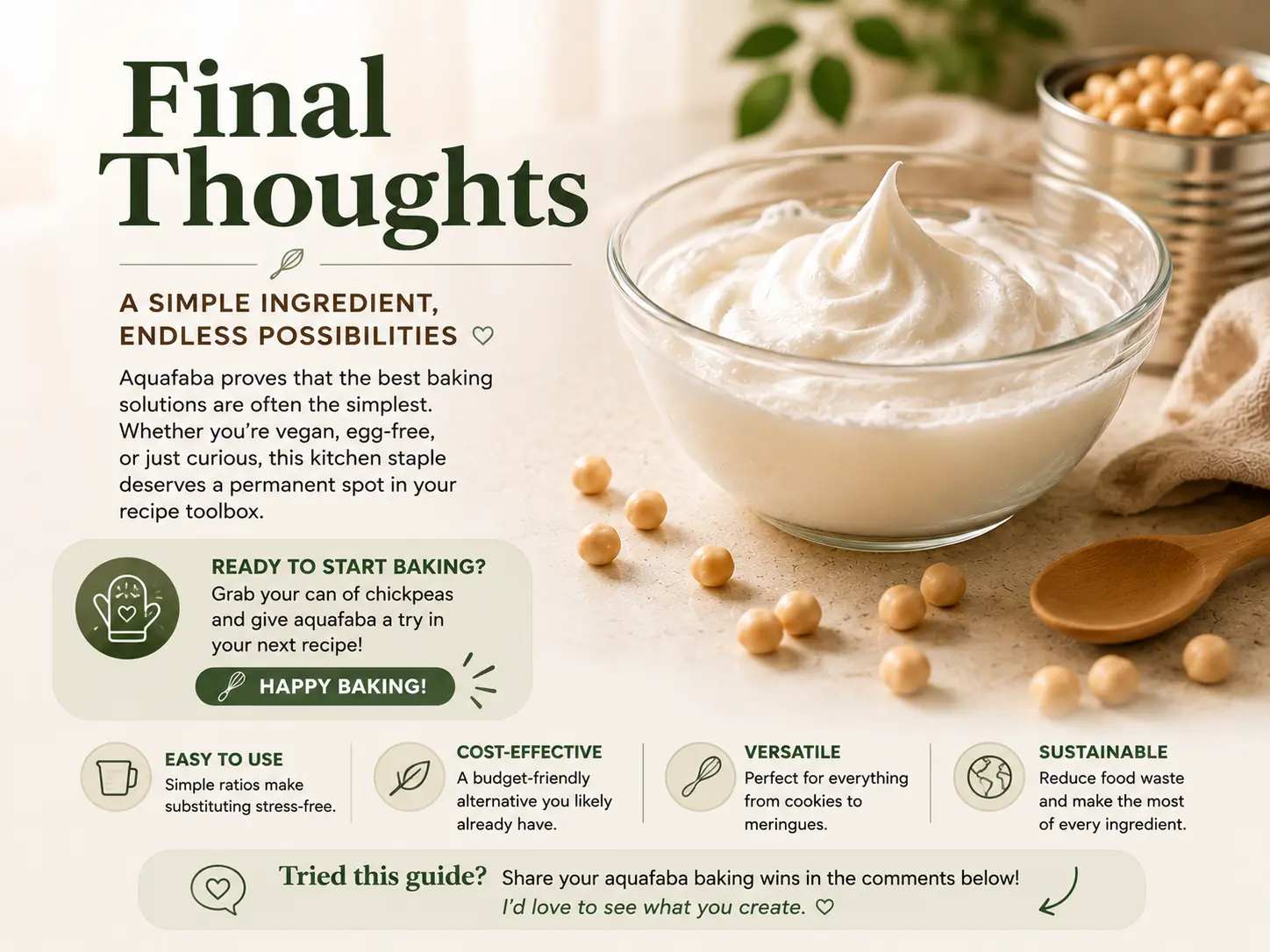
You don’t need expensive eggs to make delicious baked goods.
You need aquafaba—a liquid that’s already in your kitchen, waiting to be used.
Here’s what to do next:
📌 Save this post so you have the conversion numbers next time you need an aquafaba egg substitute ratio
🥫 Buy a can of chickpeas (or grab one you’re already planning to cook) and save that liquid
✨ Try ONE recipe with aquafaba this week—maybe cookies or a simple cake
⚖️ Measure carefully using the exact amounts in this guide (remember: 3 tablespoons per whole egg, 1/8 teaspoon cream of tartar for whipping)
🎉 Feel proud that you adapted a recipe instead of giving up
Remember: Professional chefs work with whatever ingredients they have on hand. They make substitutions constantly based on availability and budget. Home cooks can do the same thing. The aquafaba doesn’t make the dessert—you do.
Happy Baking (With Aquafaba That Actually Works)!
— Chef Amina 🍳
For additional insights on vegan baking, check out King Arthur Baking’s aquafaba guide and America’s Test Kitchen’s research on aquafaba for scientific breakdowns of how this ingredient works.