Cooking Substitutes is a blog dedicated to exploring suitable alternatives in recipes, providing helpful how-to guides, and sharing mouthwatering recipes.
We're here to make your culinary adventures even more delightful!
Egg Substitute for Frying Chicken: 7 Best Options That Actually Work
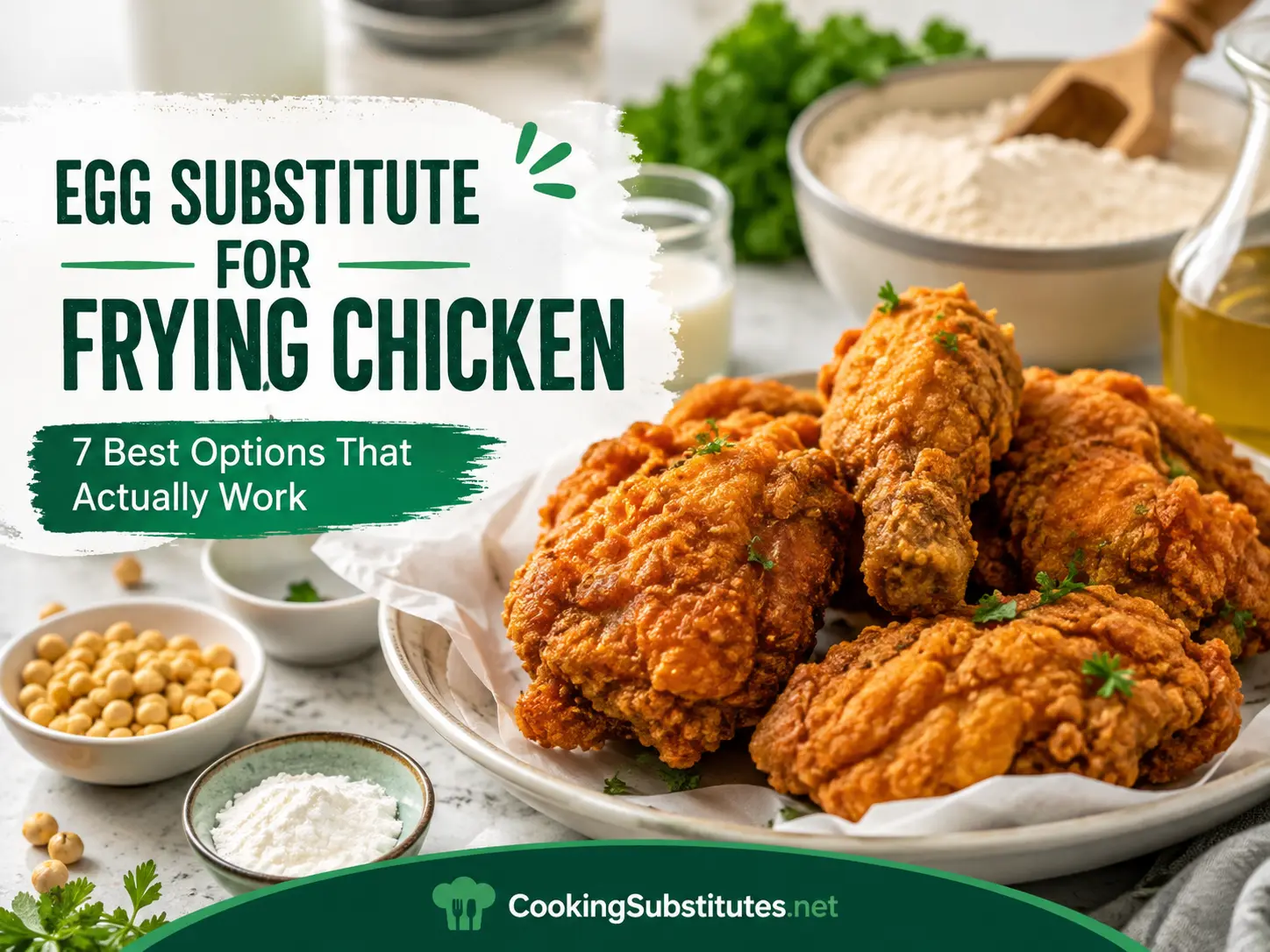
I used to think eggs were non-negotiable when frying chicken. That was until I ran out of eggs midway through prepping dinner for a group of friends—a situation I’ve learned to expect when you’re living in a tiny NYC apartment with limited pantry space. Standing in my small kitchen, I realized I had a choice: order takeout or get creative.
I grabbed what I had on hand—some buttermilk, a little cornstarch, and some creativity—and I ended up making the crispiest, most delicious fried chicken my friends had ever tasted. That’s when it clicked: the egg isn’t actually the star player when frying chicken. It’s just one way to help your coating stick.
If you’re looking for an egg substitute for frying chicken, whether because of allergies, dietary restrictions, or a last-minute pantry crisis, you’re not alone. I’ve tested every alternative imaginable in my kitchen, and I’m here to share the winners.
Why You Need an Egg Substitute for Frying Chicken
Here’s what I learned over a decade of cooking: not everyone can eat eggs, and not everyone has them on hand. Some of my best clients have severe egg allergies. Others are vegan. And honestly? Sometimes you just forget to buy them.
The role of eggs in a fried chicken recipe is actually pretty simple—they act as a binder that helps your flour coating stick to the chicken and creates that golden, crispy exterior when it hits the hot oil. The good news? Lots of things can do that job just as well, if not better.
I’ve tested all these substitute for eggs for fried chicken options in real cooking scenarios: crowded restaurant-style fry nights, camping trips where my equipment was limited, and quiet Tuesday nights testing recipes. Each one has its place, depending on what you’re trying to achieve.
1. Buttermilk: The Ultimate Game-Changer
I always reach for buttermilk first. It’s been my go-to for years, and there’s a reason why professional chefs use it constantly.
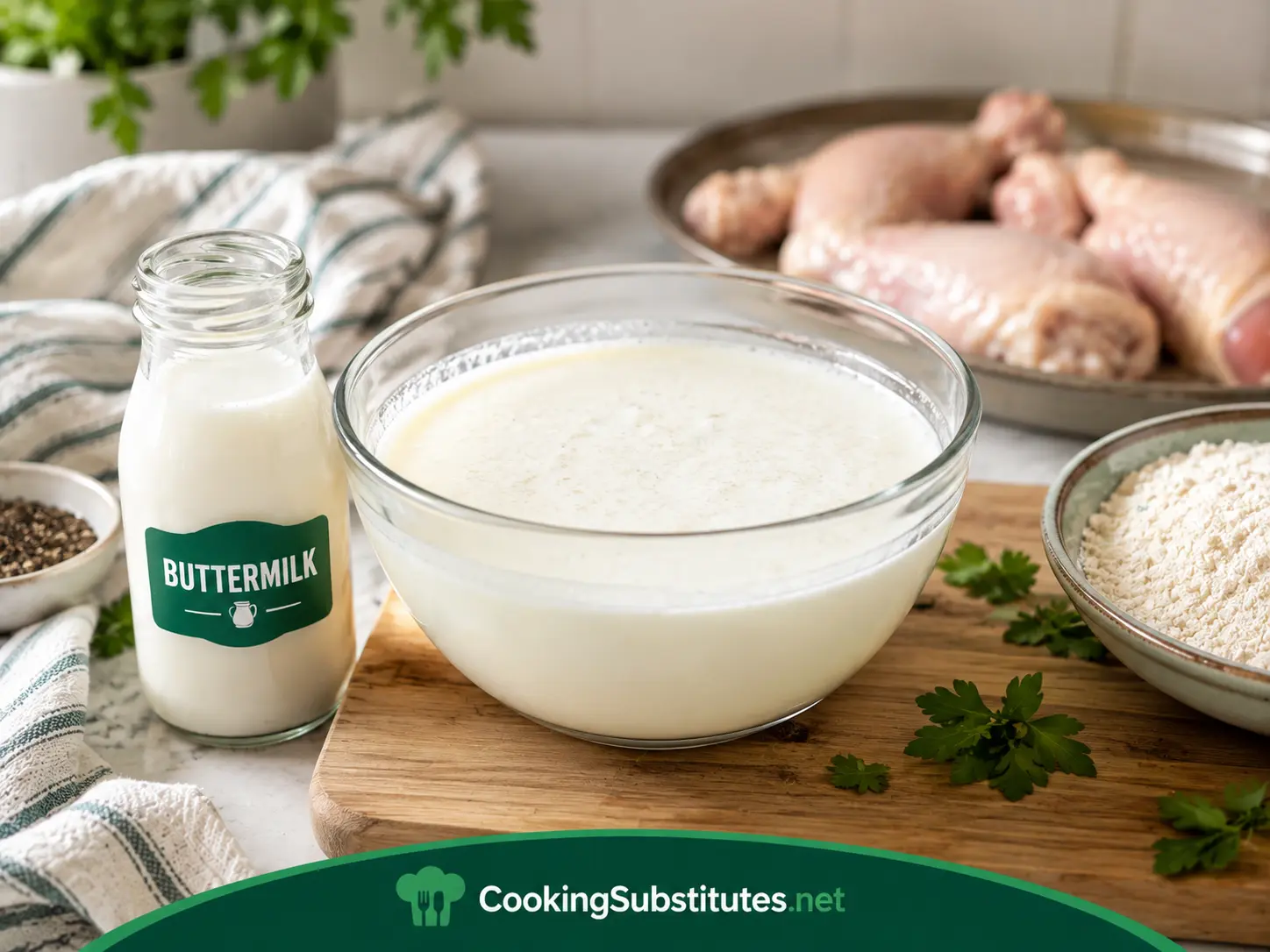
Why it works: Buttermilk is acidic, which actually tenderizes the chicken while it coats it. When I dip chicken in buttermilk, the coating adheres beautifully, and the acid helps break down the meat fibers, making every bite incredibly tender. The moisture in buttermilk also helps create a juicier chicken inside while maintaining that crispy exterior.
How to use it: Simply substitute the egg with an equal amount of buttermilk. If your recipe calls for two eggs, use a half cup of buttermilk. Dip your chicken pieces in the buttermilk, then dredge in your seasoned flour mixture.
Chef Amina’s Hack: If you don’t have buttermilk on hand, make your own by mixing regular milk with a tablespoon of lemon juice or vinegar and letting it sit for five minutes. I learned this trick when I was cooking in a small beach rental in Greece with zero access to specialty ingredients. Works every single time.
2. Milk Mixed with Cornstarch
This is honestly my second-favorite option, and I use it constantly when I want that extra-crispy coating.
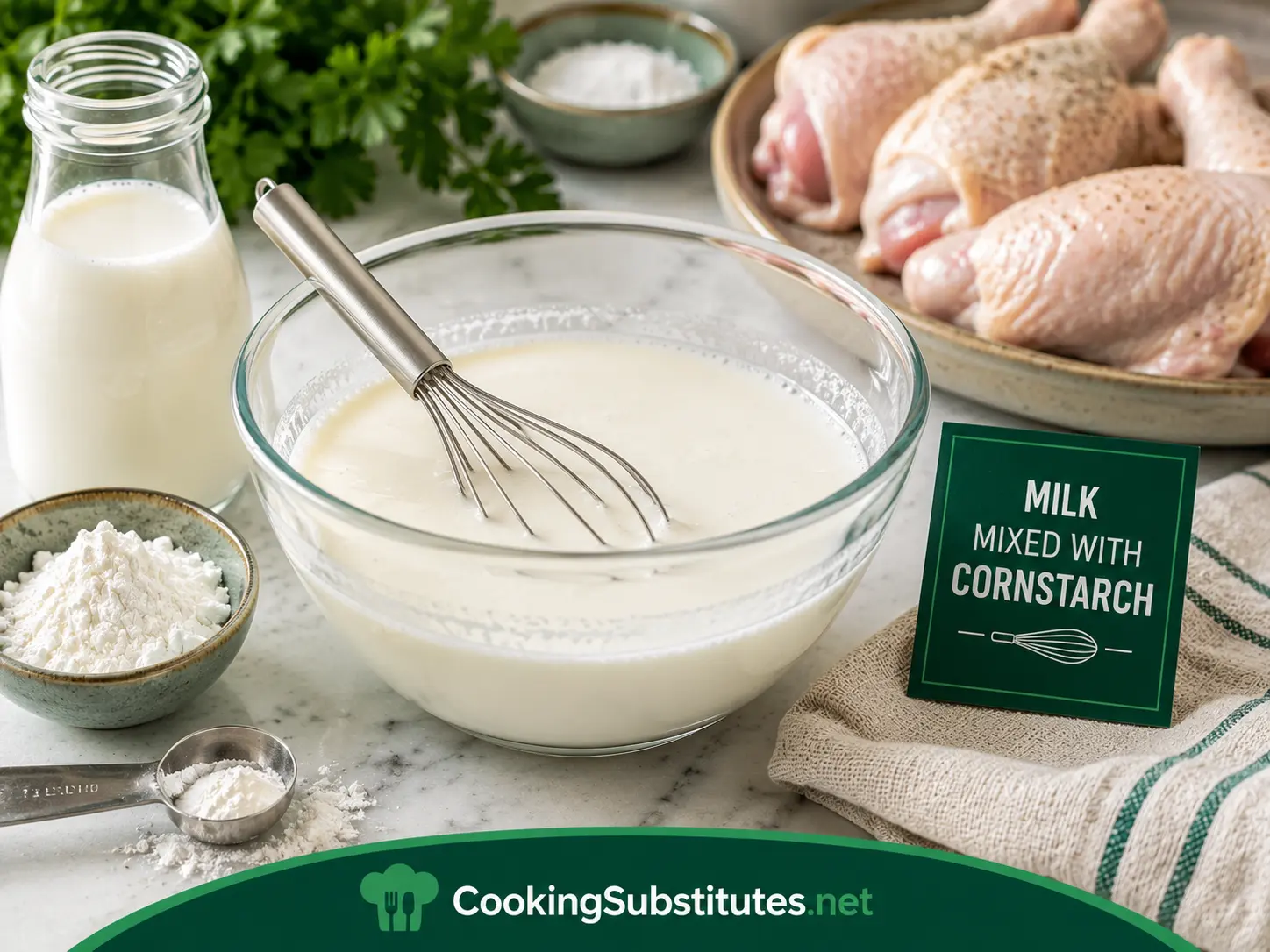
Why it works: The cornstarch in this mixture creates a crispier crust than buttermilk alone. When it hits the hot oil, it fries up almost like tempura batter—incredibly crunchy and golden. I add the cornstarch because it doesn’t develop gluten the way flour does, so it stays crispier longer.
How to use it: Mix one cup of milk with two tablespoons of cornstarch and a pinch of salt. Whisk it until completely smooth (this is important—any lumps won’t incorporate into the coating). Use this mixture just like you would eggs.
Chef Amina’s Hack – Speed Hack: Pre-mix large batches of milk and cornstarch in a container and keep it in your fridge. I do this once a week, and it cuts down my prep time significantly. Just give it a shake before using.
Pro Tip: Add a tablespoon of baking powder to your milk-cornstarch mixture. I discovered this by accident during a camping trip, and it made the crust rise and crisp up even more than usual. The baking powder releases CO2 while frying, which creates tiny air pockets in the coating.
3. Aquafaba (Chickpea Liquid)
This is the vegan secret weapon, and honestly? I was skeptical at first. Then I tested it, and I became a believer.
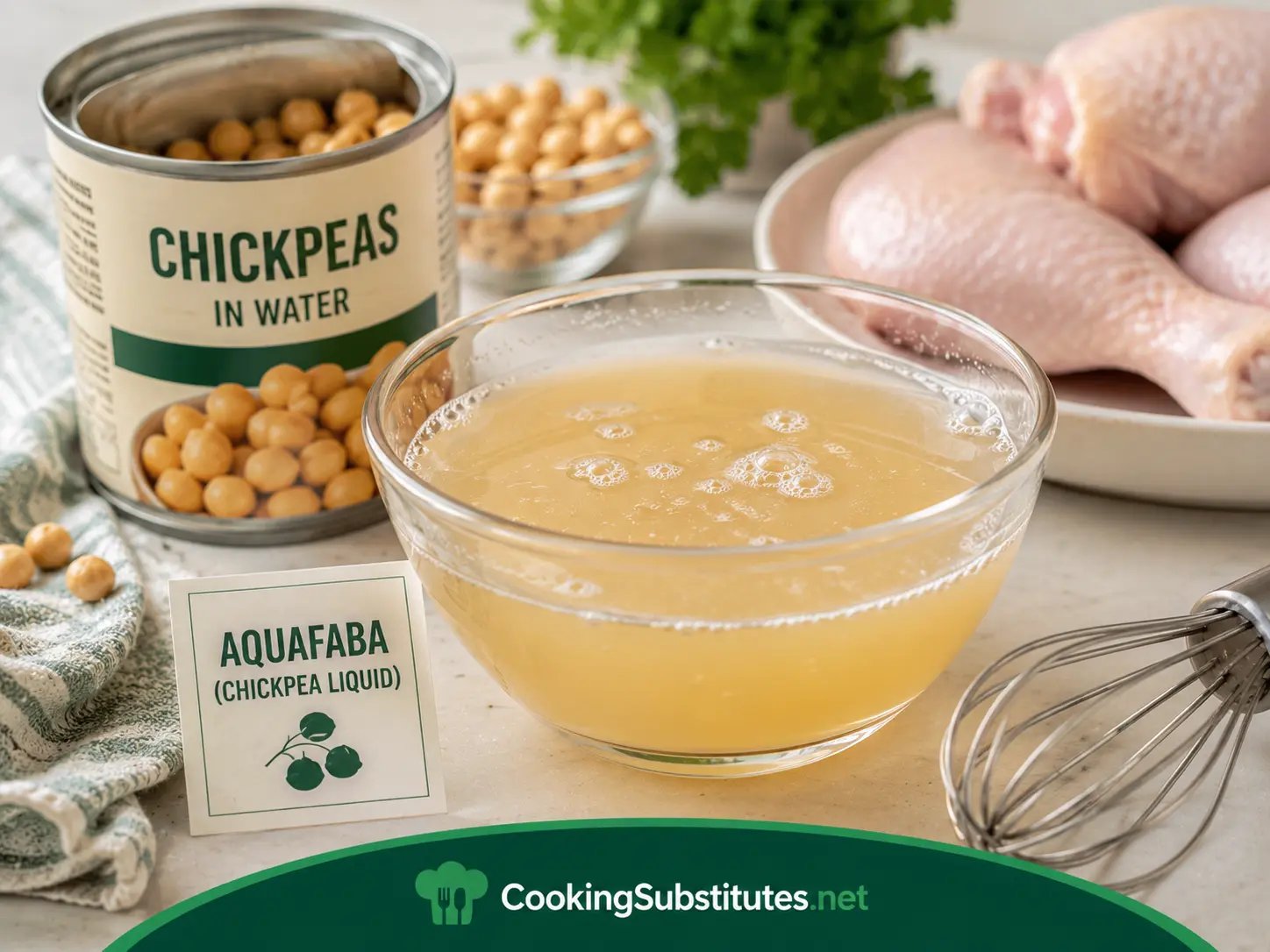
Why it works: Aquafaba—that liquid from a can of chickpeas—has natural emulsifying properties. When whipped, it can mimic egg whites incredibly well. Even not whipped, it works as a binder and creates a surprisingly good coating.
Also Read More in Detail: Aquafaba as Egg Substitute — Full Guide
How to use it: Use three tablespoons of aquafaba to replace one egg. For frying chicken specifically, you don’t need to whip it. Just use it straight from the can. It creates a coating that’s almost identical to what you’d get with eggs.
Chef Amina’s Hack – Budget Hack: Buy canned chickpeas anyway because they’re cheap and versatile. You get dinner (hummus, salads, curries) plus free frying liquid. I started doing this five years ago, and it’s saved me money while reducing waste.
Real Talk: Your fried chicken won’t look dramatically different, but it will taste incredible. The coating binds perfectly, and you get that golden-brown exterior without any eggy taste.
4. Yogurt or Greek Yogurt
Thick, creamy yogurt is underrated as a fried chicken coating agent, and I use it more often than people expect.
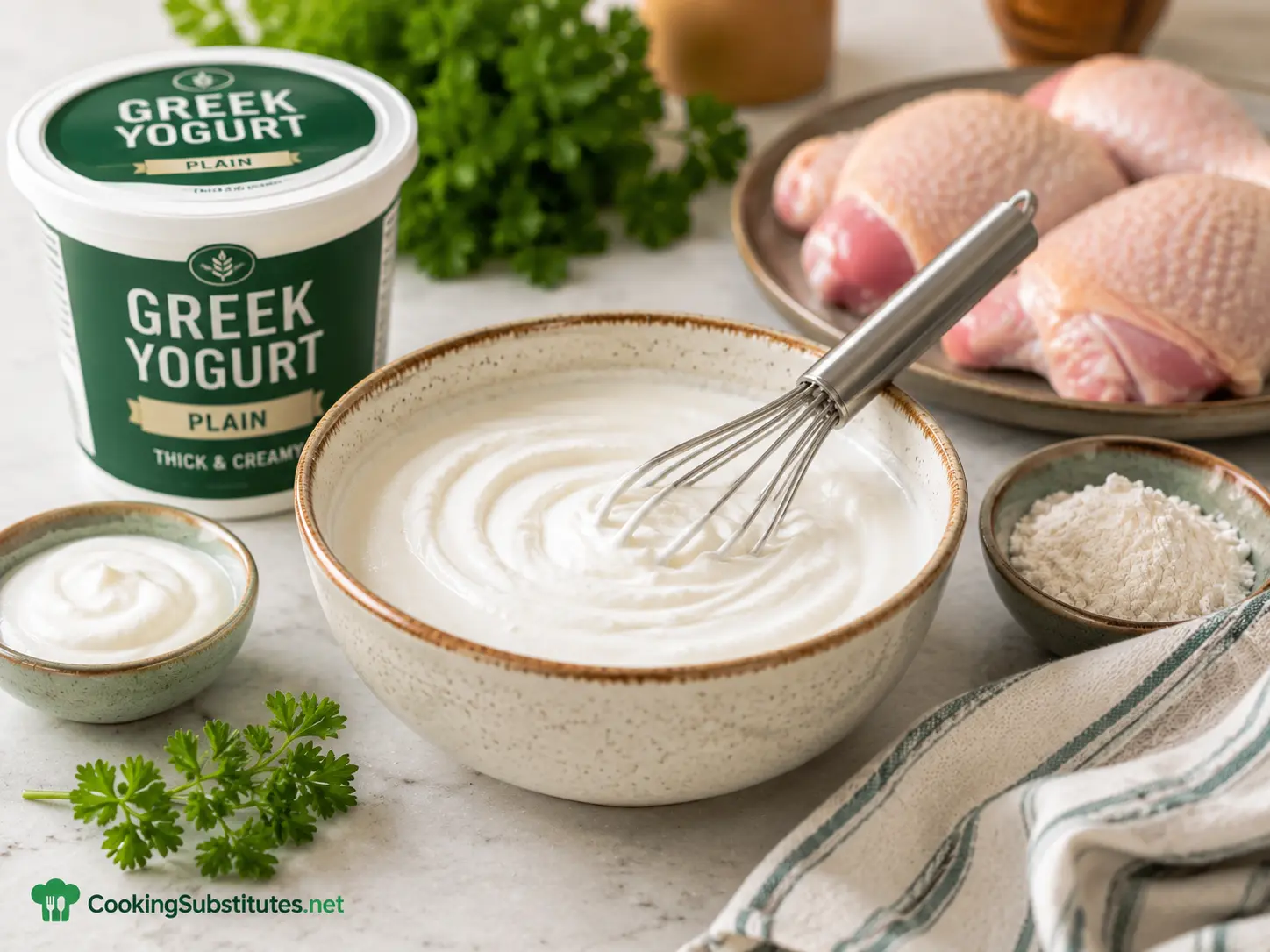
Why it works: Yogurt has the perfect viscosity—it’s thick enough to coat the chicken evenly but thin enough to work like a batter. The natural acids help tenderize the meat, similar to buttermilk. Plus, it adds a subtle tang that enhances the chicken’s flavor.
How to use it: Use equal parts yogurt to replace eggs. If your recipe calls for two eggs, use a half cup of yogurt. Mix it smooth before dipping. Greek yogurt is thicker, so you might need to thin it slightly with a little milk.
Chef Amina’s Hack – No-Chop Hack: Use yogurt straight from the container—no prep needed. When I was living in a hostel in Thailand with minimal cooking facilities, this saved me. Yogurt, flour, salt, and a pan were all I needed.
Texture Note: Yogurt creates a slightly less crispy exterior than buttermilk, but the chicken inside stays incredibly moist and tender.
5. Milk with a Beaten Chickpea Flour Slurry
This is a technique I learned from a chef friend who specializes in Indian cuisine, and it’s game-changing for extra crispy results.
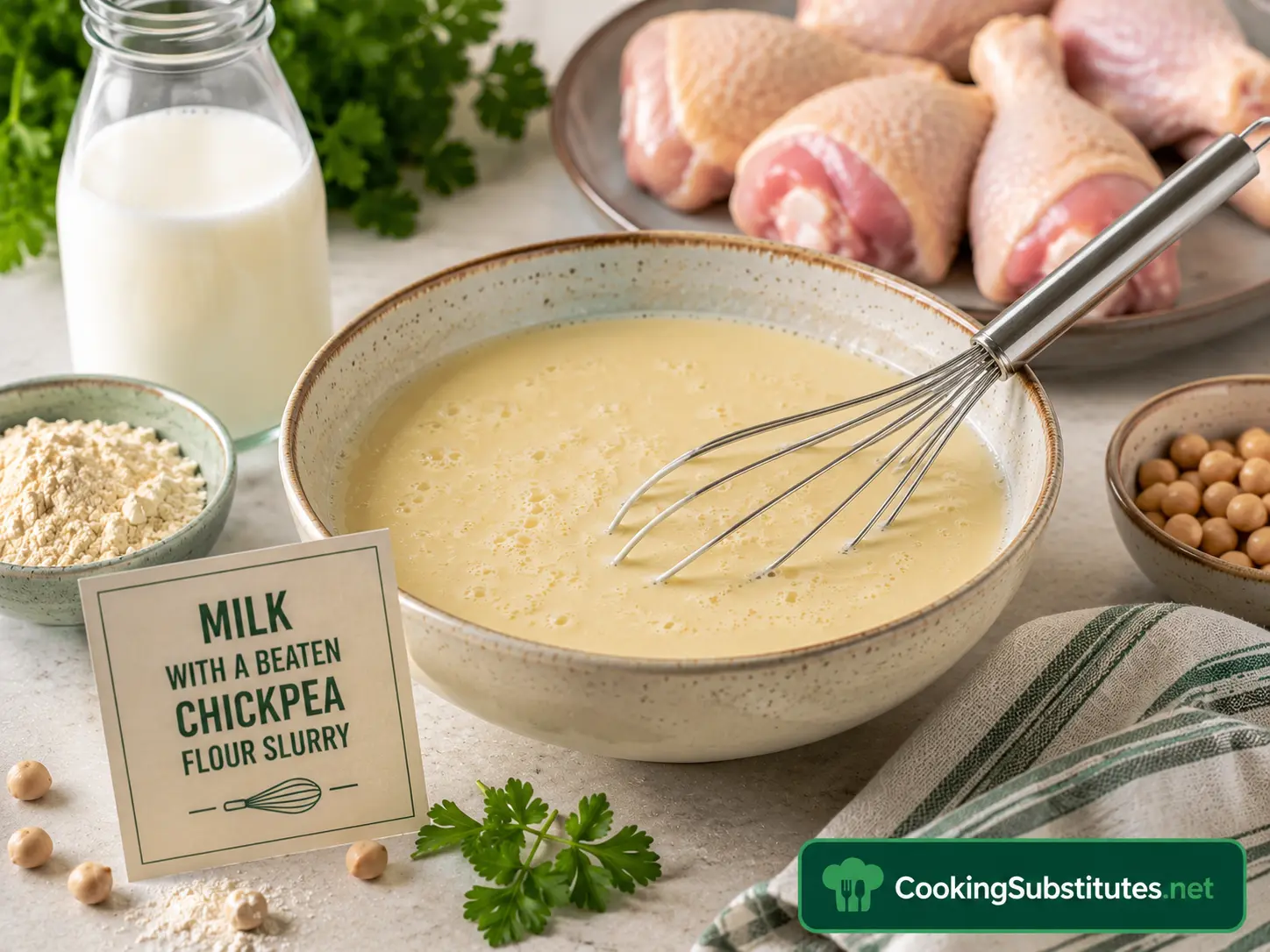
Why it works: Chickpea flour (also called gram flour or besan) has natural binding properties and creates a lighter, crispier coating than wheat flour alone. When mixed into milk, it creates a coating that’s almost like a thin batter—more protective than a dry flour coating.
How to use it: Mix one cup of milk with three tablespoons of chickpea flour and a pinch of salt. Whisk until completely smooth. Dip your chicken in this mixture, then in your seasoned flour blend.
Chef Amina’s Hack: This double-coating method creates an incredible crust. Dip in the chickpea milk batter, let it drip off for a second, then roll in seasoned flour. The flour sticks perfectly, and you get layers of crispiness.
Sourcing Note: Chickpea flour is available in most grocery stores now (check the bulk section or the international aisle). It’s also incredibly cheap—usually $2-3 per pound.
6. Coconut Milk
I know this sounds unusual, but trust me—coconut milk creates an exceptional substitute for eggs in frying chicken.
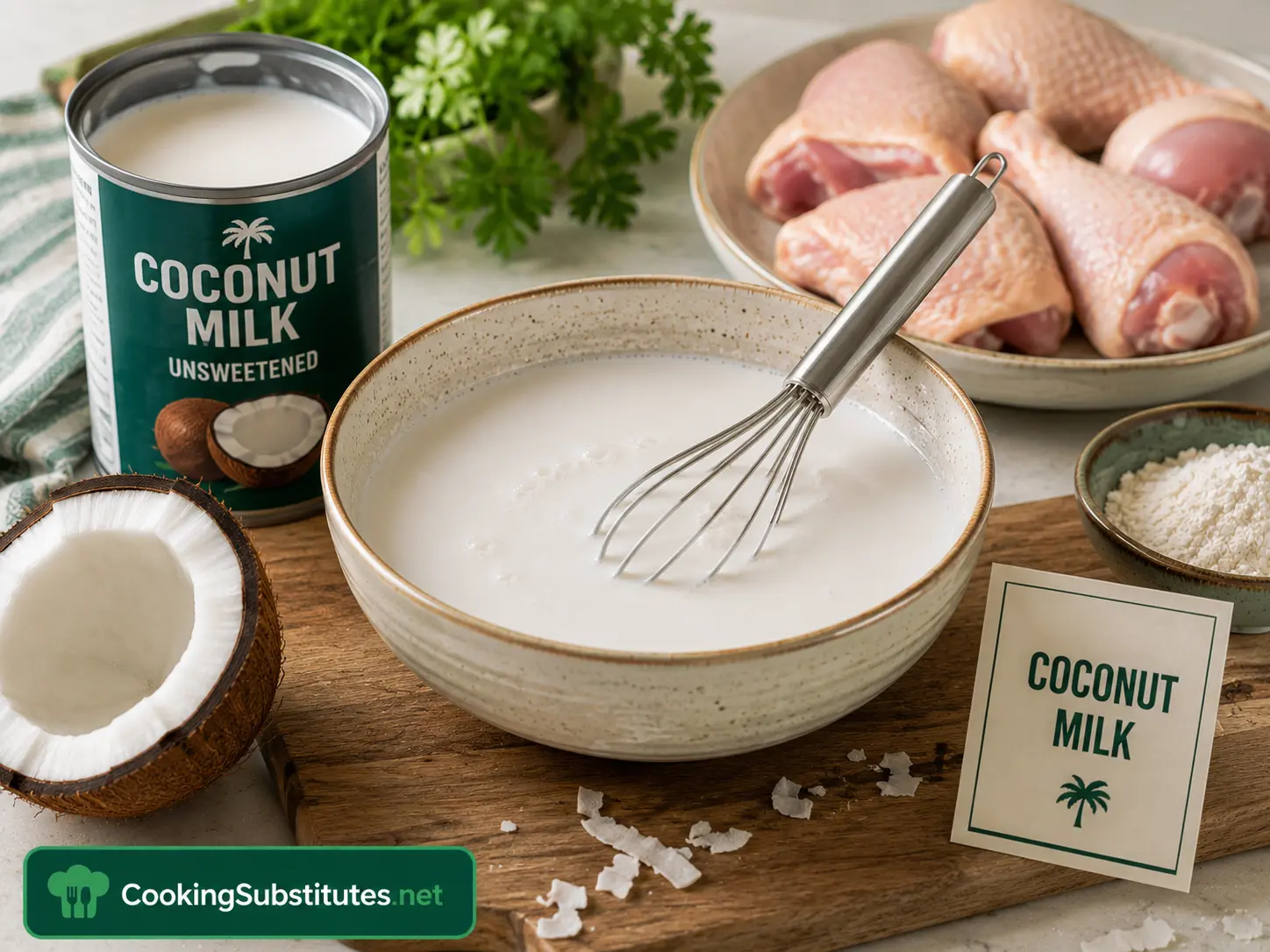
Why it works: Coconut milk has fat content (the good kind) that creates an incredibly golden, crispy coating. When I use coconut milk, the chicken fries to a deep golden brown that’s almost restaurant-quality. The natural fat in the milk also helps the coating brown more evenly.
How to use it: Use the thick part of canned coconut milk (skim off the watery part). Use equal parts coconut milk to eggs. It works best when combined with my seasoned flour—the fat helps the spices stick to the chicken.
Chef Amina’s Hack – Budget Hack: Full-fat canned coconut milk is often cheaper per ounce than fresh milk, especially if you buy it in bulk. I buy cases of it and keep them in my pantry. One can costs about $1-2 and gives you enough for multiple batches of fried chicken.
Flavor Profile: The chicken will have a slightly subtle coconut undertone, which actually pairs beautifully with Thai or Asian-inspired spice blends.
7. Arrowroot Powder with Milk
This is what I reach for when I want the absolute crispiest coating possible.
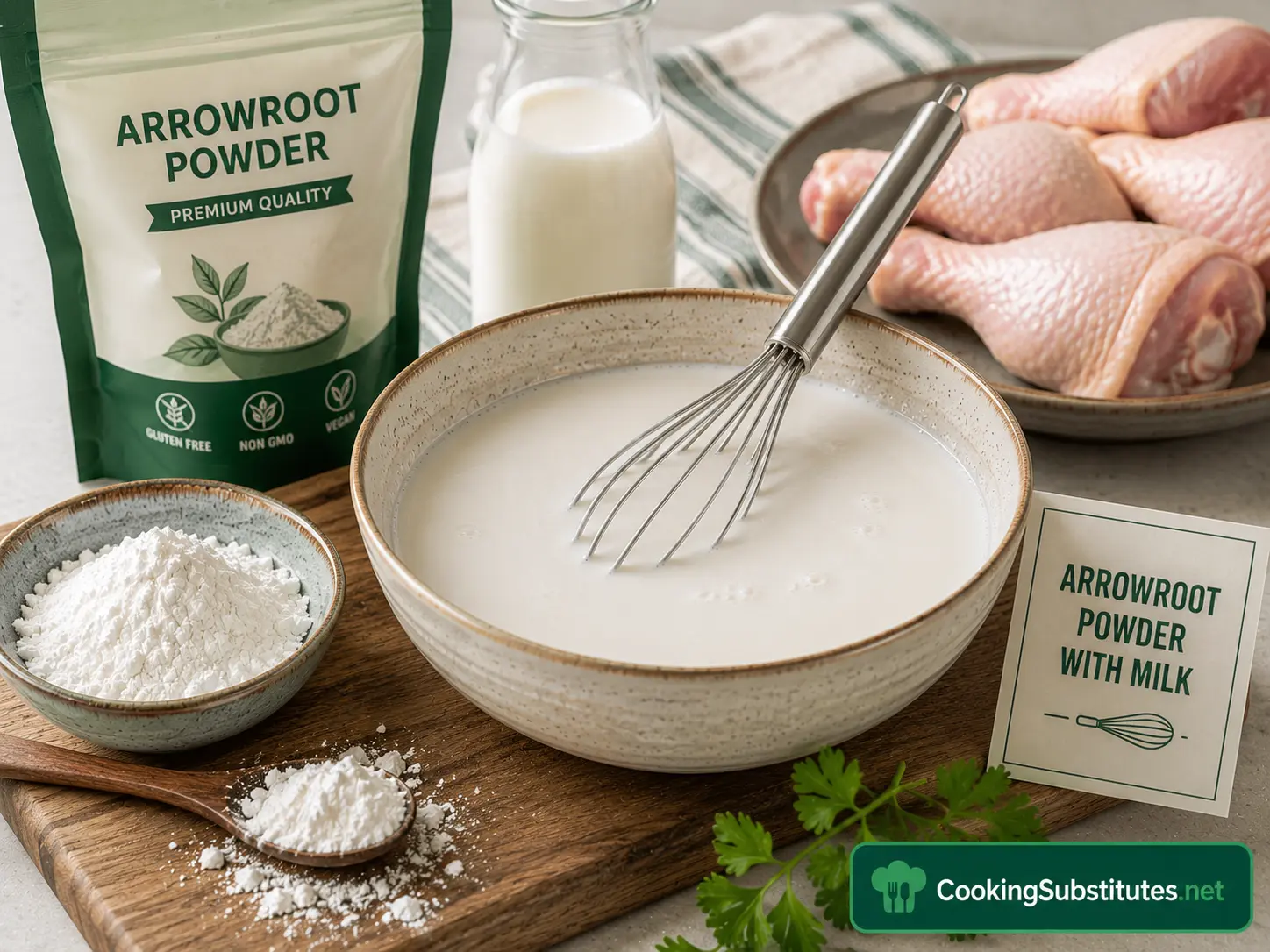
Why it works: Arrowroot powder is similar to cornstarch but creates an even crispier, more delicate crust. When combined with milk, it creates a protective barrier that fries up incredibly crisp and doesn’t absorb as much oil as regular flour.
How to use it: Mix one cup of milk with two tablespoons of arrowroot powder. Whisk until smooth. Dip chicken, then dredge in seasoned flour as usual.
Chef Amina’s Hack – Speed Hack: Keep arrowroot powder mixed with milk in a jar in your fridge. Prep batches ahead of time. On busy weeknights, I literally just grab the jar, dip, and fry. No mixing required.
The Result: You’ll notice the coating stays crispier for longer—even if your fried chicken sits for 10-15 minutes before serving, it won’t get soggy the way some coatings do.
Essential Comparisons
Quick Comparison
| Substitute | Crispiness | Best For |
|---|---|---|
| Buttermilk | Medium-High | Tender, juicy chicken |
| Milk + Cornstarch | Very High | Maximum crispiness |
| Aquafaba | Medium | Vegan/egg-free |
| Greek Yogurt | Medium | Creamy interior |
| Coconut Milk | Very High | Asian-inspired dishes |
| Arrowroot + Milk | Excellent | Extra crispy, long-lasting |
Substitution Ratios
| Substitute | For 1 Egg | For 2 Eggs |
|---|---|---|
| Buttermilk | 1/4 cup | 1/2 cup |
| Milk + Cornstarch | 1/4 cup milk + 1/2 tsp cornstarch | 1/2 cup milk + 1 tbsp cornstarch |
| Aquafaba | 3 tbsp | 6 tbsp |
| Greek Yogurt | 1/4 cup | 1/2 cup |
| Coconut Milk | 1/4 cup | 1/2 cup |
| Arrowroot + Milk | 1/4 cup milk + 1/2 tsp arrowroot | 1/2 cup milk + 1 tbsp arrowroot |
Allergen Info
| Substitute | Egg-Free | Dairy-Free | Vegan |
|---|---|---|---|
| Buttermilk | ✅ | ❌ | ❌ |
| Milk + Cornstarch | ✅ | ❌ | ❌ |
| Aquafaba | ✅ | ✅ | ✅ |
| Greek Yogurt | ✅ | ❌ | ❌ |
| Coconut Milk | ✅ | ✅ | ✅ |
| Arrowroot + Milk | ✅ | ❌ | ❌ |
Products I Actually Use
These are the products I genuinely use in my kitchen for making the best fried chicken possible:
1. Cast Iron Skillet (12-inch Lodge Cast Iron Skillet)
I use my cast iron skillet constantly for fried chicken, and I’d replace it if anything happened to it. It distributes heat evenly, gets incredibly hot, and creates the most beautiful golden-brown exterior. The seasoned surface is naturally non-stick after a few uses. At around $20-40, it’s the best investment I’ve made for my kitchen.
2. Instant-Read Meat Thermometer
When I started testing different egg substitutes, I realized I needed to know exactly when my chicken was done—165°F internally. This thermometer reads in 2-3 seconds, which means less heat loss and more consistent results. It’s accurate, durable, and costs around $15-20. I’ve had the same one for three years.
3. Splatter Screen (Stainless Steel Splatter Screen)
Here’s the real talk: frying chicken is messy. When I’m frying with buttermilk, milk, or coconut milk based coatings, oil splatters everywhere. This stainless steel screen sits on top of your skillet and catches 90% of the splatter. It also lets steam escape so your coating stays crisp. Around $20-30, and it’s saved me from countless oil burns.
Can I Use Milk Instead of Eggs for Fried Chicken?
Yes, absolutely. I use milk-based coatings constantly. The milk alone works—it provides the moisture needed for the flour to stick to the chicken. However, I usually add something to the milk (cornstarch, arrowroot powder, or chickpea flour) to make the coating crispier and more durable. Plain milk creates a decent coating, but it can absorb oil and get soggy faster than the alternatives I’ve mentioned.
What About These Common Kitchen Items?
Over the years, I’ve tested some things that seemed like they might work but actually didn’t. Worth knowing:
- Water: Doesn’t work well—it evaporates too quickly and doesn’t create a proper binding layer
- Oil: Creates an overly greasy coating that’s hard to control
- Mayonnaise: Surprisingly, it works okay, but it burns easily and adds a strong flavor that doesn’t fit most recipes
- Soy sauce: Good for flavor but too thin to coat properly on its own
When you’re working with egg alternatives, many of my readers also look for other milk substitutes for cooking. The same principles apply—you’re replacing a binder or liquid with something that has similar properties. If you’re vegan or dairy-free and using aquafaba, you might also be interested in exploring more cooking substitutes for your favorite recipes.
I’ve also tested these alternatives in other fried dishes, and the same buttermilk and milk-cornstarch methods work beautifully when you’re frying dumplings or making other battered items.
Frequently Asked Questions
What to use instead of eggs when frying chicken?
The best options are buttermilk, milk mixed with cornstarch, or aquafaba. All three create excellent coatings that bind the flour and create a crispy exterior. Choose based on what you have available and whether you prefer extra crispiness (cornstarch) or tenderness (buttermilk).
How can I fry chicken without eggs?
Use any of the seven methods I’ve outlined above. Buttermilk is my top choice because it tenderizes while it coats. Simply dip your chicken pieces in your chosen liquid, let the excess drip off, then dredge in seasoned flour and fry as normal.
What can I use to bind fried chicken without eggs?
Milk, buttermilk, yogurt, aquafaba, coconut milk, and any flour-milk combination will bind the coating to the chicken. The binding happens because the starch in the flour hydrates with the liquid and sticks to the protein in the chicken.
Can I use regular milk instead of eggs for breading chicken?
Yes, regular milk works fine as a substitute for eggs for fried chicken. I recommend mixing it with cornstarch or arrowroot powder to improve the texture and crispiness of the coating.
Does milk make fried chicken crispy?
Milk alone creates a decent coating, but it can absorb oil during frying. When you add cornstarch or arrowroot powder to the milk, you significantly improve crispiness. That’s why I usually recommend the milk-cornstarch combination over plain milk.
Is buttermilk better than milk for frying chicken?
Buttermilk is better if you want tender, juicy chicken because the acidity helps break down muscle fibers. Milk mixed with cornstarch is better if you prioritize crispy coating. I use buttermilk about 70% of the time because the tenderness is worth slightly less crispiness.
What happens if I fry chicken without any binding agent?
The flour coating won’t stick properly to the chicken and will fall off into the oil. You’ll end up with exposed chicken skin and loose flour particles in your cooking oil. Always use some kind of liquid binder.
How long can I marinate chicken in my chosen substitute?
I marinate chicken in buttermilk for up to 24 hours—the longer the better for tenderness. For milk-based mixtures without the acid, 30 minutes to 2 hours is ideal. Longer than that and the coating gets soggy.
Do I need to refrigerate chicken in the coating liquid?
Yes, for food safety. Keep coated chicken in the fridge until you’re ready to fry. I usually prep my chicken in the morning and fry it for dinner.
Can I use almond milk or oat milk for frying chicken?
Yes, though they work slightly differently than dairy milk. Almond milk is thinner, so add an extra teaspoon of cornstarch. Oat milk is thicker and works almost like buttermilk. Both work, but I prefer dairy options because they’re more predictable.
Final Thoughts: Your Kitchen, Your Rules
Here’s what I want you to remember: the egg isn’t what makes fried chicken delicious. You are.
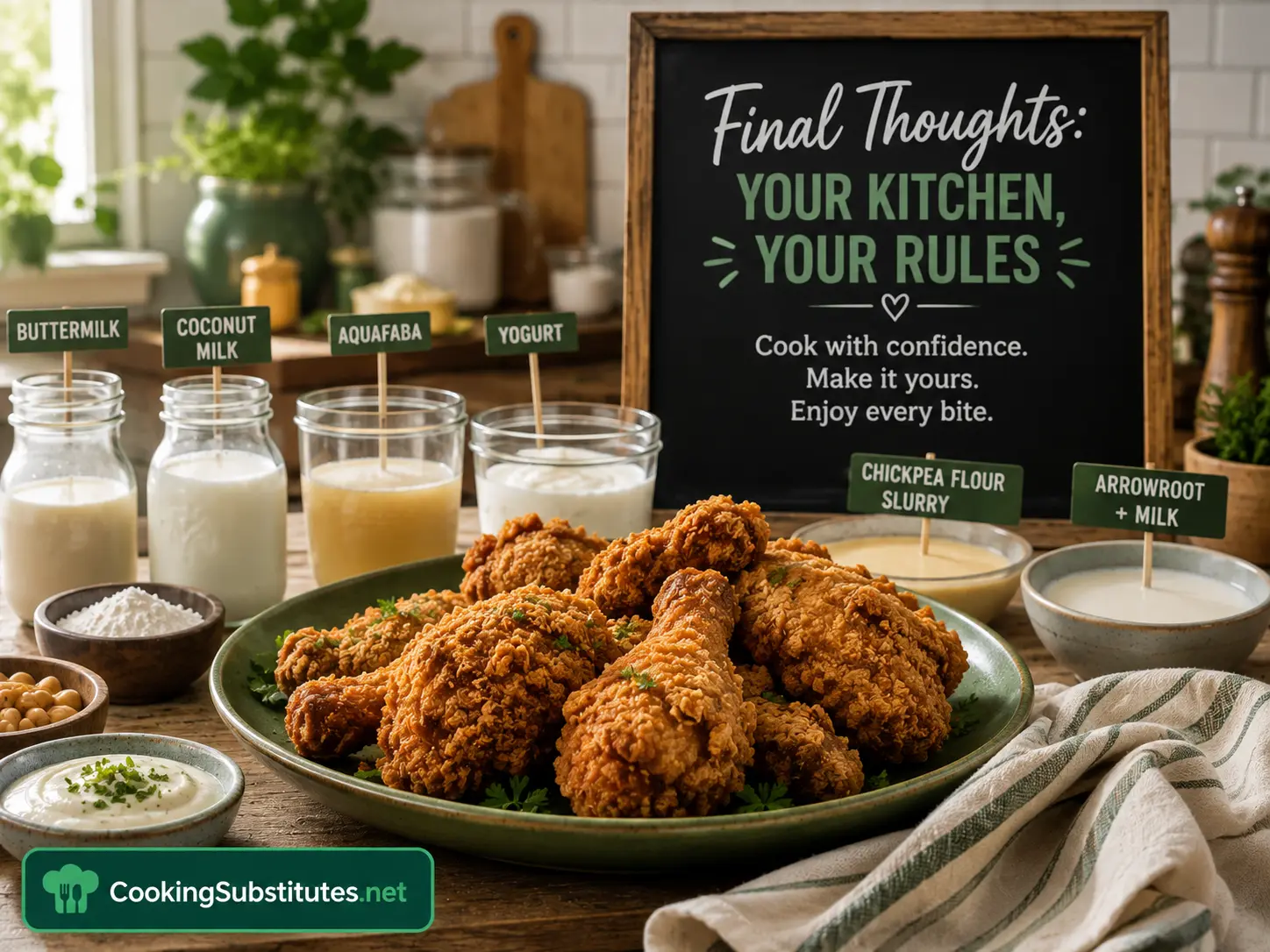
When I was first learning to cook, I thought recipes were absolute rules. Use eggs, or your fried chicken won’t work. Use a specific pan, or it won’t turn out. After cooking in a hundred different kitchens, in tiny apartments, at music festivals, and on camping trips, I learned something better: the fundamentals matter more than the specific ingredients.
What matters when you’re frying chicken is having a binder that helps the flour stick, heat that’s hot enough to create a golden crust, and oil that’s at the right temperature. Whether that binder is eggs, buttermilk, milk with cornstarch, or aquafaba is almost secondary.
I’ve taught hundreds of people to make incredible fried chicken using egg substitutes for frying chicken because that’s what they needed. I’ve had students with egg allergies make fried chicken that impressed their families. I’ve watched vegan friends finally get to eat the crispy, juicy fried chicken they’d been craving.
Here’s what to do next:
📌 Pin this post so you have it next time a fried chicken recipe calls for eggs you don’t have
Check your pantry right now and identify which substitute you already have on hand
Make one batch this week using one of these egg alternatives
Adjust based on what you learn—if you want more crispiness, add cornstarch next time; if you want more tenderness, use buttermilk
Feel proud that you adapted instead of giving up
Remember: Professional chefs adapt recipes constantly based on available ingredients and equipment. Home cooks can too. You don’t need eggs to make amazing fried chicken. You need confidence and the right substitute for eggs for fried chicken.
Happy frying with whatever coating you have on hand!
— Chef Amina 🍳