
Cooking Substitutes is a blog dedicated to exploring suitable alternatives in recipes, providing helpful how-to guides, and sharing mouthwatering recipes.
We're here to make your culinary adventures even more delightful!
🍓 The Best Strawberry Rhubarb Pie Recipe (Sweet, Tart & Never Runny!)
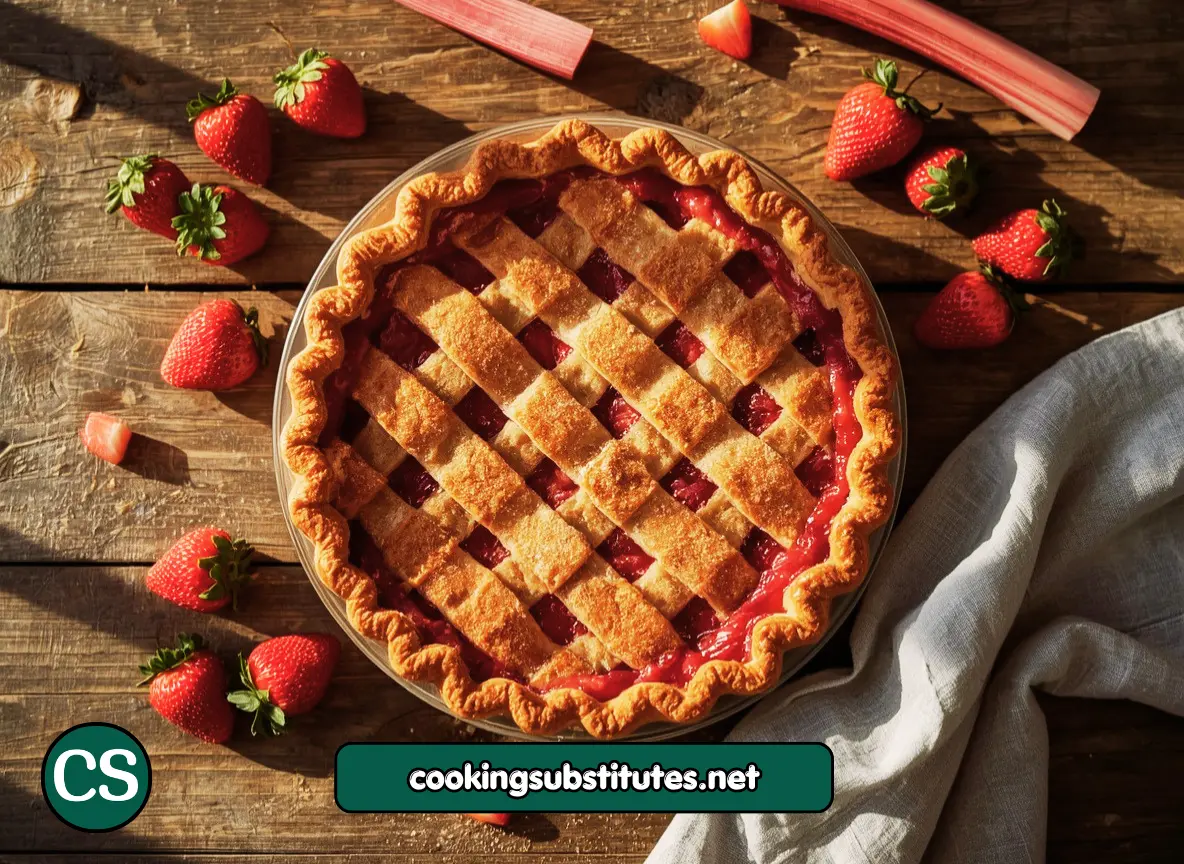
Every summer, the moment I spot rhubarb at my local farmers market, I know exactly what I’m making. My strawberry rhubarb pie recipe has been on repeat in my kitchen for over a decade now, and I still get excited every single time I pull it out of the oven. That deep pink filling bubbling through a golden, flaky crust — there is nothing quite like it.
I still remember the first time I made this pie. I was cooking in a tiny apartment kitchen with a cheap oven that ran hot. My filling was soupy, my crust was pale, and honestly, the whole thing looked like a sad mess. But I didn’t give up. I kept testing, adjusting, and figuring out what actually works — and now, every slice comes out perfectly thick, glossy, and just the right amount of sweet-tart. I’m sharing everything I know so you can skip the trial and error I went through.
Whether this is your first time working with rhubarb or you’ve made fresh strawberry pie a hundred times, this recipe is built for real kitchens and real people. No fancy equipment. No complicated techniques. Just a stunning, delicious pie that tastes like summer on a plate.
What Is Rhubarb and Why Does It Work So Well With Strawberries?
If you’ve never cooked with rhubarb before, welcome! Rhubarb is a vegetable (yes, a vegetable!) that looks like pink or red celery. It’s extremely tart on its own — almost shockingly so — but when you pair it with sweet strawberries and the right amount of sugar, something magical happens.
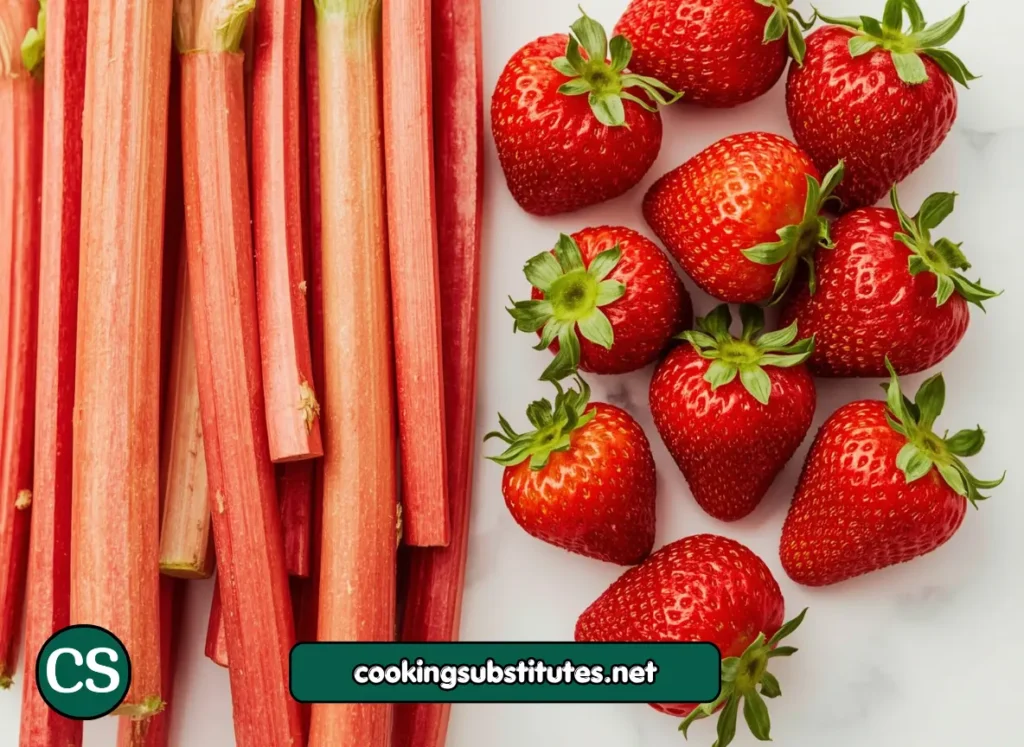
The tartness of the rhubarb balances out the sweetness of the strawberries. The result is a strawberry rhubarb pie filling that’s bright, layered, and complex. It doesn’t taste flat or one-note like a plain strawberry pie filling recipe would. The rhubarb also breaks down as it bakes and creates this jammy, luscious texture that holds the filling together beautifully.
I’ve used fresh rhubarb and frozen rhubarb in this recipe, and I’ve also played around with strawberry rhubarb crisp as a filling variation (more on that below). Both fresh and frozen work — the key is how you handle the liquid, which I’ll walk you through step by step.
Why This Recipe Works
There are three things I do differently than most recipes that make this pie stand out:
I macerate the fruit first. I toss the strawberries and rhubarb with sugar and let them sit for 30 minutes. They release a ton of liquid. I drain most of that liquid off before it goes into the crust. This one step alone is the reason my pie sets up perfectly every single time and doesn’t turn into a puddle.
I use cornstarch as my thickener. Not flour, not tapioca. Cornstarch gives you a clear, glossy filling that slices cleanly. I’ll talk more about the cornstarch vs. flour debate below.
I bake it on a hot sheet pan. I preheat a sheet pan in the oven, then set my pie dish right on top. That burst of bottom heat sets the lower crust immediately and keeps it from going soggy. This tip alone changed everything for me.
Ingredients You’ll Need
For the Filling:
- 2 cups fresh rhubarb, cut into ½-inch pieces
- 2 cups fresh strawberries, hulled and sliced
- 1 cup granulated sugar
- 3 tablespoons cornstarch
- 1 tablespoon lemon juice
- 1 teaspoon vanilla extract
- Pinch of salt
- 2 tablespoons unsalted butter, cut into small pieces
For the Crust:
- 2½ cups all-purpose flour
- 1 tablespoon granulated sugar
- 1 teaspoon salt
- 1 cup unsalted butter, cold and cubed
- 6–8 tablespoons ice cold water
For Finishing:
- 1 egg, beaten (for egg wash)
- 1 tablespoon coarse sugar (for topping)
How to Make Strawberry Rhubarb Pie — Step by Step
Step 1: Make the Pie Crust
I combine flour, sugar, and salt in a large bowl. Then I add my cold, cubed butter and use a pastry cutter to work it in until the mixture looks like coarse crumbs with some pea-sized butter chunks still visible. Those chunks are what create flaky layers in the baked crust — don’t overwork it.
I add ice water one tablespoon at a time, mixing gently with a fork after each addition until the dough just comes together. I divide it into two discs, wrap them in plastic, and refrigerate for at least one hour. Cold dough is everything. Don’t skip this step.
Step 2: Macerate the Fruit
I toss my sliced strawberries and rhubarb pieces with ¾ cup of the sugar in a large bowl. I let this sit for 30 minutes, stirring every now and then. By the end, there’s a significant amount of pink liquid pooled at the bottom. I pour off most of that liquid (I save it to drizzle over vanilla ice cream — it’s incredible). This step removes excess moisture before it even enters the pie.
Step 3: Season the Filling
To the drained fruit, I add the remaining ¼ cup sugar, cornstarch, lemon juice, vanilla extract, and a pinch of salt. I toss everything together gently until the fruit is evenly coated with no white streaks of cornstarch visible.
Step 4: Roll Out the Crust
I take my first dough disc out of the refrigerator and let it sit for five minutes. On a lightly floured surface, I roll it out to about a 12-inch circle. I carefully transfer it into my 9-inch pie dish, pressing it gently into the bottom and sides. I leave about a ½-inch overhang around the edges.
Step 5: Add the Filling
I pour the fruit filling into the prepared crust and spread it out evenly. I dot the top of the filling with small pieces of cold butter — this adds richness and helps the filling come together as it bakes.
Step 6: Add the Top Crust
I roll out the second dough disc and drape it over the top. I pinch the top and bottom edges together, roll them under, and crimp them decoratively. I cut several vents in the top — this is not optional. The steam has to escape or your crust will puff up unevenly and the filling won’t set correctly.
Step 7: Egg Wash and Bake
I brush the entire top crust with beaten egg and sprinkle it generously with coarse sugar. This gives you that gorgeous, bakery-golden color. I bake on a preheated sheet pan at 425°F for 20 minutes, then reduce the temperature to 375°F and bake for another 40–45 minutes. The pie is done when the crust is deep golden and the filling is actively bubbling through the vents. Not just “slightly bubbling” — I mean really bubbling. That bubble tells you the cornstarch has fully activated and your filling will set.
Step 8: Cool Completely
This is the hardest step. I let my pie cool on a wire rack for at least 2 to 3 hours before slicing. I know. It smells incredible and you want to dig in immediately. But if you cut into a hot pie, the filling hasn’t finished setting and it will pour out everywhere. Trust the process. The wait is worth it every single time.
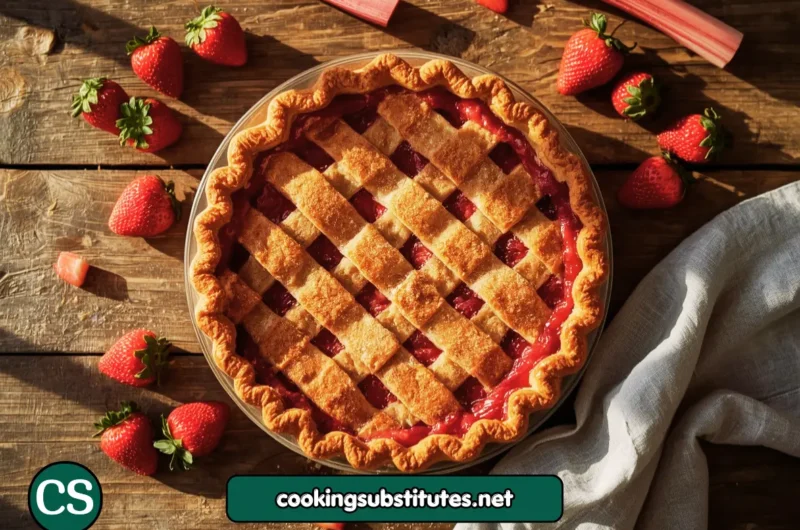
🍓 Strawberry Rhubarb Pie Recipe Card
Course: DessertCuisine: AmericanDifficulty: IntermediateServings
8
servingsPrep time
45
minutesCooking time
1
hourCalories
380
kcalThis is the pie I make every summer the moment rhubarb shows up at the market. Sweet, tart, glossy filling in a flaky butter crust — it’s the kind of dessert that makes people close their eyes when they take the first bite.
Ingredients
- For the Crust:
1 tablespoon granulated sugar
1 teaspoon salt
1 cup unsalted butter, cold and cut into cubes
6–8 tablespoons ice cold water
- For the Filling:
2 cups fresh rhubarb, cut into ½-inch pieces
2 cups fresh strawberries, hulled and sliced
3 tablespoons cornstarch
1 tablespoon fresh lemon juice
1 teaspoon vanilla extract
Pinch of salt
2 tablespoons unsalted butter, cut into small pieces
- For Finishing:
1 egg, beaten
1 tablespoon coarse sugar
Directions
- In a large bowl, whisk together flour, sugar, and salt. Add cold butter cubes and use a pastry cutter to work butter into flour until you have coarse crumbs with some pea-sized butter pieces remaining.
- Add ice water one tablespoon at a time, mixing gently with a fork until dough just comes together. Divide into two equal discs, wrap in plastic, and refrigerate for at least 1 hour.
- Place rhubarb and strawberries in a large bowl. Toss with ¾ cup sugar. Let sit 30 minutes, stirring occasionally. Drain and discard most of the released liquid.
- Add remaining ¼ cup sugar, cornstarch, lemon juice, vanilla, and salt to the drained fruit. Toss until evenly coated.
- Preheat oven to 425°F. Place a sheet pan on the lower rack to preheat along with the oven.
- Roll out first dough disc to a 12-inch circle on a floured surface. Transfer to a 9-inch pie dish. Press gently into the dish, leaving ½-inch overhang.
- Pour filling into the crust. Dot the top of the filling with small pieces of cold butter.
- Roll out second dough disc. Drape over the filling. Pinch and crimp the edges together. Cut 5–6 vents in the top crust.
- Brush top crust with beaten egg. Sprinkle generously with coarse sugar.
- Place pie on the preheated sheet pan. Bake at 425°F for 20 minutes, then reduce heat to 375°F and bake for 40–45 more minutes until crust is deep golden and filling is bubbling actively through the vents.
- Transfer to a wire rack and cool completely for at least 2–3 hours before slicing.
Notes
- Use very cold butter and ice water for the flakiest crust — warm ingredients are the enemy of good pie pastry. If your crust edges are browning too quickly, cover them loosely with foil after the first 30 minutes of baking.
🍓 My Hack: The Pre-Drain Method
Here is my number one tip that nobody told me when I was first learning to bake pie — drain your fruit before it goes in the crust.
I discovered this by accident. One day I was macerating my fruit and got distracted by a phone call. By the time I came back, there was nearly half a cup of liquid sitting at the bottom of that bowl. On a whim, I poured most of it off before adding the thickener. The result was the best-set, cleanest-slicing pie I had ever made.
Now I do it every single time. I macerate, I drain, and I only add the thickener to the drained fruit. You remove the problem liquid before it ever becomes a problem. Combined with the hot sheet pan trick I mentioned above, this two-step approach gives you a pie filling that slices like a dream.
Budget Hack: Fresh rhubarb gets pricey when it’s out of season. I buy extra in summer, chop it into ½-inch pieces, and freeze it in 2-cup portions. Frozen works just as well as fresh — just add an extra tablespoon of cornstarch to compensate for the extra moisture that comes with frozen fruit. You’ll have strawberry rhubarb recipes ready to make all year long.
🍓 My Ingredient Substitutes
I cook in all kinds of situations — tiny kitchens, travel kitchens, middle of the week with a half-stocked pantry. Here’s what I’ve used when I didn’t have the exact ingredients:
No fresh rhubarb? Frozen rhubarb works perfectly. Don’t thaw it — toss it straight into the sugar and let it macerate. It will release plenty of liquid and work just like fresh. If you absolutely can’t find rhubarb at all, try mixing tart green apple pieces with a bit of extra lemon juice. It won’t be quite the same, but it gives you that necessary tartness against the sweet strawberries in a pinch.
No fresh strawberries? Frozen strawberries are completely fine here. I’d suggest using slightly less sugar since frozen berries tend to be sweeter and softer. You can also check out my tips on strawberry pie filling recipe for more filling ideas.
No cornstarch? You can use all-purpose flour as a thickener — you’ll need about 4–5 tablespoons instead of 3. Flour gives a slightly cloudier, less glossy filling but it still sets up well. Tapioca starch is another solid swap at the same ratio as cornstarch.
No butter for the crust? I’ve made this crust with cold vegetable shortening when I was out of butter. The texture is a little different — slightly more tender, less flavorful — but it works in a pinch. A 50/50 mix of butter and shortening is actually a classic combo that many bakers swear by.
No egg for egg wash? Brush the crust with heavy cream or even just plain milk. You won’t get quite the same deep golden color, but it still browns nicely and gives that shiny finish. If you’re dairy-free, a little maple syrup brushed lightly on top works surprisingly well.
Gluten-free option? I’ve tested this with a 1:1 gluten-free flour blend for my gluten-free baking experiments. It works! The crust is slightly more delicate to handle, so I keep everything very cold and work quickly. Check out my Gluten Free Christmas Cake recipe for more of my gluten-free baking tips that translate to pies.
🥧 3 Tools That Make Strawberry Rhubarb Pie Easier
I’ve made enough pies to know that the right tools make a real difference — not just in the result but in how much you enjoy the process. Here are the three I reach for every single time.
1. Pyrex Basics 9-Inch Glass Pie Plate
Why I Use It: I’ve baked this pie in metal pans, ceramic pans, and glass — and my Pyrex glass pie plate is the one I always come back to. Glass conducts heat evenly, and the best part is I can actually see the bottom crust as it bakes. When I see it turning golden through the glass, I know the bottom is done. No guessing, no soggy surprise when you slice it.
Best For: Any fruit pie where you want a fully cooked bottom crust, especially this strawberry rhubarb pie filling which releases a lot of liquid.
Safety Feature: Pyrex glass is made to handle oven-safe temps up to 450°F. Just avoid putting a cold pie dish into a blazing hot oven straight from the refrigerator — let it sit on the counter for a few minutes first.
Accessibility Feature: The wide, shallow rim makes it easy to crimp edges without struggling to reach over a deep lip. It’s lightweight and comfortable to hold even with oven mitts on.
2. OXO Good Grips Pastry Blender / Cutter
Why I Use It: Cold butter cut into flour is what makes a flaky, layered crust. You could use two forks, but honestly the OXO pastry cutter makes this job so much faster and less exhausting. The stainless steel blades cut through cold butter effortlessly and the soft non-slip grip means I’m not white-knuckling it through the process.
Best For: Anyone who makes pie crust from scratch and wants that professional, flaky result without a food processor.
Safety Feature: Sturdy stainless steel blades that won’t bend or snap. Dishwasher safe so no awkward handwashing around sharp edges.
Accessibility Feature: The soft, ergonomic handle reduces hand fatigue significantly, which is great if you have any wrist or hand sensitivity. The blades are wide set, making it easier to control the pressure you apply.
3. Farberware Classic Wood Rolling Pin (18-Inch)
Why I Use It: I’ve rolled pie dough with wine bottles, glass jars, and my palm when I was desperate while traveling. None of them work like a proper rolling pin. The Farberware 18-inch wood rolling pin gives me even pressure across the whole dough circle, which means uniform thickness and even baking. A thick spot on one side and a thin spot on the other is a recipe for a burnt edge and a raw middle.
Best For: Rolling out both bottom and top pie crusts quickly and evenly. The long barrel covers a lot of ground with each pass.
Safety Feature: Smooth hardwood construction with no sharp parts. The ergonomic handles give you control so the pin doesn’t slip.
Accessibility Feature: The lightweight design means you’re not fighting the weight of the pin while trying to roll — the rolling motion is smooth and requires minimal downward pressure.
Cornstarch vs. Flour: Which One Should You Use?
This is one of the most common debates in pie baking and I have a strong opinion. Use cornstarch.
When I first started baking pies, I used flour because every old-school recipe called for it. The filling would set up okay, but it was always a little murky and starchy-tasting. Then I switched to cornstarch and the difference was immediate — the filling came out glossy and clear, with a clean fruit flavor that wasn’t muddied by a floury taste.
Cornstarch also has stronger thickening power than flour, which means you use less of it and the filling stays lighter and more saucy-jammy rather than gluey. The key is making sure it bakes long enough for the cornstarch to fully activate — that bubbling I mentioned earlier is your signal.
If you’re interested in exploring more ingredient swaps like this, I have a whole guide on cooking substitutes that explains how different ingredients behave when you swap them.
Strawberry Rhubarb Crisp: A Faster Alternative
On weeks when I don’t have time to make pie crust from scratch, I make a strawberry rhubarb crisp instead. The filling is exactly the same — same fruit, same sugar ratio, same cornstarch trick. The difference is the topping. Instead of crust, I mix together oats, butter, flour, brown sugar, and cinnamon and crumble it over the top.
The strawberry rhubarb crisp bakes in about 45 minutes versus an hour-plus for pie, and you skip all the crust-rolling entirely. It’s my weeknight version when I want those same gorgeous strawberry rhubarb flavors without the full commitment. Serve it warm with vanilla ice cream and nobody misses the crust.
Tips for the Best Results
Keep everything cold. Cold butter, cold water, cold dough. If your kitchen is warm, pop your mixing bowl in the freezer for 10 minutes before you start. Warm dough makes a tough, shrinking crust.
Don’t skip venting the top crust. Those slits let steam escape. Without them, your pie top balloons up and your filling never properly sets.
Protect the crust edges. After about 30 minutes of baking, cover the outer crust edges with foil or a pie shield. The edges will brown before the center is done otherwise.
Bake until it’s really bubbling. I can’t stress this enough. A pie that looks done but isn’t actively bubbling in the center is an undercooked pie with a filling that will be runny when you cut it. Wait for the big, thick bubbles.
Cool on a wire rack, not the counter. A wire rack allows air circulation under the pie so the bottom crust doesn’t steam itself and go soft as it cools.
For more smart kitchen tips and techniques, I also love sharing ideas in my 15-Minute Skillet Dinners post — cooking smart is always the goal!
FAQs
How do I keep my strawberry rhubarb pie from being too runny?
The biggest reason for a runny pie is too much liquid in the filling and not baking it long enough. My solution: macerate the fruit in sugar first, drain off most of the released liquid, then add your cornstarch to the drained fruit. Also make sure your pie is bubbling actively through the vents before you pull it out of the oven — that bubble means the cornstarch has activated and your filling will set as it cools. And please, let it cool fully before slicing. At least 2 to 3 hours. I know it’s hard.
Can I use frozen strawberries and rhubarb instead of fresh?
Absolutely. Frozen fruit works great in this recipe. Don’t thaw it before you macerate it — just toss it straight into the sugar. Frozen fruit releases even more liquid than fresh, so make sure you drain off a good amount before adding the cornstarch. I also add an extra half tablespoon of cornstarch when using frozen fruit, just to compensate for that extra moisture.
How do I store leftover strawberry rhubarb pie?
Let the pie cool completely first. Then cover it loosely with foil or plastic wrap and store it at room temperature for up to 2 days. For longer storage, keep it in the refrigerator for up to 5 days. Reheat individual slices in a 300°F oven for about 10–15 minutes to re-crisp the crust. I don’t recommend the microwave — it makes the crust soggy.
Can I make this pie ahead of time?
Yes! This is actually a great make-ahead dessert. I often bake it the day before I need it. The filling continues to set overnight in the refrigerator and the slices actually cut cleaner the next day. You can also make the pie crust dough up to 3 days ahead and keep it wrapped in the refrigerator, or freeze it for up to 3 months.
What’s the best thickener to use — cornstarch or flour?
Cornstarch, every single time. I’ve used both and cornstarch gives you a clearer, glossier filling with a cleaner fruit flavor. Flour tends to make the filling a bit cloudy and can taste slightly starchy if it doesn’t cook long enough. If you only have flour, use about 4–5 tablespoons in place of 3 tablespoons of cornstarch. Tapioca starch is another excellent option at the same ratio as cornstarch.
Recipe Testing Notes
I tested this recipe 6 times over the course of two summers before I landed on this final version. Early tests used flour as the thickener — the filling set up but tasted a little starchy. Switching to cornstarch in test 4 was a turning point. The filling became glossier and the fruit flavor came through much more cleanly.
The macerating-and-draining step came from test 3, when I accidentally drained my fruit before adding it to the crust. That version was the cleanest-slicing pie I’d ever made. I’ve done it that way ever since.
The sheet pan trick came in on test 5. Before that, my bottom crusts were always slightly underdone. The preheated sheet pan puts direct heat on the bottom of the pie dish immediately, and the difference in the bottom crust is dramatic — golden, fully cooked, and not a hint of sogginess.
Nutrition Info (Per Slice, Approximate)
| Nutrient | Amount |
|---|---|
| Calories | 380 |
| Total Fat | 19g |
| Saturated Fat | 11g |
| Carbohydrates | 51g |
| Sugar | 28g |
| Fiber | 2g |
| Protein | 4g |
| Sodium | 210mg |
Nutrition is approximate and will vary based on exact ingredients and serving size.
Why This Recipe Works
Three things set this recipe apart from most strawberry rhubarb pie recipes. First, macerating the fruit and draining off the excess liquid before adding the thickener removes the main cause of a runny pie before it’s even baked. Second, cornstarch as the thickener creates a clean, glossy, clean-tasting filling that lets the natural fruit flavor shine through without any starchy muddiness. Third, baking the pie on a preheated sheet pan solves the soggy bottom crust problem at the source by hitting the bottom of the pie dish with direct heat right from the start. Together, these three elements give you a pie that looks and tastes like it came from a proper bakery.
Final Thoughts
Your Kitchen, Your Pie
The best strawberry rhubarb pie recipe isn’t the one from the fanciest cookbook or the most followed food blogger. It’s the one that works in your kitchen, with your oven, made by your hands.
You don’t need a marble countertop to roll out pie dough. You don’t need a stand mixer or a pastry wheel or any of that. You need cold butter, cold water, good fruit, and a little bit of patience while it cools on the counter.
Here’s what to do next:
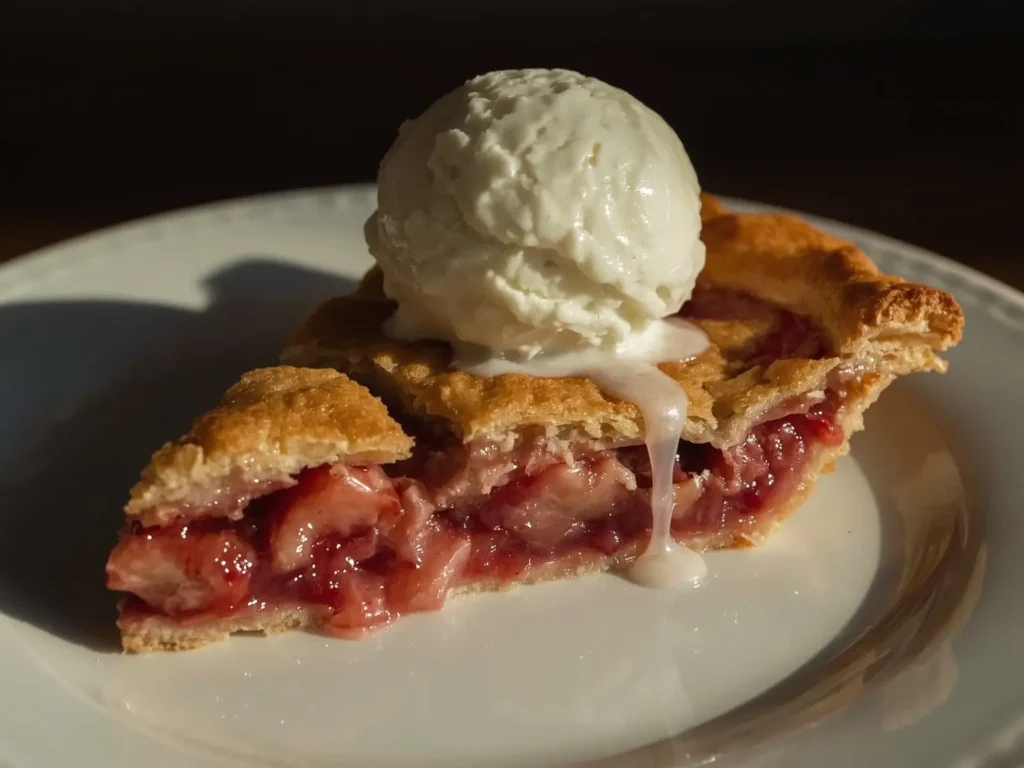
📌 Save this recipe so you have it the moment rhubarb shows up at your market this season Look at the three tools I mentioned and check which ones you already own (you might have more than you think) Make the crust and filling separately today if you’re short on time — the dough keeps beautifully in the fridge for 3 days Bake it, let it cool, and cut yourself a slice with a big scoop of vanilla ice cream Feel proud that you made this from scratch — because that matters
Remember: even professional bakers have runny pies and pale crusts sometimes. The difference is they know why it happened and they adjust next time. Now you do too.
The filling doesn’t make the pie — you do.
Happy Baking (With Whatever Pan You Have)! — Chef Amina 🍳
P.S. — What’s your rhubarb situation like this year? Did you grow it, find it at the market, or score some from a neighbor’s garden? I once harvested rhubarb from a total stranger’s yard in Vermont because she flagged me down from her porch and insisted I take some. Came home and made three pies in one weekend. Tell me your rhubarb stories in the comments — I love them!