
CookingSubstitutes is a blog dedicated to exploring suitable alternatives in recipes, providing helpful how-to guides, and sharing mouthwatering recipes.
We're here to make your culinary adventures even more delightful!
Sheet Pan Substitutes: Your Easiest Swap for a Full, Flavorful Meal

You’re scrolling Pinterest, you find the perfect one-pan dinner recipe, you read the first line: “Place everything on a rimmed sheet pan.”
You look at your kitchen. You don’t have a sheet pan.
The recipe is ruined. Or is it?
Here’s the truth nobody tells you: Most “sheet pan recipes” don’t actually require a sheet pan. They just require something flat that goes in the oven.
And you probably already have three different options sitting in your cabinet right now.
I tested 5 common kitchen pans as sheet pan substitutes across dozens of recipes. Every single one worked—some worked even better than actual sheet pans for certain dishes.
Don’t let the lack of one specific pan stop you from making delicious meals. Kitchen equipment is about function, not following rules.
What You’ll Learn:
- 5 pans that work as sheet pan substitutes
- Exact cooking adjustments for each (time, temperature, spacing)
- Which substitute works best for specific recipes
- When you actually need a real sheet pan (spoiler: almost never)
📊 The 5 Best Sheet Pan Substitutes (At a Glance)
| Pan Type | Size Range | Best For | Adjustment Needed | Cleanup |
| 9×13 Casserole Dish | Smaller portions | Roasted veggies, 2-4 servings | Lower temp 25°F | Easy (non-stick) |
| Cast Iron Skillet | 10-12 inch | High-heat proteins, crispy results | Preheat pan | Needs seasoning |
| Roasting Pan | Large (14×10+) | Whole chickens, big batches | Same as sheet pan | Heavy to clean |
| Broiler Pan | Varies | Draining fat, crispy bottoms | Elevates food | Two-piece cleanup |
| Large Oven-Safe Skillet | 12-14 inch | One-pan meals, quick dinners | Watch edges cook faster | Depends on material |
Key Insight: The “best” substitute depends on what you’re cooking. Keep reading to find your match.
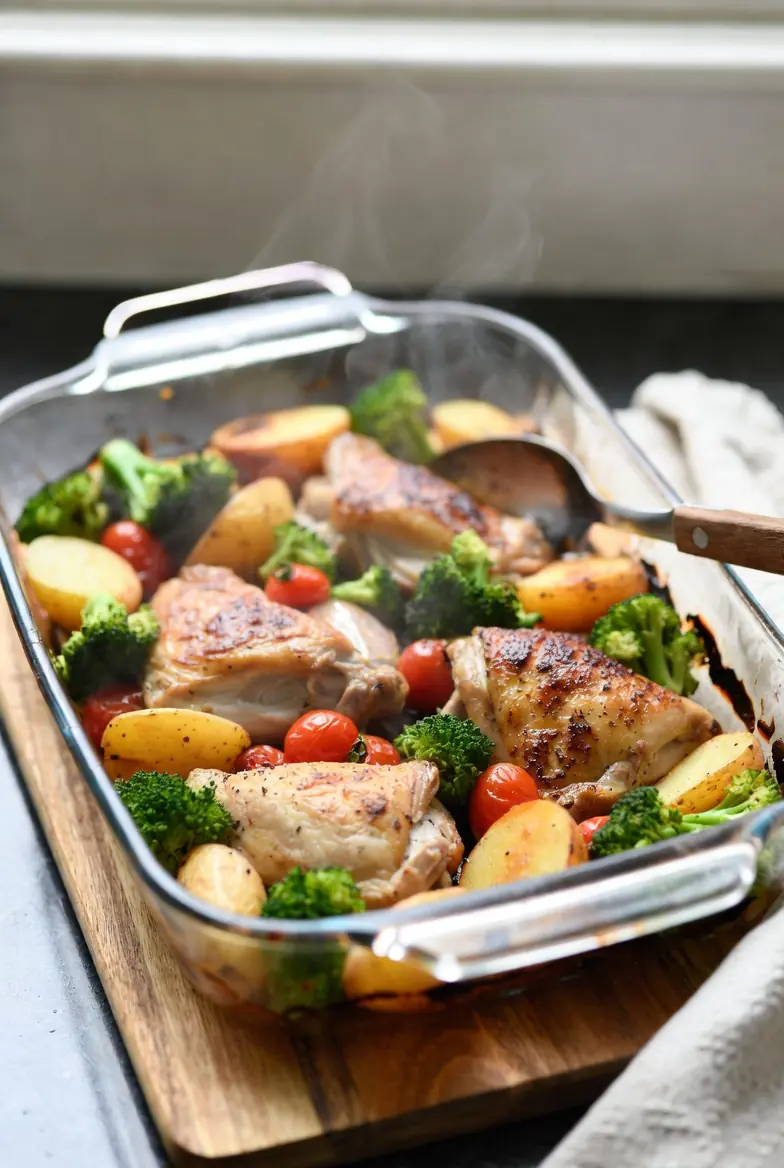
Substitute #1: 9×13 Casserole Dish (Perfect for Small Batches)
A casserole dish is basically a sheet pan with higher sides. The ceramic or glass material distributes heat evenly, and the smaller size is perfect for cooking for 1-3 people.
I lived in a studio apartment for two years with exactly four pans: a pot, a skillet, and two casserole dishes. I made “sheet pan” dinners in my 9×13 Pyrex at least twice a week.
It works perfectly—sometimes better than a sheet pan because the higher sides keep juices from spilling.
WHAT YOU NEED TO KNOW
✅ WORKS GREAT FOR:
- Roasted vegetables (broccoli, Brussels sprouts, root veggies)
- Chicken thighs or drumsticks (4-6 pieces fit comfortably)
- Salmon or fish fillets (2-4 servings)
- Small batch roasted potatoes
- Sheet pan nachos (the sides are actually perfect for this!)
❌ NOT IDEAL FOR:
- Recipes needing lots of airflow (things won’t get as crispy)
- Cooking for more than 4 people (not enough space)
- Very high heat (glass can crack above 450°F)
- Foods that benefit from maximum surface area contact
🔧 COOKING ADJUSTMENTS:
- Lower temperature by 25°F (glass heats differently than metal)
- Add 5-10 minutes to cooking time (thicker material takes longer to heat)
- Don’t crowd the pan—leave at least 1 inch of space between items
- Use parchment paper for easier cleanup and to prevent sticking
Best Recipes for Casserole Dishes:
- Baked salmon with asparagus and lemon
- Roasted chicken thighs with sweet potatoes
- Sheet pan nachos (perfect for this!)
- Baked feta pasta (actually originated in a casserole dish)
- Roasted vegetables medley
Pro Tips:
- Choose Pyrex or ceramic: Both go from fridge to oven safely
- Avoid sudden temperature changes: Don’t put cold glass in a hot oven (it can shatter)
- The sides are a feature: Use them for recipes with sauces or marinades that would otherwise run off
- Easier to carry: The handles make transporting from oven to table safer than a flat sheet pan
- Doubles as serving dish: Goes straight from oven to table looking presentable
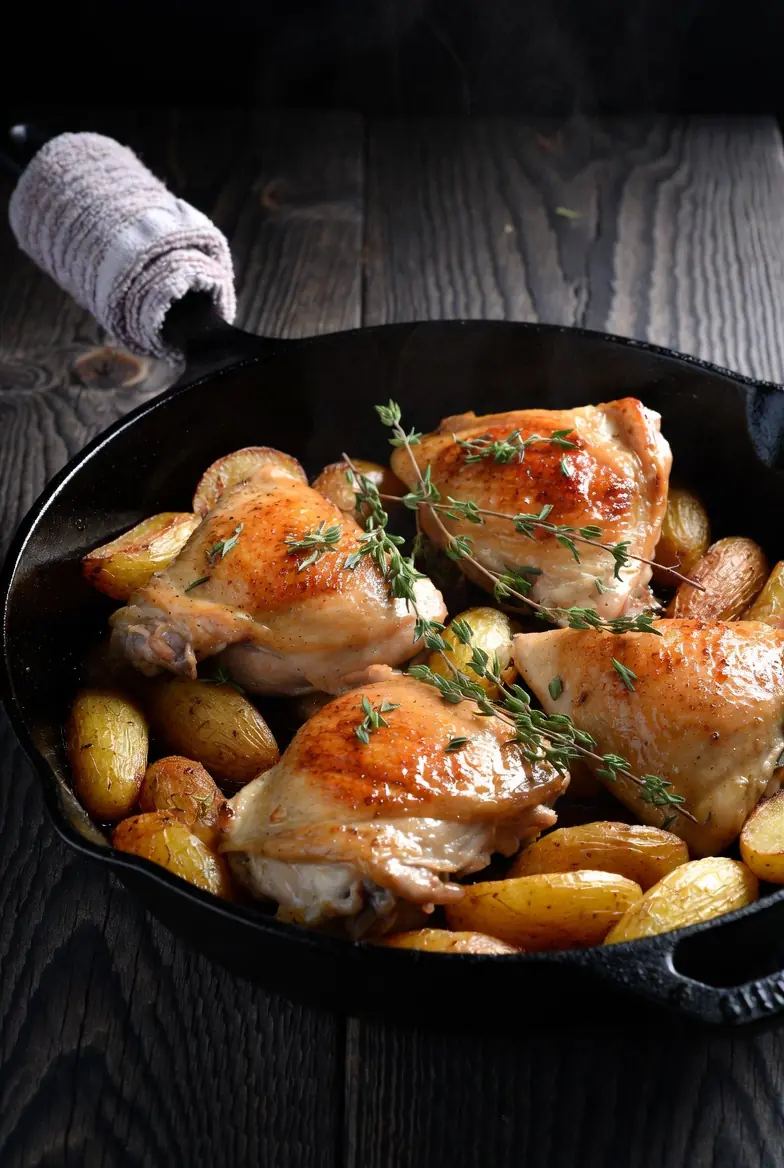
Substitute #2: Cast Iron Skillet (The High-Heat Champion)
Cast iron retains heat beautifully and creates the kind of sear and crisp that sheet pans can only dream about.
This is my secret weapon for crispy-skinned chicken thighs. The pan gets so hot that the skin renders and crisps in half the time.
If you want restaurant-quality crust on your proteins, this is your substitute.
WHAT YOU NEED TO KNOW
✅ WORKS GREAT FOR:
- Proteins that need serious crust (chicken thighs, steak, pork chops)
- Anything you want extra crispy (potatoes, Brussels sprouts)
- High-heat roasting (above 425°F)
- Stovetop-to-oven recipes (sear first, finish in oven)
- Cornbread, frittatas, Dutch babies
❌ NOT IDEAL FOR:
- Delicate fish (too much heat, fish falls apart)
- Acidic recipes (tomatoes react with iron and taste metallic)
- Cooking for more than 4 people (size limitation)
- Recipes with lots of liquid (it’s heavy to handle when full)
🔧 COOKING ADJUSTMENTS:
- Preheat pan in oven for 5 minutes with a little oil
- Reduce cook time by 5 minutes (cast iron is hotter than other pans)
- Use oven mitts always—the handle stays hot for 30+ minutes
- Don’t overcrowd—cast iron needs space for even heat distribution
Best Recipes for Cast Iron:
- Crispy chicken thighs with roasted potatoes
- Seared steak finished in oven with vegetables
- Sheet pan pancake (Dutch baby style)
- Skillet nachos with broiled cheese
- Roasted Brussels sprouts with bacon
Pro Tips:
- Season it well before using: Rub with thin layer of oil, bake at 400°F for an hour
- Don’t wash with soap: Just wipe with paper towel while warm, rinse if needed
- Dry immediately: Cast iron rusts if left wet
- Wipe with oil after each use: Maintains the non-stick seasoning
- It gets better with age: The more you use it, the better the non-stick surface becomes
Substitute #3: Roasting Pan (The Big Batch Solution)
Roasting pans are often larger than standard sheet pans, with sturdy handles that make moving heavy loads easier.
If you’re cooking for a crowd or meal prepping for the week, this is your best friend.
WHAT YOU NEED TO KNOW
✅ WORKS GREAT FOR:
- Whole roasted chicken or turkey breast
- Cooking for 6+ people at once
- Large vegetables (whole heads of cauliflower, big potato wedges)
- Meal prep Sundays (make 10 chicken thighs + 3 lbs vegetables)
- Holiday cooking
❌ NOT IDEAL FOR:
- Quick weeknight meals (it’s huge and heavy to handle)
- Small portions (wastes oven space and energy)
- Compact ovens (might not fit)
- Anyone with limited upper body strength (it’s heavy when full)
🔧 COOKING ADJUSTMENTS:
- Often deeper than sheet pans, so increase airflow by not overcrowding
- Same temperature as recipe calls for
- Same cooking time as sheet pan recipes
- Use the rack if included—elevates food for even cooking on all sides
Best Recipes for Roasting Pans:
- Whole roasted chicken with root vegetables
- Turkey breast for holidays
- Large batch meal prep (6-8 chicken thighs + pounds of vegetables)
- Sheet pan breakfast for a crowd
- Roasted whole fish
Pro Tips:
- The rack is essential: If your roasting pan came with a V-rack, use it for whole chickens—air circulates underneath
- Line with foil for easy cleanup: These are heavy and awkward to scrub
- Great for drippings: The depth means you can make gravy from the pan juices
- Storage challenge: These are bulky—only worth owning if you use them regularly
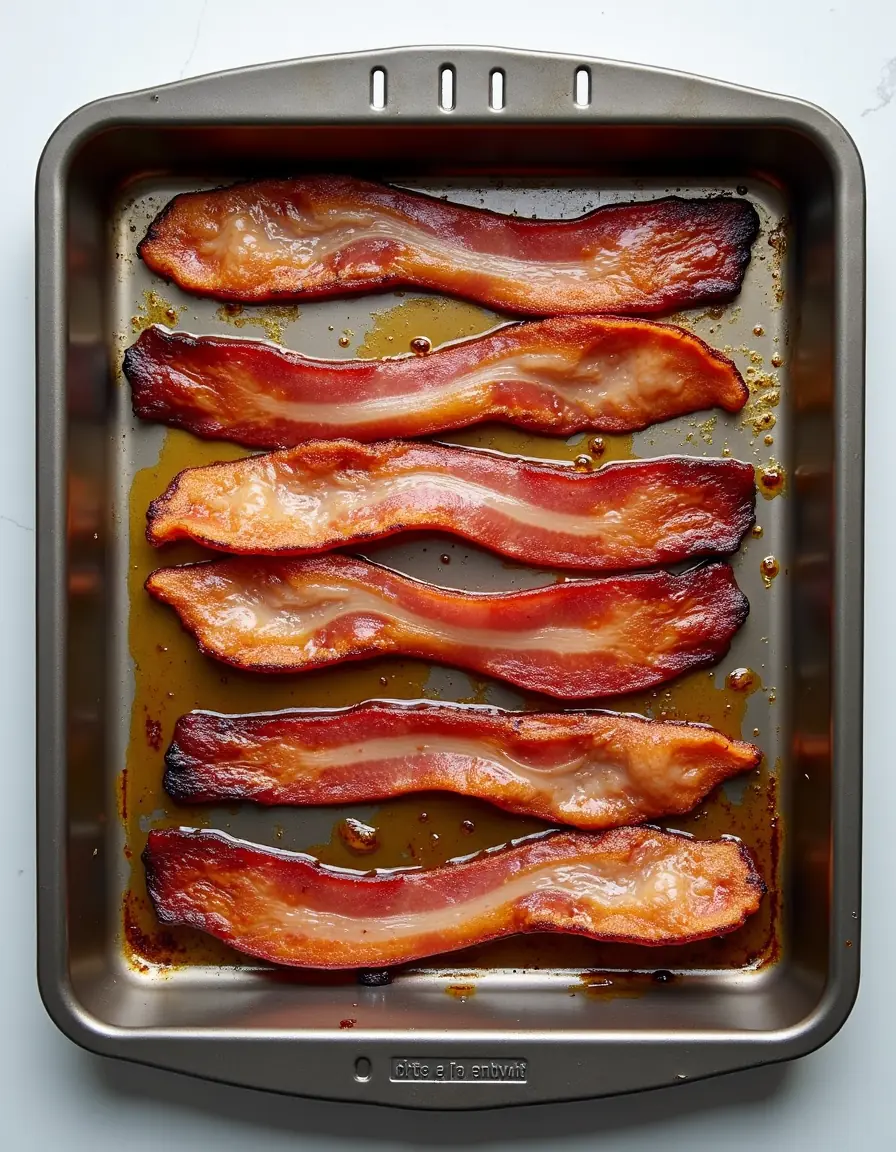
Substitute #4: Broiler Pan (The Two-Piece Wonder)
The broiler pan has a slotted top that lets fat drain into the pan below. Most people don’t even know they own one—it usually comes with your oven and sits forgotten in the bottom drawer.
Find it. Use it. Especially for bacon.
WHAT YOU NEED TO KNOW
✅ WORKS GREAT FOR:
- Bacon (best method for crispy, evenly cooked bacon)
- Sausage links (fat drains away)
- Chicken wings (crispy skin without deep frying)
- Anything fatty that benefits from drainage
- Getting crispy results without extra oil
❌ NOT IDEAL FOR:
- Roasted vegetables (small pieces fall through the slots)
- Saucy dishes (sauce drips through)
- Fish fillets (they stick to the slots)
- One-pan meals with mixed ingredients
🔧 COOKING ADJUSTMENTS:
- Food sits higher, so reduce cook time by 5-10 minutes
- Watch closely—it’s easy to overcook on the elevated surface
- Use top oven rack for maximum air circulation
- Preheat both pieces for best results
Best Recipes for Broiler Pans:
- Crispy bacon (life-changing method)
- Chicken wings
- Sausage links
- Bone-in chicken pieces
- Pork chops
Pro Tips:
- Line bottom pan with foil: Makes cleanup SO much easier
- Don’t lose the top piece: They’re sold as a set and hard to replace
- Perfect for getting crispy: The elevation and drainage create restaurant-quality crispness
- Two-piece cleanup: Yes, you wash two pieces, but they’re both easy since food doesn’t stick much
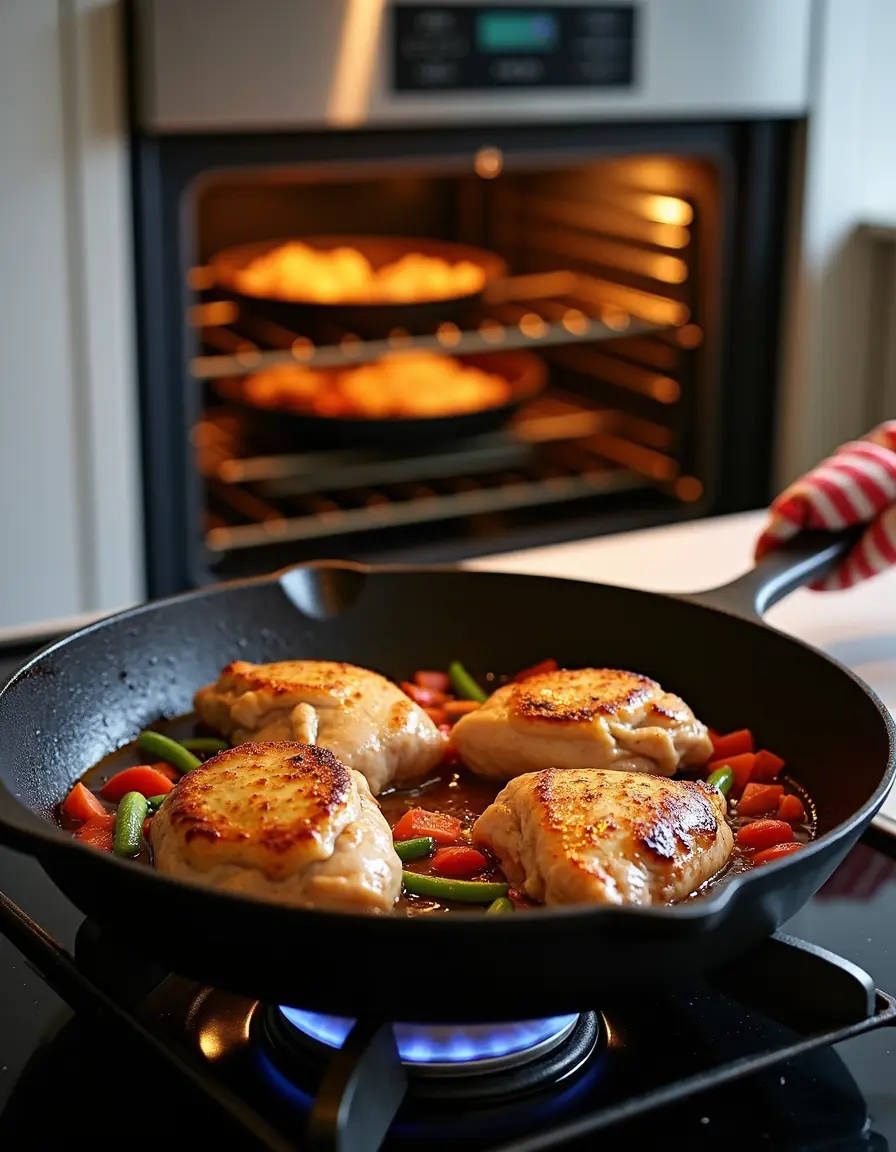
Substitute #5: Large Oven-Safe Skillet (The Multitasker)
Any skillet that can go in the oven works as a sheet pan substitute. The advantage? You can start on the stovetop and finish in the oven—all in one pan.
This is the technique restaurants use. Now it’s yours.
WHAT YOU NEED TO KNOW
✅ WORKS GREAT FOR:
- Sear-then-roast proteins (steak, pork chops, bone-in chicken)
- One-pan pasta bakes
- Frittatas and egg dishes
- Skillet cookies and cobblers
- Stovetop-to-oven recipes
❌ NOT IDEAL FOR:
- Feeding more than 4 people (size constraint)
- Recipes needing full sheet pan space
- Anything with non-oven-safe handles (check before using!)
🔧 COOKING ADJUSTMENTS:
- Edges cook faster than center—rotate pan halfway through cooking
- Preheat if starting in oven (cold pan = uneven cooking)
- Same temperature as recipe calls for
- Watch the handle—use an oven mitt, it’ll be screaming hot
Best Recipes for Oven-Safe Skillets:
- Seared steak with roasted vegetables
- One-pan chicken and orzo
- Shakshuka (eggs baked in tomato sauce)
- Skillet cookie (giant chocolate chip cookie)
- Pan-roasted salmon with vegetables
Pro Tips:
- Check if handle is oven-safe: No plastic, no wooden handles. Metal or silicone only
- Use for hybrid cooking methods: Brown on stovetop, finish in oven for best of both worlds
- Stainless steel and cast iron work best: Non-stick coatings can degrade at high oven temps
- Wrap handle with foil: Visual reminder that it’s hot when you take it out
🔥 How to Adjust Cooking Times & Temps for Each Substitute
Here’s the thing about substitutes: they work, but they’re not identical. Different materials conduct heat differently. Here’s your cheat sheet.
| Your Substitute | Temperature Adjustment | Time Adjustment | Spacing Tips |
| Glass/Ceramic Casserole | Reduce 25°F | Add 5-10 min | Leave 1 inch between items |
| Cast Iron Skillet | Keep same | Reduce 5 min | Preheat pan first |
| Roasting Pan | Keep same | Keep same | Don’t stack items |
| Broiler Pan | Keep same | Reduce 5-10 min | Use top rack only |
| Oven-Safe Skillet | Keep same | Keep same | Rotate pan halfway |
General Rules:
- Glass heats slower: Lower temp, longer time, or it can crack
- Cast iron heats faster: Watch closely after 15 minutes—it’s retaining heat like crazy
- Deeper pans need airflow: Don’t overcrowd or food will steam instead of roast
- Always preheat oven fully: Regardless of pan type, cold oven = uneven cooking
🍽️ What to Cook in Each Pan (Recipe Matching Guide)
Not all pans are created equal. Here’s what works best in each substitute.
9×13 Casserole Dish:
- Baked salmon with lemon and asparagus
- Chicken thighs with roasted vegetables
- Sheet pan quesadillas (the sides contain everything perfectly!)
- Roasted sausage and peppers
- Baked feta pasta
Cast Iron Skillet:
- Crispy chicken thighs with potatoes
- Seared steak and roasted vegetables
- Sheet pan pancake (Dutch baby style)
- Skillet nachos with broiled cheese
- Roasted Brussels sprouts with bacon
Roasting Pan:
- Whole roasted chicken with root vegetables
- Turkey breast for holidays
- Large batch meal prep (chicken + 3 lbs vegetables)
- Sheet pan breakfast for a crowd (eggs, bacon, potatoes)
- Whole roasted fish
Broiler Pan:
- Crispy bacon (seriously, try this method)
- Chicken wings (restaurant-quality crispy)
- Sausage links
- Roasted bone-in chicken pieces
- Pork chops
Oven-Safe Skillet:
- Seared steak finished in oven
- One-pan chicken and orzo
- Shakshuka (eggs baked in tomato sauce)
- Skillet cookie or fruit cobbler
- Pan-roasted salmon with asparagus
🧽 Make Cleanup Stupid Easy (Regardless of What Pan You Use)
Let’s be real: the main appeal of sheet pan dinners is minimal cleanup. Here’s how to keep that benefit no matter what pan you’re using.
The Universal Cleanup Hacks:
1. Line It Before You Cook
Parchment paper works in any pan except cast iron (it can burn at very high heat). Tear a sheet, place it in your pan, cook on top, toss paper after. Zero scrubbing.
Aluminum foil creates a barrier but food can stick. I use it for broiler pan bottoms and roasting pans where I want to save drippings for gravy.
Silicone baking mats are reusable and nothing sticks. These are my favorite for casserole dishes—one quick wash and they’re ready again.
2. The Oil Brush Trick
Before adding food, lightly brush your pan with high-heat oil (avocado or grapeseed). This creates a natural non-stick barrier.
Use a silicone brush—it’s easier to clean than cloth pastry brushes and won’t melt.
3. The Immediate Soak Method
As soon as you plate your food, fill the hot pan with hot soapy water. Let it soak while you eat.
By the time you’re done with dinner (15-20 minutes), everything wipes off with minimal scrubbing. This works for every pan type except cast iron.
4. The Baking Soda Paste (For Stuck-On Food)
Mix 3 parts baking soda + 1 part water into a paste. Spread it on stuck spots. Let sit 30 minutes. Scrub off with a sponge.
Works on everything except cast iron (which needs different care).
5. Cast Iron Special Care
While the pan is still warm (not screaming hot), wipe it out with a paper towel. If there’s stuck food, rinse with water only—no soap.
Dry immediately with a towel. Rub a thin layer of oil on the surface with a paper towel. Done.
Never let cast iron air dry or it will rust.
🤔 Do You Actually Need to Buy a Sheet Pan?
Honest answer: Maybe not. It depends on how you cook.
You DON’T need a sheet pan if:
- You’re cooking for 1-3 people regularly (casserole dish works perfectly)
- You already have cast iron skillets and roasting pans
- You have limited storage space (sheet pans are awkward to store)
- You’re in temporary housing (dorm, AirBnB, short-term rental with limited equipment)
- You only cook occasionally (your substitutes will handle it)
You SHOULD invest in a sheet pan if:
- You’re cooking for 4+ people regularly
- You meal prep on Sundays for the entire week
- You want the absolute easiest cleanup (flat surface, no corners for food to hide)
- You love crispy roasted vegetables (more airflow than deep pans = crispier results)
- You bake cookies or other baked goods frequently
If You’re Going to Buy One:
Get a rimmed half sheet pan (13×18 inches). It’s the goldilocks size—big enough for family meals, small enough to fit in standard ovens.
Skip the fancy non-stick coating. Get plain aluminum and line it with parchment paper. Costs $12-15 and lasts forever.
🛒 3 Tools That Work With Any Pan
These three tools make cooking in any substitute easier and more successful.
1. Silicone Basting Brush – Heat Resistant to 450°F
Why I Love It: Evenly distributes oil on any pan surface before cooking—glass, metal, cast iron, everything. Creates a non-stick barrier that prevents food from welding itself to the pan.
Easy to clean (just throw it in the dishwasher). The silicone won’t melt or absorb flavors like traditional brushes.
Best For: Pre-oiling pans, brushing marinade on food while it cooks
Cost: $8.99
2. Avocado Oil Spray – High Heat Cooking Oil
Why I Love It: Neutral flavor, high smoke point (500°F), works perfectly in all these substitutes. Better than olive oil for high-heat roasting (olive oil burns and gets bitter).
The spray gives you an even coating without needing to brush. Faster prep, less oil used.
Best For: Quick oil application, getting crispy results on vegetables and proteins
Cost: $5.18
3. Digital Kitchen Timer with Magnetic Back
Why I Love It: When you’re adjusting cook times for different pans, you need to watch closely. This timer is louder than phone timers and sticks to your oven door.
No more “I forgot I was cooking” disasters. The magnetic back means it’s always visible and within reach.
Best For: Tracking adjusted cook times, multitasking in the kitchen without burning dinner
Cost: $13.99
❓ Your Sheet Pan Substitute Questions Answered
Can I use a cookie sheet instead of a rimmed sheet pan?
Flat cookie sheets (without sides) work for dry foods like cookies, but they’re terrible for sheet pan dinners.
Juices and oils will run off the edges into your oven, creating a smoky mess and potential fire hazard.
If it’s all you have, use it only for roasted vegetables without added oils, or line it with foil and fold up the edges to create a makeshift rim.
Will a glass casserole dish break in the oven?
Quality borosilicate glass (Pyrex, Anchor Hocking) is designed for oven use up to 450°F.
But avoid these mistakes:
Don’t put cold glass in a hot oven (thermal shock can crack it)
Don’t put hot glass on a cold or wet surface (same issue)
Check manufacturer guidelines for your specific dish—older Pyrex has different heat tolerances
Can I use aluminum foil pans from the grocery store?
Yes! Those disposable aluminum pans work as sheet pan substitutes.
They’re thinner so they heat faster—reduce cook time by 5 minutes and watch closely for burning.
Great for potlucks or meal prep you’re giving away to friends. Just place them on a sturdy baking sheet for stability when moving them in and out of the oven.
My cast iron skillet isn’t non-stick. Can I still use it for sheet pan recipes?
Yes, but season it first.
Rub a thin layer of oil all over the cooking surface. Bake it upside down at 400°F for an hour (place foil underneath to catch drips). This creates a natural non-stick coating.
For recipes, always preheat the pan with a little oil before adding food. The combination of seasoning + preheating + oil prevents sticking.
What if I’m cooking for just one person—what’s the best substitute?
An 8×8 or 9×9 square casserole dish is perfect for single servings. Or use a 10-inch cast iron skillet.
Both give you the right portion size without wasting energy heating a huge pan for a small amount of food.
Can I use a substitute for sheet pan cookies?
For baking cookies, you need a flat surface for even spreading and browning.
Your best substitutes:
Flat cookie sheets without sides
Upside-down sheet pan (flip it over and use the bottom as the flat surface)
Cast iron skillet for one giant cookie (slice into wedges after baking)
Casserole dishes don’t work well for cookies—the sides prevent proper air circulation and the cookies don’t spread correctly.
Your Kitchen, Your Rules
The whole point of cooking at home is making it work for YOU. Not following some arbitrary equipment list from a recipe blog that assumes you have a Williams-Sonoma budget and unlimited cabinet space.
You don’t need a sheet pan to make delicious one-pan meals.
You need something oven-safe, heat-conductive, and large enough for your ingredients.
You probably already have that.
Here’s what to do next:
- 📌 Pin this post so you have it next time a recipe calls for a sheet pan you don’t own
- Look in your cabinets right now and identify which substitute you already have
- Try ONE sheet pan recipe this week using your substitute
- Adjust based on the guide above (lower temp for glass, preheat cast iron, etc.)
- Feel proud that you adapted instead of giving up
Remember: Professional chefs adapt recipes constantly based on available equipment. Home cooks can too.
The pan doesn’t make the meal—you do.
Happy Cooking (With Whatever Pan You Have)!
— Chef Amina 🍳
P.S. — What’s the weirdest thing you’ve ever used as a cooking pan substitute? I once made roasted vegetables in a pizza pan because it was the only thing that fit in my tiny oven. Worked perfectly. Tell me your creative solutions in the comments!