Cooking Substitutes is a blog dedicated to exploring suitable alternatives in recipes, providing helpful how-to guides, and sharing mouthwatering recipes.
We're here to make your culinary adventures even more delightful!
Egg Substitute for Meatballs: Binding Without Eggs
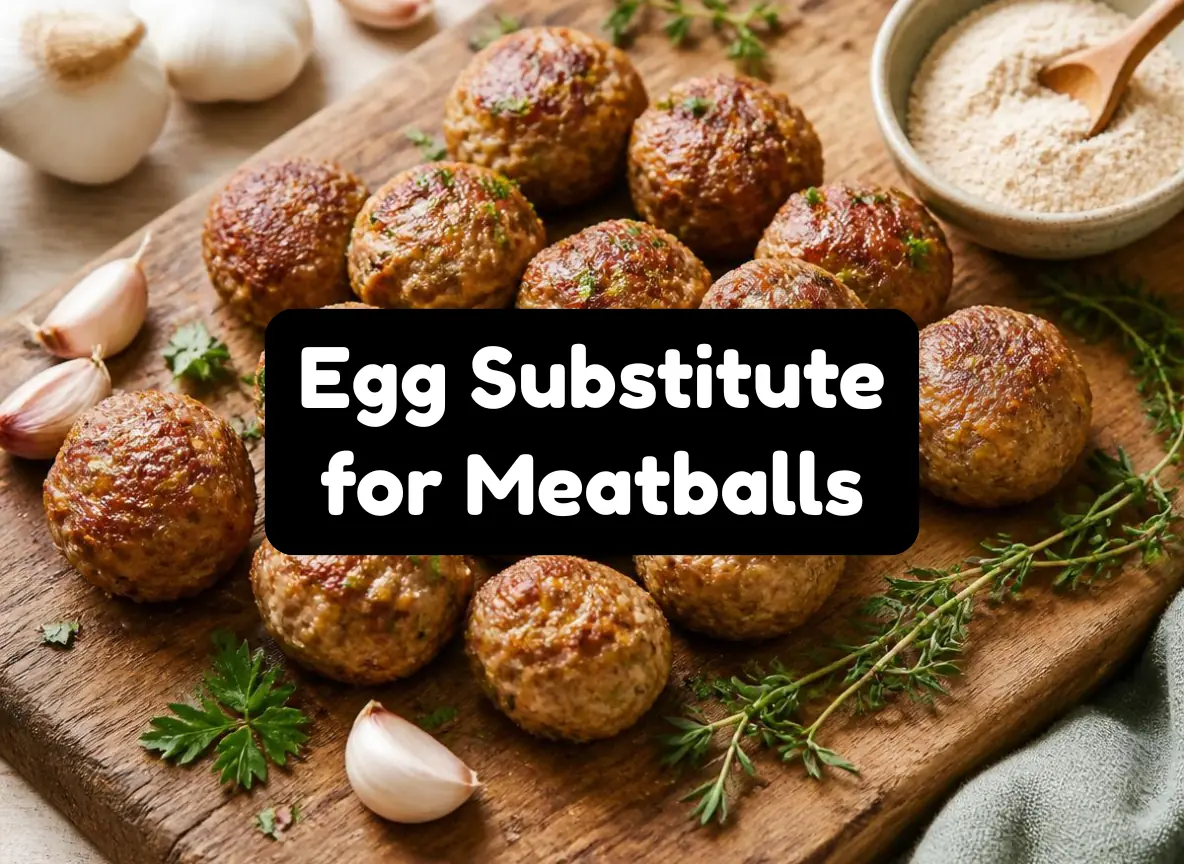
I’m Chef Amina, and I’ve made thousands of meatballs across three continents—from my tiny Mumbai kitchen to a cramped hotel room in Barcelona. And you know what? I’ve made just as many without eggs as with them. Whether you’re vegan, dealing with allergies, or simply ran out of eggs (happens more than you’d think), finding the right egg substitute for meatballs is simpler than you’d imagine.
The biggest myth I hear? “You need eggs to bind meatballs.” Not true. Eggs help, sure. But they’re not essential. What matters is moisture, texture, and a binder that holds everything together. I’m going to walk you through exactly what I’ve tested and what actually works.
Why We Use Binders in Meatballs (And Why Eggs Aren’t Essential)
Here’s what I learned after years in kitchens where pantry space was measured in inches: binders keep meatballs from falling apart during cooking. They absorb moisture from the meat and create structure.
Eggs do this naturally because they contain water and proteins that gel when heated. But plenty of other ingredients do the same thing. I’ve made beautiful meatballs using yogurt, starch, and ground nuts. Each one created different textures—some tender, some firmer. All delicious.
The key is understanding what you’re substituting for eggs in meatballs isn’t just one thing. It’s the moisture, the binding power, and sometimes the slight richness eggs add.
Top Egg Substitutes for Binding Meatballs
1. Psyllium Husk Powder (My Go-To)
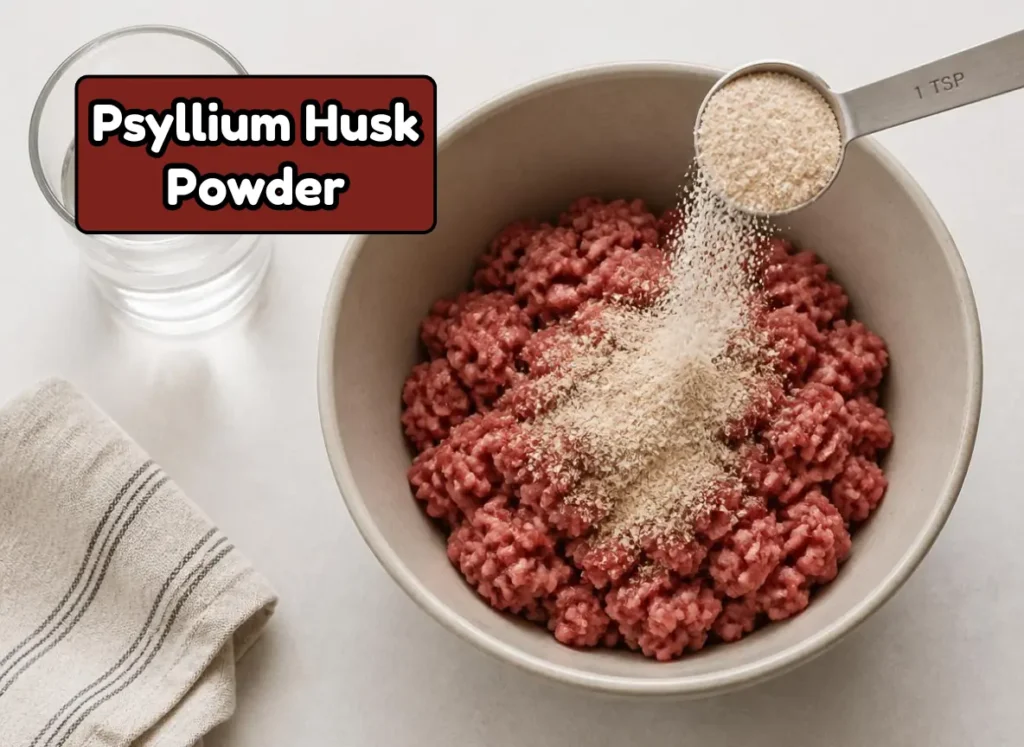
This is my most-reached-for substitute for egg in meatballs, especially when I need reliability.
I add 1–2 tablespoons of psyllium husk powder to a pound of meat. Mix it with 2–3 tablespoons of water first (let it sit 2 minutes), then fold into your meat mixture. The powder absorbs moisture and forms a gel that binds everything beautifully.
What I love: It’s neutral tasting, creates a tender crumb, and works even if your meat is lean. I used this exact hack when filming cooking content in a studio kitchen—zero failures.
2. Panko Breadcrumbs Soaked in Milk (The Traditional Swap)
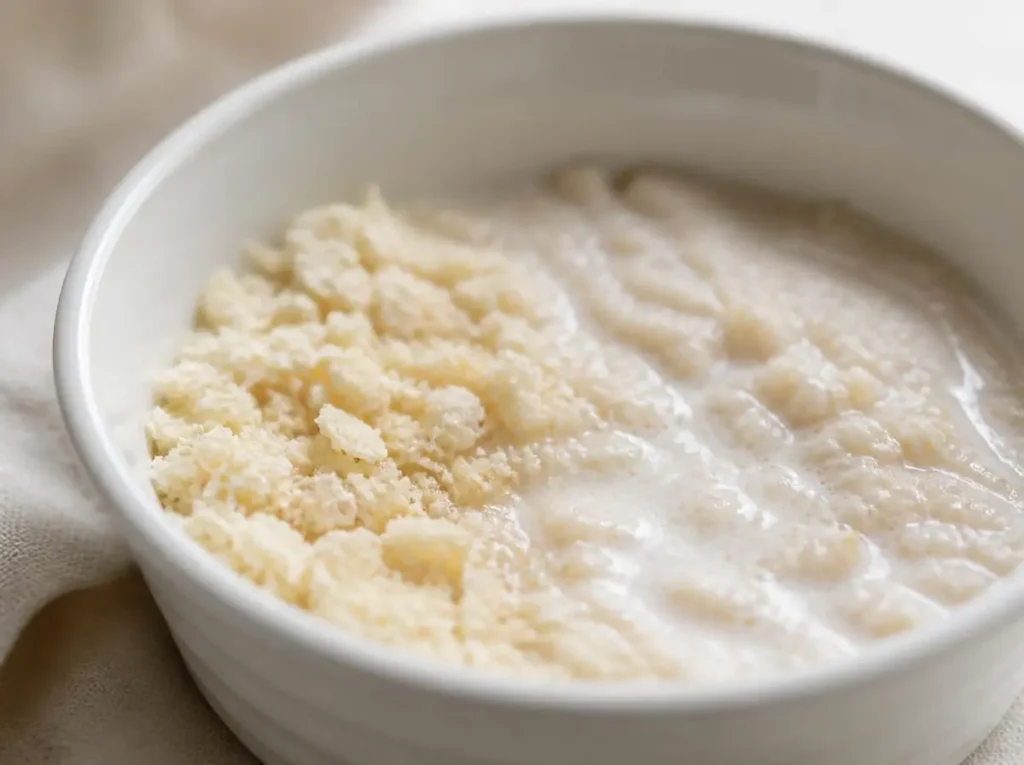
I grew up with this one. Soak 1/2 cup panko in 3–4 tablespoons of milk or plant milk until it’s a paste. Fold into your meat.
This mimics eggs perfectly because you’re adding moisture + starch + a bit of fat. The breadcrumbs soften and disperse throughout the meat, creating incredibly tender meatballs.
Pro tip: If you don’t have panko, use crushed oats or torn bread. I’ve done both in last-minute situations.
3. Greek Yogurt or Aquafaba
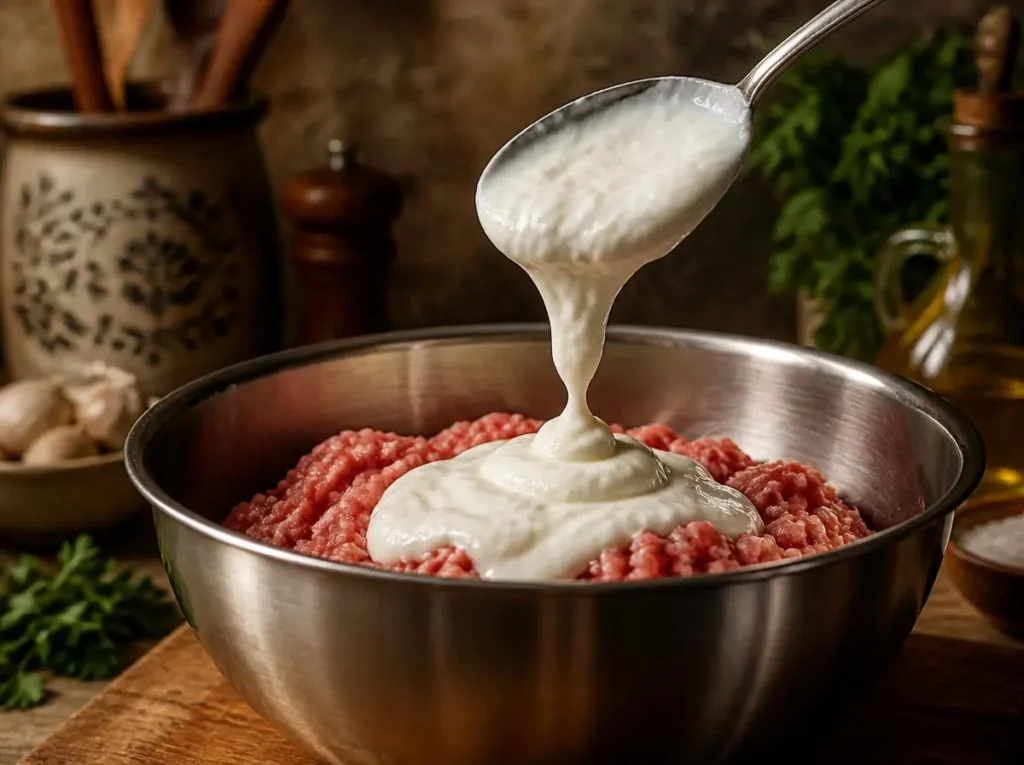
For richer, more tender meatballs, I use 3–4 tablespoons of Greek yogurt per pound of meat. The protein and fat create a luxurious texture.
Aquafaba (canned chickpea liquid) is my vegan workaround: 3–4 tablespoons whipped briefly with a fork to add air, then folded in.
4. Ground Nuts or Seeds
Finely ground almonds, walnuts, or sunflower seeds add binding power plus texture. I use 1/4 cup per pound of meat. They’re especially good when combined with a wet ingredient like yogurt.
5. Cornstarch or Arrowroot Powder
Mix 1 tablespoon cornstarch with 3 tablespoons water and stir until smooth. Add to meat. It creates a silky texture and holds everything together.
Speed Hack: The Two-Minute Binder
When I’m against the clock (which is always, honestly), here’s what I do:
1 tablespoon psyllium husk powder + 2 tablespoons water = mixed into any meat mixture in under 30 seconds. No waiting. No extra steps.
The meatballs come out perfectly bound, with no egg necessary. I learned this hack cooking in a hotel room with literally one burner, and it’s never failed me.
Budget Hack: If you’re making meatballs on a tight budget, use panko soaked in water instead of milk. It binds just as well and costs half the price. I did this when I was stretching every dollar in my early days.
No-Chop Hack: Can’t chop onions? Skip them or use garlic powder instead. Can’t mince parsley? Use dried herbs. A substitute for eggs in binding meatballs is just the beginning—you can swap everything if you’re strategic. Psyllium husk powder + ground meat + dried herbs + salt = perfectly edible meatballs in 15 minutes, minimal effort.
How to Use Each Substitute (Step-by-Step)
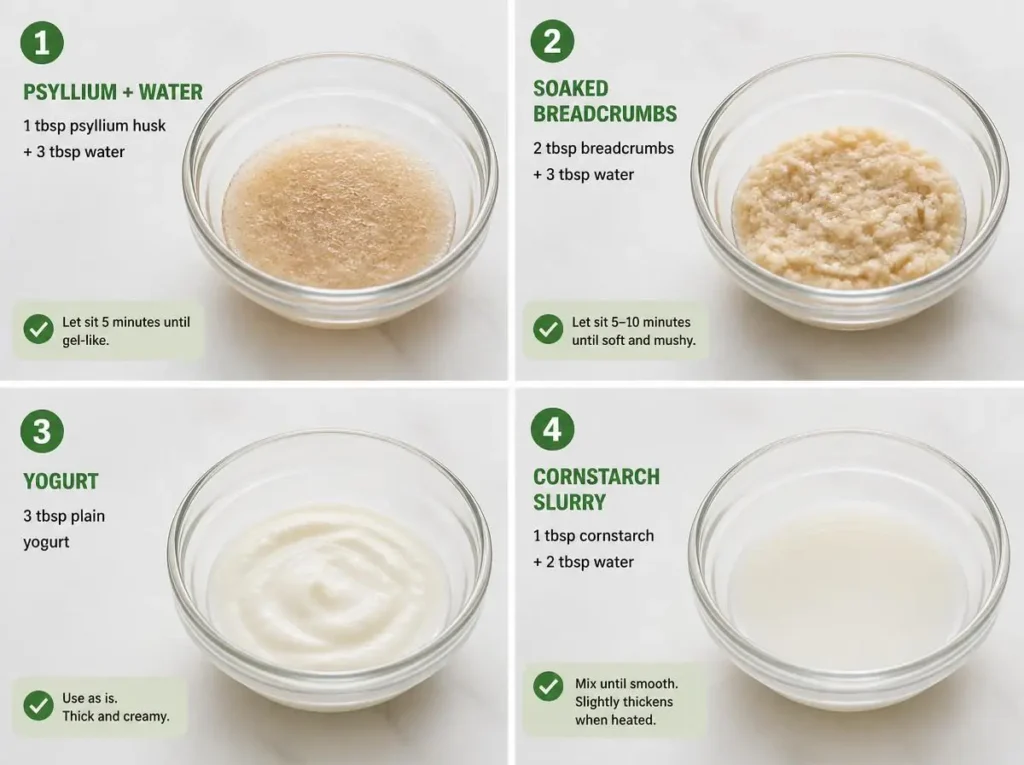
With Psyllium Husk:
- Mix 1–2 tbsp powder + 2–3 tbsp water. Wait 1 minute.
- Add to meat along with breadcrumbs (if using) and seasonings.
- Mix gently until just combined. Don’t overmix.
- Refrigerate 15 minutes if you have time (makes handling easier).
- Bake at 400°F for 20–22 minutes.
With Soaked Breadcrumbs:
- Soak panko in milk/water for 2–3 minutes until pasty.
- Squeeze out excess liquid.
- Fold into meat.
- Season and bake at 400°F for 20–22 minutes.
With Greek Yogurt:
- Fold 3–4 tbsp yogurt into meat along with seasonings.
- Form and bake immediately (yogurt adds moisture, so don’t refrigerate too long).
- Bake at 375°F for 20–25 minutes (yogurt can brown faster).
If you’re exploring substitutes across your cooking, check out our guide to egg substitutes for pancakes—many of the same principles apply. You can also browse our full substitutes category for other ingredient swaps.
For more meatball inspiration, AllRecipes has hundreds of meatball variations, and The Kitchn has a fantastic guide to freezing meatballs.
People also ask
What can I put in my meatballs if I don’t have an egg?
Any moisture-absorbing ingredient works: psyllium husk, soaked breadcrumbs, yogurt, aquafaba, or even mashed potato. I’ve used all of them successfully.
What can you use instead of egg to bind?
The best replacements are ingredients that absorb and hold moisture: psyllium husk powder, panko soaked in liquid, ground nuts, starches (cornstarch, arrowroot), or moisture-rich foods like yogurt.
What can be used as a binder for meatballs?
Literally anything that adds moisture and holds texture: breadcrumbs, oats, crushed nuts, seeds, starches, yogurt, mashed potato, or aquafaba. I’ve experimented with most of them.
What is a good substitute for eggs?
For binding specifically? Psyllium husk is my top choice because it’s reliable and doesn’t change the flavor. For richness? Yogurt or plant milk. For texture? Soaked breadcrumbs.
Are eggs necessary for meatballs?
Not at all. Eggs are convenient because they do multiple jobs (binding, adding moisture, creating richness), but other ingredients can replicate each of those functions individually.
What is a good egg substitute for binding meat?
Psyllium husk powder is my gold standard. One tablespoon hydrated with water works in most meat mixtures. It’s flavorless, works consistently, and I’ve used it for beef, pork, turkey, and even plant-based meatballs.
Recommended Kitchen Tools
I want to share three products I actually use when making meatballs:
1. Viva Naturals Organic Psyllium Husk Powder
This is the psyllium husk I use for binding. It’s finely ground, mixes smoothly, and I trust the quality. The 24 oz bag lasts forever because a little goes a long way. I’ve made hundreds of batches with this brand.
2. Aleia’s Gluten Free Panko Bread Crumbs
These are my go-to breadcrumbs. They’re light, crispy, and work beautifully when soaked in milk as a binding agent. I keep multiple boxes in my pantry.
3. CHEFFANO LIFE Electric Meat Grinder
When I’m making meatballs with fresh meat (not ground from the store), this grinder saves me time. I can control the texture exactly how I want it—coarse or fine. It’s under $100 and powerful enough for regular home cooking.
What’s the Nutritional Difference? (Per Pound of Meatballs)
When you choose an egg substitute for meatballs, you’re changing more than just the binding agent. You’re changing the nutrition profile slightly. Here’s exactly what you’re getting with each option:
Egg Substitute Comparison
| Egg Substitute | Amount Used | Calories | Protein (g) | Fat (g) | Carbs (g) | Binding Power | Best For |
|---|---|---|---|---|---|---|---|
| 1 Large Egg (baseline) | 1 egg | 70 | 6g | 5g | 0.4g | ⭐⭐⭐⭐⭐ | All meatballs, classic texture |
| Psyllium Husk Powder | 1-2 tbsp + water | 15-30 | 0g | 0g | 3-6g | ⭐⭐⭐⭐⭐ | Lean meats, tender texture |
| Panko + Milk | 1/2 cup + 3-4 tbsp milk | 120-150 | 3g | 2g | 20g | ⭐⭐⭐⭐ | Rich, tender, classic feel |
| Greek Yogurt | 3-4 tbsp | 35-45 | 4-5g | 0.5g | 2g | ⭐⭐⭐⭐ | Creamy, protein-rich results |
| Aquafaba | 3-4 tbsp | 10-15 | 0.3g | 0g | 2g | ⭐⭐⭐⭐ | Vegan option, tender texture |
| Cornstarch + Water | 1 tbsp + 3 tbsp water | 30 | 0g | 0g | 7g | ⭐⭐⭐ | Smooth texture, light binder |
| Ground Almonds | 1/4 cup | 160 | 6g | 14g | 6g | ⭐⭐⭐⭐ | Nutty flavor, protein boost |
Breaking Down the Numbers: What I’ve Learned
The Psyllium Husk Advantage:
When I switched to psyllium husk as my go-to substitute for eggs in meatballs, I noticed the nutrition profile stays incredibly clean. It adds almost zero calories while giving you maximum binding power. For a 1-pound batch making about 16 meatballs, you’re only adding 15-30 calories total to the entire batch. That’s less than 2 calories per meatball from the binder alone.
The Protein Play:
If you’re making meatballs for protein goals, Greek yogurt is your friend. Those 4-5 grams of protein per serving add up across a batch. I use Greek yogurt when I’m making meatballs for clients focused on fitness because it keeps the protein count high without adding much fat.
The Traditional Option:
Panko + milk mimics an egg more closely in both taste and nutrition. You’re getting about 70% of an egg’s caloric content but with more carbs (from the breadcrumbs). This is what most Italian grandmothers use, and honestly? It’s delicious. The slight increase in carbs actually helps create a more tender crumb.
Vegan & Keto Considerations:
Aquafaba (chickpea liquid) is a game-changer if you’re cooking vegan. It has almost zero calories and zero fat, making it perfect for meatball diets focused on lean protein. Cornstarch works similarly if you’re watching carbs—it’s minimal in everything.
Nutrition Per Serving (Based on 16 Meatballs per Pound)
Here’s what ONE meatball contains, depending on your binder choice (using 1 lb ground beef + binder as base):
| Binder Type | Calories/Meatball | Protein/Meatball | Fat/Meatball | Carbs/Meatball |
|---|---|---|---|---|
| 1 Egg | +4 cal | +0.4g | +0.3g | +0.03g |
| Psyllium Husk | +1-2 cal | +0g | +0g | +0.2g |
| Panko + Milk | +7-9 cal | +0.2g | +0.1g | +1.3g |
| Greek Yogurt | +2-3 cal | +0.3g | +0.03g | +0.1g |
| Aquafaba | +0.6 cal | +0.02g | +0g | +0.1g |
| Cornstarch | +2 cal | +0g | +0g | +0.4g |
Which Substitute Fits Your Goals?
If you’re counting calories: Aquafaba or psyllium husk wins. Minimal impact on your total calorie count.
If you want extra protein: Greek yogurt or ground almonds. Both add meaningful protein to your batch.
If you’re watching carbs: Psyllium husk, aquafaba, or Greek yogurt. All keep carbs under 0.5g per meatball from the binder alone.
If you want traditional flavor & texture: Panko + milk or a regular egg. You’re trading a few extra calories for that authentic taste you grew up with.
If you’re cooking for mixed diets: Psyllium husk is your neutral choice. It doesn’t add meaningful calories, carbs, or anything else that would conflict with keto, vegan, or low-calorie diets.
My Personal Recommendation by Situation
When I’m cooking for myself (health-focused, minimal kitchen): Psyllium husk powder. It’s efficient, clean, and the numbers are honest.
When I’m cooking for family dinner (everyone eating, no restrictions): Panko + milk. It’s what works, tastes familiar, and the slight nutrition bump doesn’t matter when you’re having a gathering.
When I’m cooking for vegan clients: Aquafaba. No compromise, no substitutions—it works like an egg would.
When I’m cooking for high-protein goals: Greek yogurt. I get binding power + protein in one ingredient.
Final Thoughts: Your Kitchen, Your Rules
Here’s what I’ve learned after years of cooking in unconventional spaces: meatballs without an egg substitute aren’t second-best. They’re just different. And “different” can be amazing.
You don’t need to follow someone else’s recipe down to the last ingredient. You need something that holds your meatballs together and tastes good to you.
I started experimenting with egg-free meatballs out of necessity (traveling with dietary restrictions). I kept doing it out of choice. These methods work. I’ve tested every single one multiple times in real kitchens with real limitations.
Here’s what I want you to do:
📌 Pick ONE egg substitute for meatballs from this article and try it this week. Just one batch.
Notice how it handles. Notice the texture. Notice if you’d do it again.
Adjust. Make notes. Try a different substitute next time.
Professional chefs adapt recipes constantly based on what’s available. Pantry constraints. Allergies. What’s on sale. We don’t see it as limitation—we see it as a cooking skill.
You can too.
The beautiful thing about meatballs is their forgivingness. They want to hold together. With any of these egg substitutes, they will.
Make your meatballs your way.
Happy cooking (however you need to do it!)
— Chef Amina 🍳