Cooking Substitutes is a blog dedicated to exploring suitable alternatives in recipes, providing helpful how-to guides, and sharing mouthwatering recipes.
We're here to make your culinary adventures even more delightful!
Mango Pineapple Smoothie Recipe – Thick, Tropical & Ready in 5 Minutes
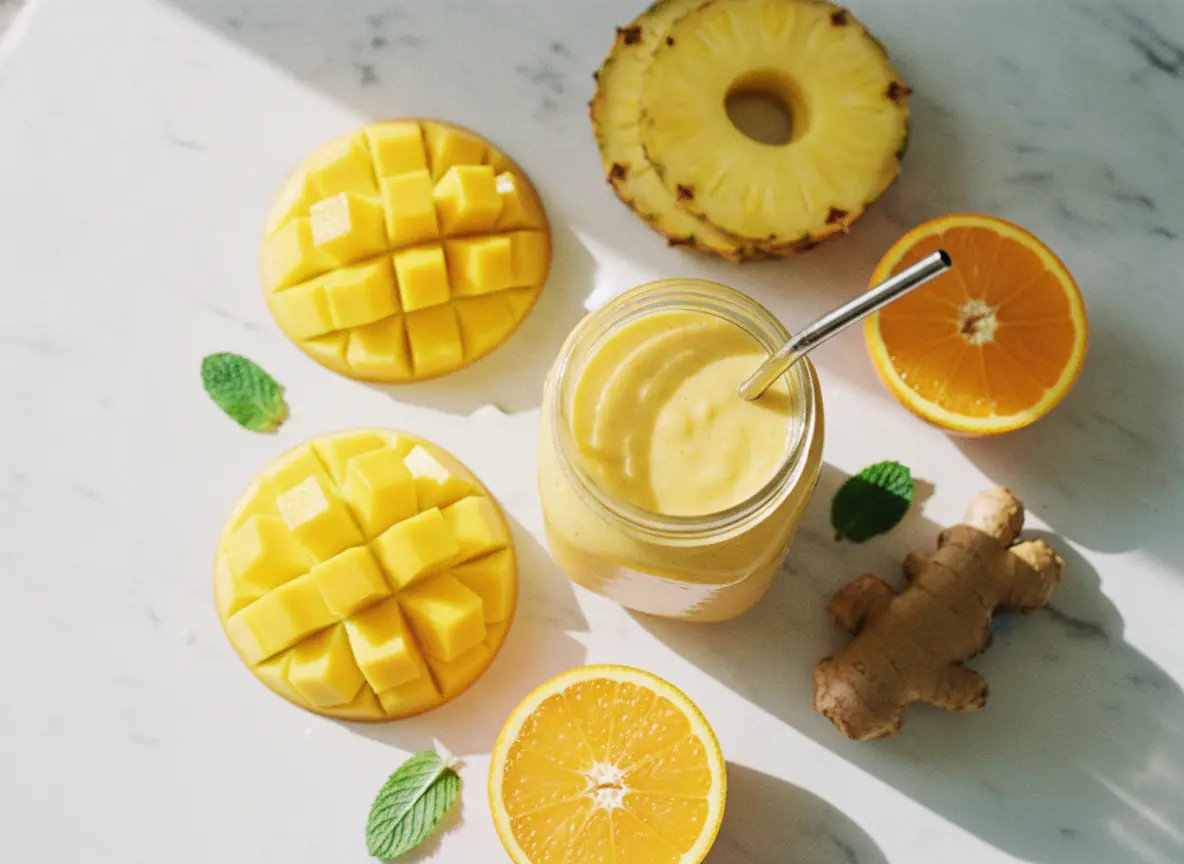
If you’ve been searching for the perfect mango pineapple smoothie recipe, you just found it. This one is thick, creamy, naturally sweet, and tastes like a tropical vacation in a glass — no fancy equipment, no hard-to-find ingredients, and no stress.
I make this smoothie at least three times a week. Some mornings I’m running late, some days I just need something cold and refreshing that isn’t coffee, and this smoothie always comes through. It takes me exactly 5 minutes from fridge to glass, and honestly? My whole family fights over the last sip.
Let me walk you through everything — my exact recipe, the substitutions that actually work, the tools I use, and a few hacks that make this even better.
Why I’m Obsessed With This Mango and Pineapple Smoothie Recipe
I first made this mango and pineapple smoothie recipe during a summer trip when I had nothing but frozen fruit, a carton of coconut milk, and a tiny blender I’d packed in my suitcase. I wasn’t expecting much. But that first sip? I almost cried. It was that good.
Since then I’ve tested probably 30 versions of this recipe. I’ve tried different ratios, different liquid bases, with yogurt, without yogurt, fresh fruit, frozen fruit — you name it, I blended it. What I’m sharing today is the version I keep coming back to every single time.
It’s bright, it’s tropical, it’s thick enough to eat with a spoon if you want, and it doubles as a breakfast, a snack, or an afternoon pick-me-up. As someone who has also gone deep into healthy breakfast drinks over the years, this one holds a special place in my heart.
Ingredients You’ll Need
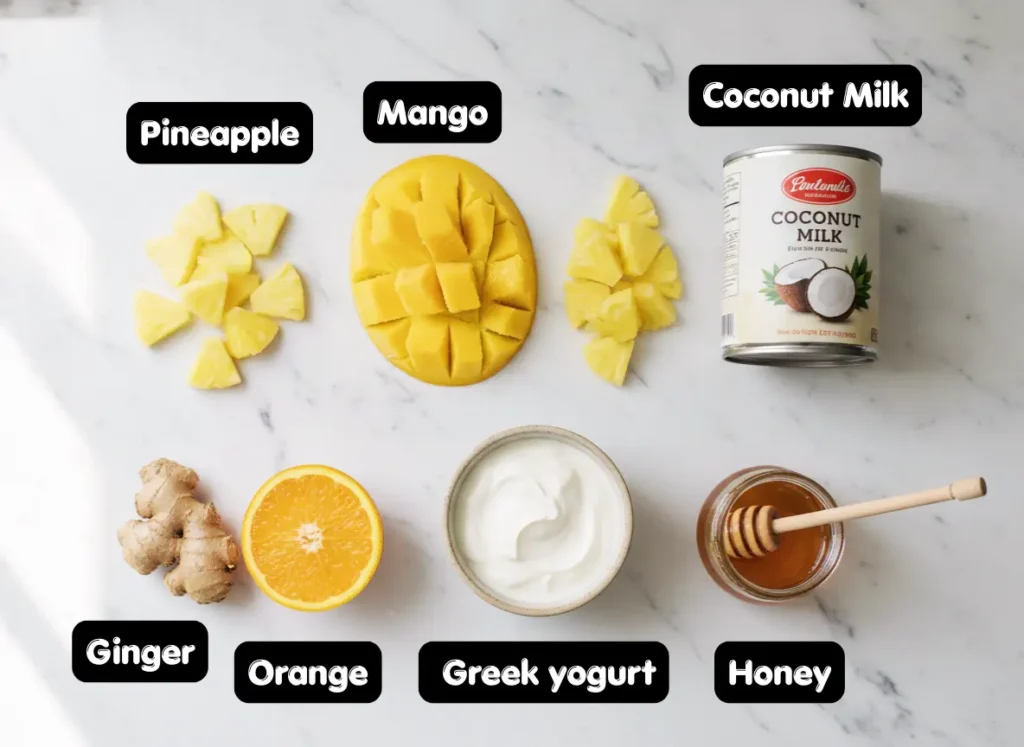
Here’s what I use for my go-to pineapple mango smoothie recipe. These amounts make two generous servings.
- 1 cup frozen mango chunks
- 1 cup frozen pineapple chunks
- ½ cup full-fat coconut milk (canned)
- ½ cup plain Greek yogurt
- ½ cup orange juice (fresh-squeezed if you can!)
- 1 tablespoon honey (optional, only if your fruit isn’t sweet enough)
- ½ teaspoon fresh grated ginger (trust me on this one)
- Handful of ice (if using fresh fruit instead of frozen)
That’s it. Nothing weird, nothing you need to order online, nothing that costs a fortune.
How I Make It – Step by Step
Step 1: I add the liquids first — coconut milk and orange juice go in the blender before anything else. This is my number one trick for smooth blending without burning out the motor.
Step 2: Next I add the Greek yogurt. It gives the smoothie that thick, creamy texture and adds a little protein to keep me full longer.
Step 3: Then in go the frozen mango and frozen pineapple chunks. I always use frozen fruit because it means I don’t need to add a ton of ice, and the smoothie stays thicker and colder longer.
Step 4: I add the ginger last. Just a tiny half teaspoon. It sounds small but it wakes up all the tropical flavors in a way I can’t fully explain. It just works.
Step 5: Blend on high for about 60 seconds. If it looks too thick, I add a splash more OJ. If it looks too thin, I toss in a few more frozen fruit pieces and blend again for 15 seconds.
Step 6: Pour, sip, and pretend you’re somewhere with a beach view.
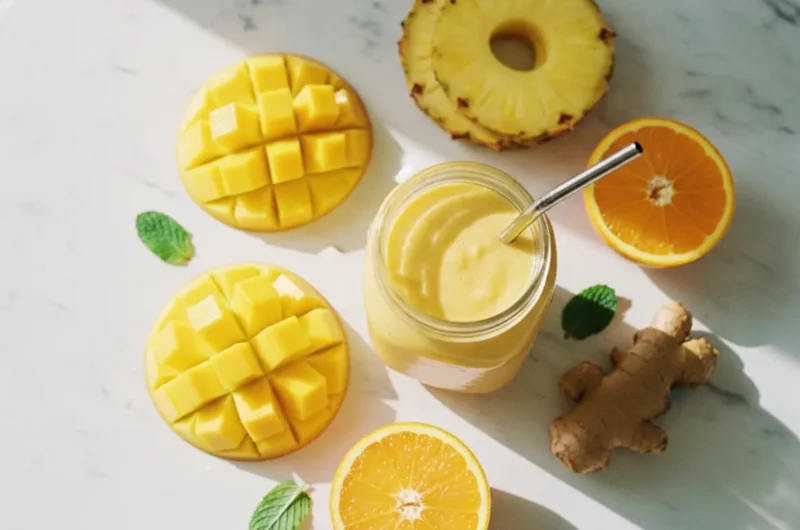
Mango Pineapple Smoothie
Course: Drink / BreakfastCuisine: AmericanDifficulty: EasyServings
2
servingsPrep time
5
minutesCalories
240
kcalA thick, creamy tropical smoothie made with frozen mango, pineapple, coconut milk, and Greek yogurt. Ready in 5 minutes and naturally sweet — your new favorite breakfast smoothie.
Ingredients
1 cup frozen mango chunks
1 cup frozen pineapple chunks
½ cup full-fat canned coconut milk
½ cup plain Greek yogurt
½ cup fresh orange juice
1 tablespoon honey (optional)
½ teaspoon fresh grated ginger
Handful of ice (only if using fresh fruit)
Directions
- Add coconut milk and orange juice to the blender first.
- Add Greek yogurt.
- Add frozen mango and pineapple chunks.
- Add grated ginger (and honey if using).
- Blend on high for 60 seconds until completely smooth.
- Taste and adjust — add more OJ if too thick, more frozen fruit if too thin.
- Pour into glasses and serve immediately, or into sealed jars for fridge storage.
Notes
- Always add liquids first for the smoothest blend. Frozen fruit gives better texture than fresh + ice. Smoothie keeps in fridge up to 24 hours in a sealed container.
My Speed Hack 🏃♀️
Okay here’s what I do when I’m rushing out the door: I pre-portion my frozen mango and pineapple into zip-lock bags the night before, or even on Sunday for the whole week. Each bag has exactly one serving worth of fruit. In the morning I just dump the bag straight into the blender with coconut milk and OJ, and I’m done in under 2 minutes. No measuring, no mess. I’ve been doing this for years and it’s genuinely life-changing if you make smoothies regularly.
I also keep a bottle of fresh-squeezed OJ in the fridge at all times specifically for this smoothie. It makes a bigger difference than you’d think compared to store-bought juice from a carton.
Ingredient Substitutes
I’ve cooked in hotel rooms, tiny camper kitchens, and once in an Airbnb that had exactly one pot and a sad little blender. So trust me when I say — this smoothie is flexible. Here’s what I swap when I don’t have something:
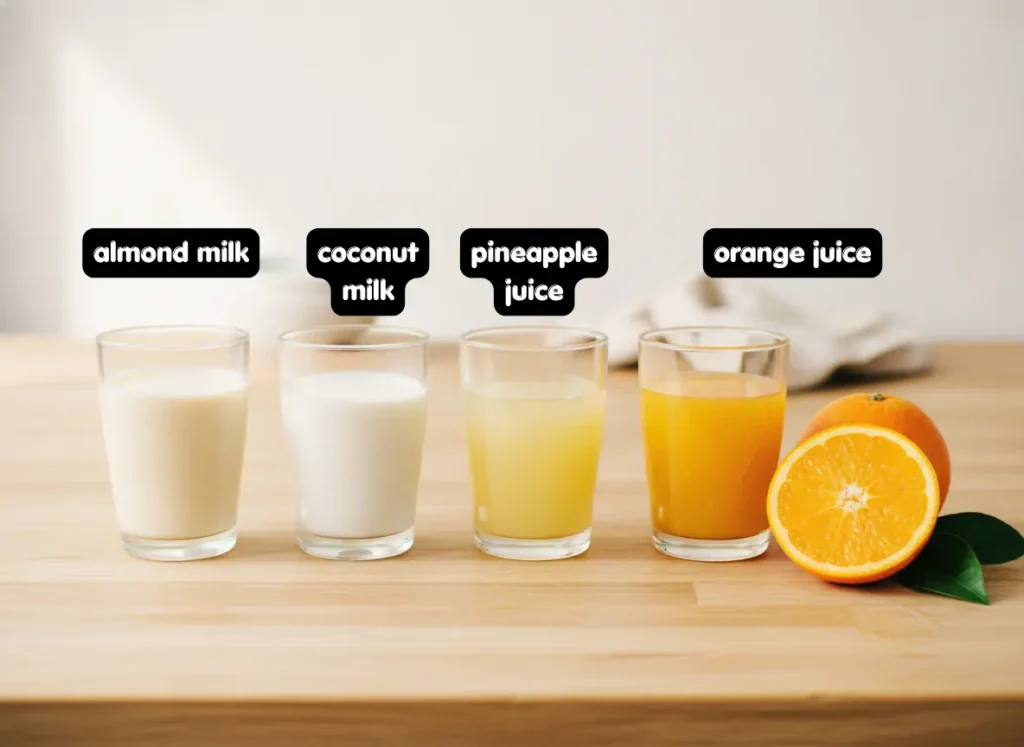
No coconut milk? Use regular whole milk, almond milk, or oat milk. Whole milk gives you a creamier result. Almond milk makes it lighter. Oat milk adds a slightly sweet, malty flavor that’s actually really nice.
No Greek yogurt? Try regular plain yogurt, silken tofu (works way better than you’d think), or frozen banana. The frozen banana also adds natural sweetness so you can skip the honey.
No fresh orange juice? Use pineapple juice from a carton — it doubles down on that tropical flavor and I actually prefer it some days. Apple juice also works in a pinch.
No fresh ginger? ¼ teaspoon of ground ginger works fine. Or skip it entirely — the smoothie is still amazing without it.
No frozen fruit? Use fresh fruit plus a generous handful of ice. The texture won’t be quite as thick but it’ll still taste incredible.
Want it dairy-free? Skip the yogurt, use coconut milk, and add half a frozen banana for creaminess. This is honestly one of my favorite variations.
Is This the McDonald’s Mango Pineapple Smoothie Recipe?
A lot of people search for the McDonald’s mango pineapple smoothie recipe and honestly — I get it. That drink is really good. But here’s what I’ll tell you: mine is better, and I say that with zero ego, just facts.
The McDonald’s version uses a mango pineapple base that’s mostly juice concentrate and added sugar, plus low-fat yogurt. My version uses real fruit, real coconut milk, and Greek yogurt. You get more fiber, more protein, more healthy fats, and way more actual tropical flavor.
To get closer to that McDonald’s mango and pineapple smoothie recipe feel, just use all pineapple juice as your liquid, skip the ginger, and use low-fat yogurt instead of Greek. Blend until very smooth with no chunks. That light, sweet, super-smooth result is pretty darn close.
🍹 3 Tools That Speed Up My Mango Pineapple Smoothie
These are the three tools I personally use every time I make this smoothie. I’ve tried the cheap versions and the expensive versions and these hit the sweet spot of reliable, practical, and worth every cent.
1. Ninja BL660 Professional Compact Blender
Why I Use It: I bought this blender two years ago and I’ve made hundreds of smoothies in it since. The 1100-watt motor crushes frozen mango and pineapple in under 60 seconds — no chunks, no weird bits, completely silky smooth every single time. Before I had this, I was fighting with a cheap 300-watt blender that left stringy mango pieces at the bottom. Never again.
Best For: Anyone who makes smoothies more than twice a week and wants professional results at home. The 72 oz pitcher is great for batch-making, and the two 16-oz to-go cups mean I can blend and walk out the door without washing anything extra.
Safety Feature: BPA-free pitcher and cups, all parts dishwasher safe, and the blades only engage when the pitcher is properly locked in — which I appreciate every single time I use it.
Accessibility Feature: Simple 3-speed dial plus pulse — no complicated digital screens, no confusing buttons. My mom, who is not a tech person at all, figured it out in about 30 seconds.
2. NutriBullet Pro 900 Watt Personal Blender
Why I Use It: When I’m making just one serving for myself — especially on mornings when I don’t want to wash a huge pitcher — I reach for my NutriBullet Pro. It’s compact, powerful, and I blend directly in the cup I drink from. The 900-watt motor handles frozen fruit really well for its size, and it extracts nutrients much better than older personal blenders I’ve tried.
Best For: Solo smoothie drinkers, small kitchens, or anyone who wants a quick single-serve healthy breakfast drink without the cleanup hassle. I also take it when I travel because it packs down small.
Safety Feature: BPA-free cups, no-spill extractor blade that only works when properly attached, and a motor base that shuts off automatically if it overheats.
Accessibility Feature: The push-and-twist design is genuinely one of the easiest blender mechanisms I’ve ever used. One motion and you’re blending — no buttons, no settings, no confusion.
3. Jarming Collections Reusable Smoothie Cups with Lids & Stainless Steel Straws
Why I Use It: Okay I know this one isn’t a blender, but hear me out — the cup you drink your smoothie from actually matters. I switched to these glass mason jar smoothie cups a while back and I genuinely enjoy my smoothies more. They keep the drink cold longer, the wide stainless steel straws are perfect for thick smoothies, and they look beautiful on the counter. I also feel good about not using plastic every morning.
Best For: People who make smoothies daily and want an eco-friendly, reusable option that doesn’t retain smells or flavors like plastic does. Also great if you’re making tropical smoothie recipes with strong flavors like mango and pineapple — glass keeps everything tasting clean.
Safety Feature: Made from food-grade glass, BPA-free lids, rust-proof stainless steel straws, and dishwasher safe for easy cleaning.
Accessibility Feature: Wide-mouth opening makes them easy to fill, clean, and drink from. The lids are leak-resistant which is a lifesaver for anyone who takes their smoothie on the go.
Tips To Make Your Smoothie Even Better
I’ve made this recipe so many times that I’ve picked up a few tricks along the way. These small things make a real difference:
Always blend liquids first. Adding liquid before frozen fruit protects your blender motor and creates a much smoother vortex. I learned this the hard way after killing a blender by dumping hard frozen mango straight in dry.
Taste before you pour. Every mango is different. Some are super sweet, some are slightly tart. I always do a quick taste test after blending and adjust with a tiny squeeze of honey or an extra splash of OJ if needed.
Don’t over-blend. 60 seconds is usually plenty. Over-blending warms the smoothie up and makes it thinner. Blend just until smooth, then stop.
Freeze your cup for 5 minutes before pouring. This sounds extra, but if you have the time it keeps your smoothie colder for longer. I do this on hot summer days and the difference is noticeable.
Add spinach. I know, I know — hear me out. One big handful of baby spinach blended into this smoothie is completely invisible in both taste and texture. You get a nutritional boost and you’d never know it was in there. I’ve served this to picky eaters and nobody has ever noticed.
If you love smoothie-style breakfast drinks, you should also check out my cherry smoothie recipe — it uses a very similar method and is just as quick to make on busy mornings.
Make It a Full Breakfast
This smoothie is great on its own, but on days when I know I have a long morning ahead, I turn it into a fuller meal by adding:
- 1 scoop of vanilla protein powder blended in
- A tablespoon of chia seeds or ground flaxseed (barely detectable, massive nutrition boost)
- A spoonful of almond butter for healthy fat and staying power
All three additions blend in seamlessly and don’t mess with that bright, tropical flavor you’re here for. These kinds of simple swaps are what I talk about in my 5-ingredient dinner recipes too — small additions, big results, minimal effort.
For an external resource on smoothie nutrition, the team at Healthline has a great breakdown of which smoothie ingredients actually keep you full versus which ones cause a sugar spike — worth a read if you’re making this a regular healthy breakfast drink.
Nutrition Info (Per Serving – Approx.)
| Nutrient | Amount |
|---|---|
| Calories | ~240 kcal |
| Carbohydrates | 42g |
| Protein | 8g |
| Fat | 7g |
| Fiber | 3g |
| Sugar | 32g (naturally occurring) |
| Vitamin C | ~85% DV |
| Potassium | ~480mg |
Based on full-fat coconut milk and Greek yogurt. Values will vary depending on specific brands and substitutions used.
Why This Recipe Works
The reason this mango pineapple smoothie hits differently from others comes down to three things:
Frozen fruit instead of ice. Ice dilutes the flavor as it melts. Frozen fruit keeps the smoothie cold AND thick AND flavorful from first sip to last drop.
Greek yogurt + coconut milk combo. The yogurt adds body, protein, and a slight tang that balances the sweetness. The coconut milk adds richness and that unmistakably tropical flavor. Together they create a creaminess that neither ingredient achieves alone.
Fresh ginger. Just half a teaspoon adds a warmth and brightness that makes the tropical flavors pop. It’s the ingredient that makes people ask “what IS that flavor?” — in a good way. Ginger is also well-documented for its anti-inflammatory benefits.
Recipe Testing Notes
I tested this recipe with 6 different liquid bases: whole milk, oat milk, almond milk, coconut milk (canned), coconut milk (carton), and orange juice alone. Canned coconut milk won for richness and tropical flavor by a significant margin. A 50/50 split of canned coconut milk and orange juice was my personal favorite result.
I also tested fresh versus frozen mango. Frozen wins every time for texture and convenience. Fresh mango makes a slightly brighter-tasting smoothie but you lose thickness and you need more ice, which thins it out.
The ginger was tested with and without across multiple taste testers. Every single person preferred the version with ginger, even those who said they “don’t like ginger” before tasting.
Frequently Asked Questions
Can I use fresh mango and pineapple instead of frozen?
Yes, absolutely. Fresh fruit works great — just add a generous cup of ice to compensate for the lack of chill and to get that thick, frosty texture. The smoothie will taste slightly brighter and more fragrant with fresh fruit, but a touch less thick. In summer when mangoes are at peak ripeness, I actually prefer fresh. Just peel, cube, and toss them in.
How do I make this taste like the McDonald’s mango pineapple smoothie recipe?
The McDonald’s version is all about that very smooth, light, and sweet flavor. To get close to it, swap the coconut milk for pineapple juice, use low-fat plain yogurt instead of Greek, skip the ginger, and blend until completely liquid with zero chunks. The key is really blending it long enough — McDonald’s uses commercial blenders that get it ultra-fine. Blend for a full 90 seconds on high to get as close as possible at home.
Can I make this smoothie ahead of time?
I do this all the time! The smoothie stays good in a sealed jar or bottle in the fridge for up to 24 hours. It will separate a little — just give it a good shake or a quick stir before drinking. For longer storage, pour it into popsicle molds and freeze them. Mango pineapple smoothie popsicles are one of my favorite summer treats.
Is mango pineapple smoothie good for weight loss?
It can absolutely be part of a weight-loss-friendly diet. Mango and pineapple are naturally sweet fruits with fiber, vitamins, and antioxidants. Using Greek yogurt adds protein to keep you full longer. To make it lower in calories, swap canned coconut milk for light coconut milk or unsweetened almond milk, skip the honey, and watch your portion size. Using it to replace a higher-calorie breakfast or snack makes good sense nutritionally.
Can I add protein powder to this smoothie?
Yes — and it blends in beautifully. Vanilla protein powder is my personal favorite addition. It doesn’t overpower the mango and pineapple flavors at all. I use one scoop and blend it in at the beginning with the liquids so it dissolves properly before the frozen fruit goes in. Unflavored protein powder also works well if you want to keep the smoothie tasting purely tropical.
How long does this smoothie last in the fridge?
Up to 24 hours in an airtight container. After that the texture starts to break down and the color can dull a little. For best results, drink it within a few hours of making it. If you want to prep ahead for the week, freeze individual portions in zip-lock bags or ice cube trays and blend fresh each morning — it takes less than 2 minutes with your fruit pre-portioned.
Final Thoughts
Your Blender, Your Rules
The whole point of making smoothies at home is making it work for YOU. Not following some recipe that assumes you have fresh mango, a Vitamix, and an hour to spare on a Tuesday morning.
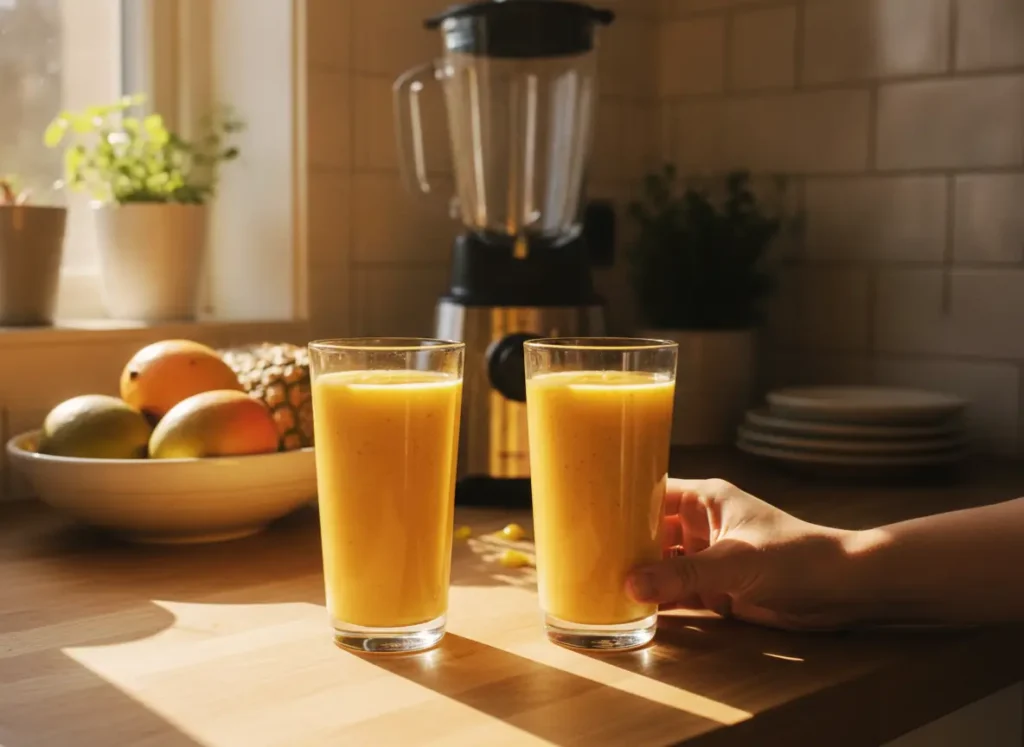
You don’t need the exact ingredients I listed to make a delicious mango pineapple smoothie recipe.
You need frozen tropical fruit, a liquid base, something creamy, and a blender that spins.
You probably already have all of that.
Here’s what to do next:
📌 Pin this post so you have it next time that mango pineapple smoothie craving hits at 7am
🥭 Look in your freezer right now — do you have frozen mango or pineapple? If yes, you’re 5 minutes away from an amazing smoothie
🥤 Try the recipe this week exactly as written, then next time start experimenting with the substitutes I listed above
🌿 Add the spinach. Seriously. Trust me on that one.
Remember: A great smoothie isn’t about having perfect ingredients — it’s about combining what you have in a way that’s delicious and nourishing. I’ve made incredible versions of this mango pineapple smoothie recipe in hotel rooms, in tiny camper kitchens, and once at 6am in a vacation rental using a blender that sounded like a small lawnmower. It still tasted amazing.
The blender doesn’t make the smoothie — you do.
Happy Blending (With Whatever Fruit You Have)! — Chef Amina 🍳
P.S. — What’s your favorite thing to add to a tropical smoothie? I once added a splash of coconut water and a squeeze of lime in a tiny beach house kitchen with no other options, and it became one of the best versions I’ve ever made.