
Cooking Substitutes is a blog dedicated to exploring suitable alternatives in recipes, providing helpful how-to guides, and sharing mouthwatering recipes.
We're here to make your culinary adventures even more delightful!
Flax Seed Egg Substitute — Exact Ratio & How To Use
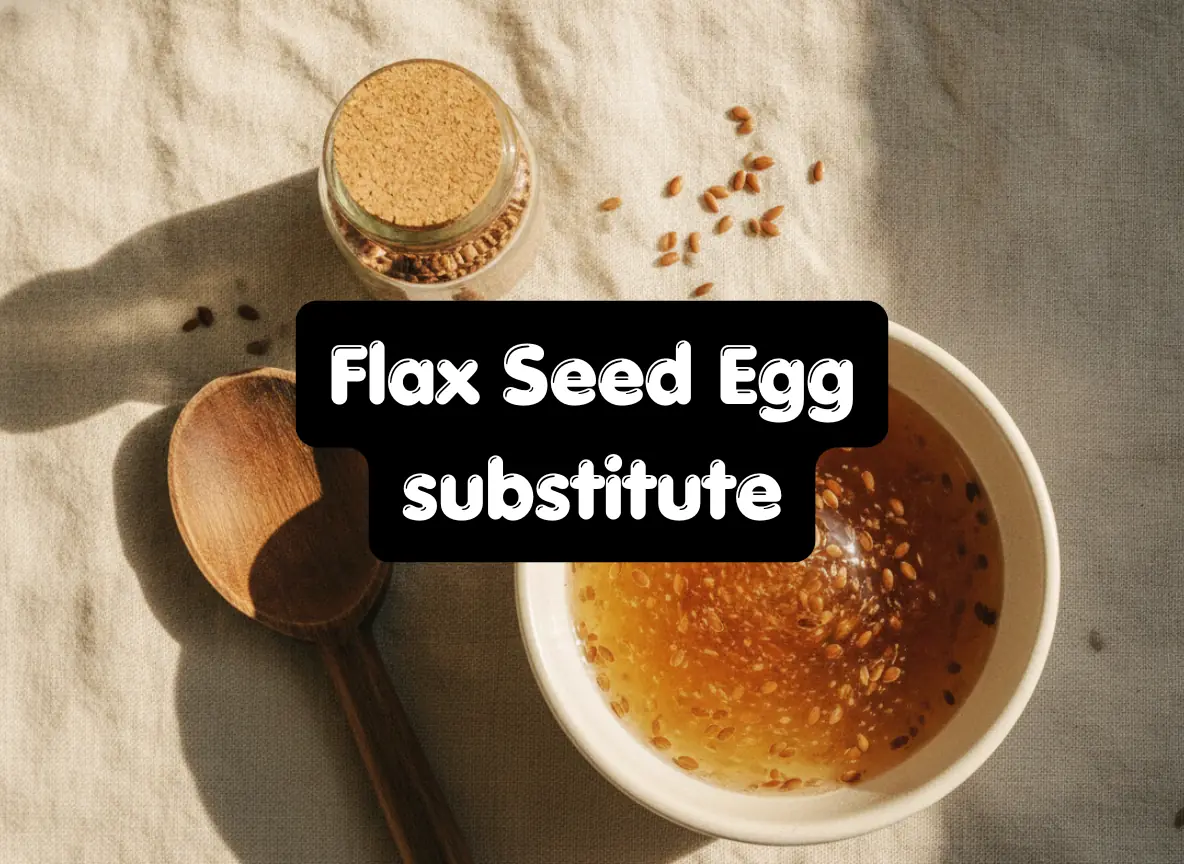
If you’ve ever cracked open your fridge only to find zero eggs staring back at you right before baking, you already know the panic. I’ve been there more times than I can count. That’s exactly how I first discovered the flax seed egg substitute — and honestly, it changed the way I bake forever.
I remember the first time I tried it. I was making banana bread on a Sunday morning, completely out of eggs, and I wasn’t about to drive to the store just for one ingredient. I had a bag of ground flaxseed sitting in my pantry, and I decided to give it a shot. The result? My banana bread turned out perfectly moist, held together beautifully, and nobody at the table even noticed the difference.
Since then, I’ve used flax eggs in everything from cookies to veggie burgers. And today I’m walking you through everything I’ve learned — the exact ratio, how to make it right, when it works, and when to skip it.
What Exactly Is a Flax Egg?
A flax egg is simply a mix of ground flaxseed and water. When you combine them and let the mixture sit for a few minutes, it becomes thick, gel-like, and goopy — kind of like the consistency of a beaten egg. That gel is what does the work. It binds your ingredients together just like a regular egg would in most baking recipes.
It’s completely plant-based, vegan-friendly, and packed with omega-3 fatty acids and fiber. So not only does it save your baking session — it actually adds a little nutrition boost too.
The reason it works comes down to the outer coating of the flax seed. It contains a natural mucilage — a sticky, gel-forming substance — that releases when the seed is ground and mixed with water. Think of it as nature’s glue.
The Exact Flax Seed Egg Substitute Ratio
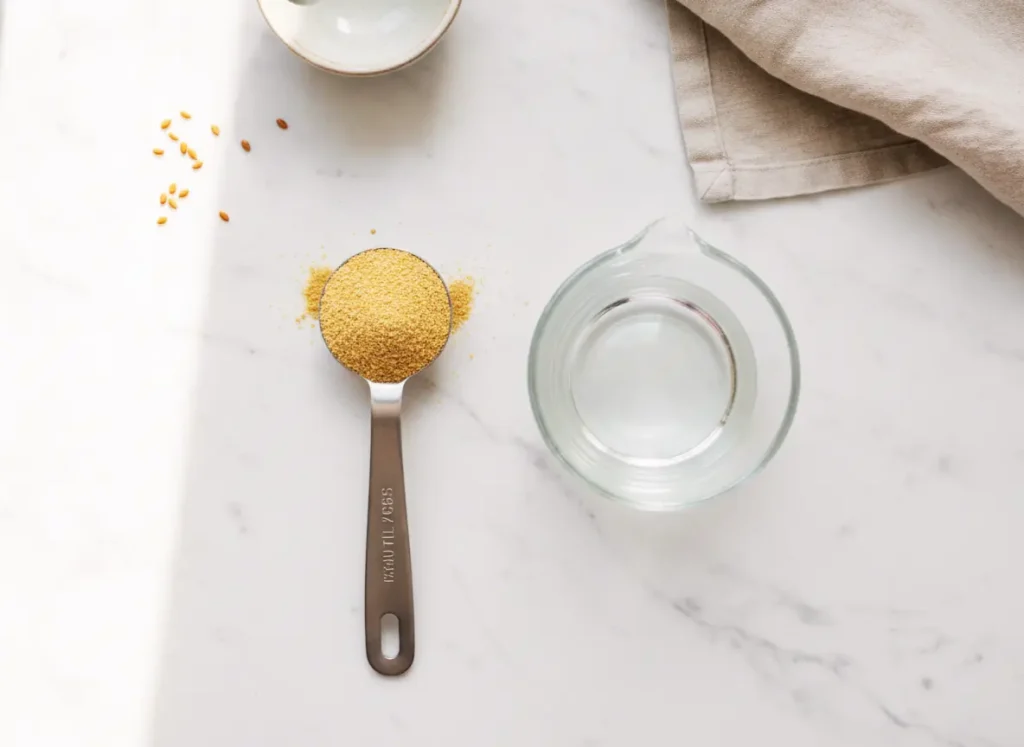
This is the part everyone wants to know, so let me keep it simple and clear:
1 Flax Egg = 1 tablespoon ground flaxseed + 3 tablespoons warm water
That’s it. That one flax egg replaces one regular chicken egg in most recipes.
I personally use warm water instead of cold — I found it speeds up the gelling process and gives a thicker consistency faster. Stir it well right after mixing, then let it sit for at least 5 to 10 minutes before using. You’ll see it transform from a watery liquid into a thick, sticky gel right before your eyes.
To make 2 flax eggs: 2 tablespoons ground flaxseed + 6 tablespoons warm water To make 3 flax eggs: 3 tablespoons ground flaxseed + 9 tablespoons warm water
Just scale it up the same way. I usually make mine in a small bowl with a fork, give it a good stir, and set it aside while I prep the rest of my ingredients. By the time I’m ready for it, it’s perfectly gelled.
💡 Tip: Don’t skip the resting time. I’ve rushed it before and used it too early — the mixture was still watery and my cookies spread way too flat. Give it the full 5 to 10 minutes.
How To Make a Flax Egg — Step by Step
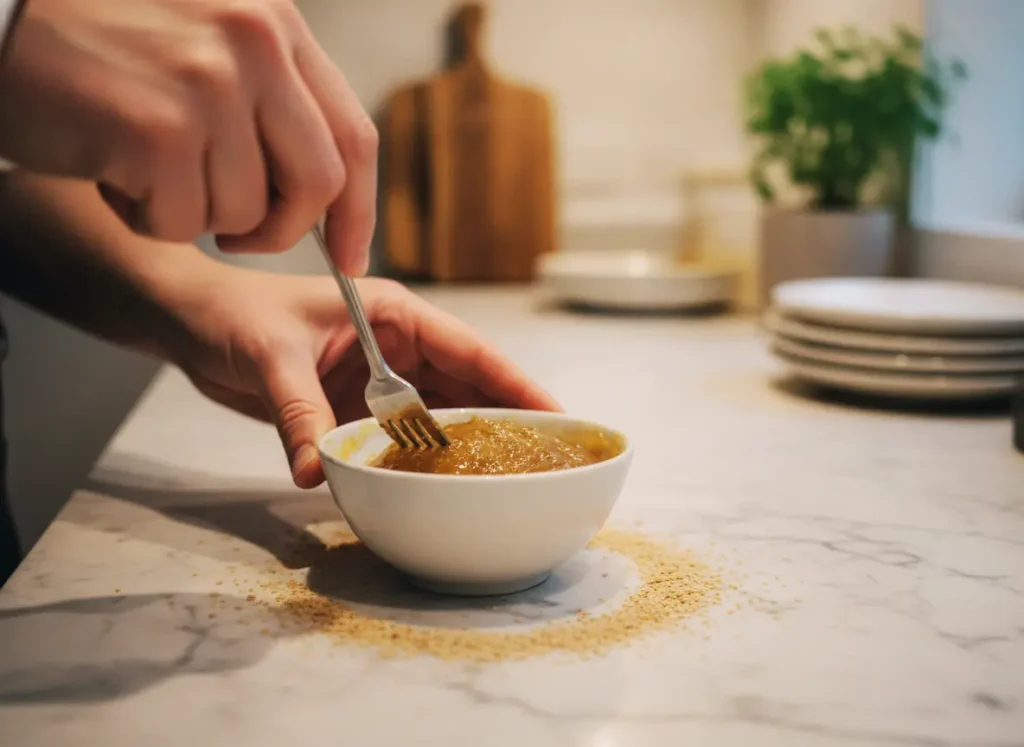
You really don’t need any fancy equipment for this. Here’s how I do it every time:
Step 1 — Measure your ground flaxseed. Use 1 tablespoon per egg you’re replacing. Make sure it’s ground flaxseed (flaxseed meal), not whole seeds. Whole seeds won’t gel properly — I learned that the hard way early on.
Step 2 — Add warm water. Pour in 3 tablespoons of warm (not boiling) water per tablespoon of flaxseed.
Step 3 — Stir well. Use a fork and mix it thoroughly for about 30 seconds. You want the flaxseed fully incorporated, not clumped at the bottom.
Step 4 — Let it rest. Set your bowl aside for 5 to 10 minutes. The longer you wait, the thicker it gets. I usually wait a full 10 minutes for the best results.
Step 5 — Use it just like an egg. Add it to your batter or dough exactly where the recipe calls for an egg. Fold it in gently.
That’s genuinely all there is to it. The whole process takes under 15 minutes including the wait time.
Ground vs Whole Flax Seeds — Does It Matter?
Yes, it absolutely matters. And this is one of the biggest mistakes I see people make.
You must use ground flaxseed (also called flaxseed meal) for this to work. Whole flax seeds do not release the gel that creates the egg-like binding. I once tried it with whole seeds in a pinch — the mixture stayed completely watery, and my muffins were a crumbly mess.
If you only have whole flax seeds at home, you can grind them yourself in a coffee grinder or spice grinder in about 10 seconds. I actually prefer grinding my own because freshly ground flaxseed has more nutty flavor and the gel sets up better.
You can also buy it pre-ground, which is what I usually keep in my pantry for convenience. Just store it in the fridge or freezer after opening — ground flaxseed goes rancid faster than whole seeds.
Golden vs brown flaxseed: I’ve used both and honestly the difference is minimal. Golden flaxseed is lighter in color so it blends more invisibly into light-colored batters. Brown flaxseed has a slightly nuttier flavor. Either works perfectly as a vegan egg replacement.
Where Does a Flax Egg Work Best?
This is where I want to be really honest with you, because flax eggs are amazing — but they’re not magic for every single recipe.
Flax eggs work great as a binder in:
- Banana bread (this is where I use them most)
- Muffins
- Brownies
- Chocolate chip cookies
- Pancakes — if you’re curious how they stack up, check out my guide on egg substitutes for pancakes for the full breakdown
- Veggie burgers and fritters
- Meatballs (or plant-based meatballs)
- Quick breads
- Some cakes
The key here is that flax eggs work when eggs are being used as a binder — something that holds the ingredients together.
Flax eggs do NOT work well for:
- Recipes that need eggs for lift and fluffiness (like angel food cake or soufflés)
- Scrambled eggs or omelets — obviously
- Recipes that require whipped egg whites for structure
- Recipes calling for more than 3 eggs (though I’ve pushed it to 2 flax eggs successfully many times)
- Very lightly flavored batters where the nutty taste might come through
I once tried using a flax egg in a white vanilla sponge cake and the texture just wasn’t right — the cake was denser than expected and had a slight gray tint. Lesson learned.
Does a Flax Egg Taste Like a Real Egg?
Short answer — no, but that’s actually a good thing most of the time.
A flax egg adds a very mild, slightly nutty flavor. In most baked goods like banana bread, brownies, or chocolate cookies, you won’t taste it at all. The other flavors easily overpower it.
Where you might notice it is in very plain or lightly flavored recipes — like a simple white cake or a delicate vanilla muffin. In those cases, the nuttiness can be a tiny bit detectable. I personally like it, but if you’re worried, golden flaxseed tends to be milder in flavor than brown.
The texture-wise difference is that a flax egg won’t give you the same fluffiness or rise that a whole egg provides. What it does give you is moisture and binding — so your baked goods stay together and don’t dry out.
How Many Flax Eggs Can You Use in One Recipe?
I’ve seen a lot of sources say you can only replace up to 2 eggs with flax eggs. In my personal testing, I’ve gone up to 3 in recipes like dense brownies and hearty veggie burgers and had great results.
The honest answer is: it depends on the recipe. The more eggs a recipe calls for, the more the final texture and structure relies on them. If a recipe uses 4 eggs, they’re probably doing a lot of work — leavening, emulsifying, providing moisture. That’s a lot to replace with flaxseed meal.
My rule of thumb: for 1 to 2 eggs, flax egg works reliably well. For 3 eggs, test it first in a lower-stakes bake. For 4 or more, I’d either look for a different substitute or combine flax egg with another egg replacer.
Flax Egg vs Chia Egg — What’s the Difference?
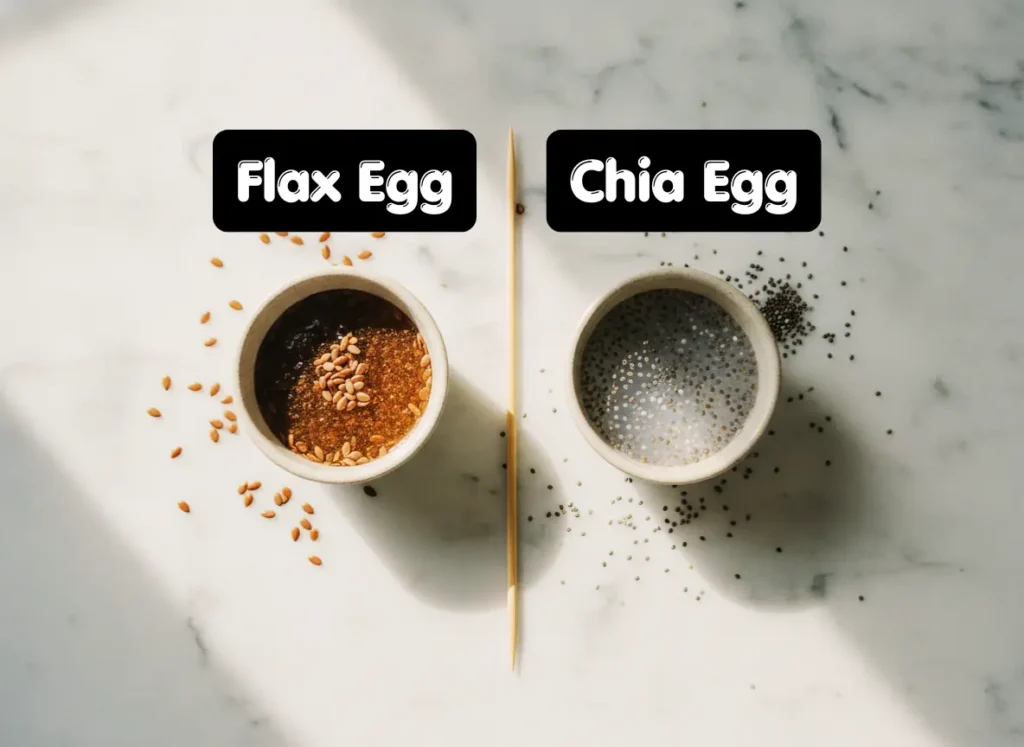
Both chia and flax eggs work on the same principle — seeds that gel up when mixed with water and act as a binder. The ratio is almost identical:
Chia egg: 1 tablespoon chia seeds + 3 tablespoons water
Flax egg: 1 tablespoon ground flaxseed + 3 tablespoons water
The biggest difference I notice is flavor and appearance. Chia seeds are nearly flavorless and almost invisible in lighter batters. Flax eggs have more of that nutty taste and can leave tiny brown specks in your baked goods.
I reach for chia eggs when I’m making something light-colored or delicately flavored — like vanilla muffins or sugar cookies. I reach for flax eggs in heartier recipes — banana bread, brownies, oatmeal cookies — where a little nutty flavor is actually welcome. If you want a full comparison of dairy-free swaps you can use in everyday cooking, take a look at my article on milk substitutes for pasta to see how I approach ingredient swaps overall.
Can You Use Flax Eggs in Cakes?
Yes — with some caveats, and I want to be upfront about this.
Flax eggs work well in dense, moist cakes like carrot cake, chocolate cake, banana cake, or zucchini cake. I’ve made a gorgeous chocolate fudge cake using 2 flax eggs and it came out rich and perfectly fudgy.
Where flax eggs struggle is in light, airy cakes that need eggs to trap air and create rise — think chiffon cake, angel food cake, or a classic white birthday cake. Those recipes need eggs to do serious structural work, and a flax egg just can’t replicate that.
My go-to test: if the recipe uses oil rather than butter (or calls for buttermilk), it’s usually a moist, dense-style cake that handles flax eggs well. If the recipe calls for creaming butter and sugar until fluffy, it likely needs eggs for their leavening properties, and flax eggs may not be your best bet.
When I made my gluten-free Christmas cake, flax eggs were actually a perfect fit because of how dense and fruit-packed that cake is. They held everything together without any issues.
Can You Make Flax Eggs Ahead of Time?
Yes! And I actually recommend it when you’re doing a big baking day.
I’ve made flax eggs up to 24 hours in advance and stored them in a covered container in the fridge. They stay perfectly gelled and work just as well as freshly made ones. Sometimes I think they actually gel up even thicker overnight, which I love.
Just give the mixture a quick stir before using — a thin layer of water can separate on top after sitting in the fridge. One stir and it comes right back together.
I would not recommend storing them at room temperature for more than an hour, especially in warm weather, since the water can cause them to go off. Keep them cold and use within a day or two.
Can You Use Flax Eggs for Binding in Savory Recipes?
Absolutely — and this is one of my favorite lesser-known uses for flax eggs.
I add flax eggs to veggie burgers all the time. Without a binder, my veggie patties used to fall apart on the grill every single time. Once I started adding a flax egg, they held together perfectly. Same thing with lentil fritters, stuffed peppers with a grain filling, and even some meatloaf-style dishes.
The nutty flavor works really naturally in savory recipes — especially anything with grains, lentils, beans, or vegetables. It blends right in without being noticeable.
Just remember: flax eggs won’t work for anything where you need the flavor of eggs, like scrambled eggs or egg-based sauces. They’re a texture and binding solution, not a flavor substitute.
🏷️ Chef Amina’s Speed Hack
When I’m in the middle of a recipe and suddenly realize I forgot eggs, I don’t want to wait 10 minutes for my flax egg to set. Here’s my little trick: I mix my flax egg first — before I even preheat the oven or measure anything else. It’s the very first thing I do when I walk into the kitchen.
By the time I’ve measured my flour, melted my butter, and gathered everything else, my flax egg is perfectly gelled and ready to go. Zero waiting, zero slowing down. I call it my “start with the egg” rule and it genuinely saves me every single time.
🛒 Products I Use and Trust (Amazon Picks)
Here are three products I personally use in my kitchen to make perfect flax eggs every time:
1. Bob’s Red Mill Organic Golden Flaxseed Meal This is my absolute go-to. It’s cold-milled, certified organic, gluten-free, and the texture is consistently fine and smooth — which means my flax eggs always gel up beautifully. I’ve gone through probably a dozen bags of this at this point. The mild golden flavor means it disappears into almost any batter.
2. Anthony’s Organic Flaxseed Meal (2.5 lb) When I’m in a heavy baking stretch — think holiday cookie season — I grab Anthony’s because the value for the size is hard to beat. It’s ultra-fine ground, cold-milled, gluten-free, and keto-friendly. I’ve used it in brownies, muffins, and pancakes and it performs just as well as the smaller bags. Great for those of us who bake a lot.
3. SHARDOR Electric Coffee & Spice Grinder If you buy whole flax seeds (which stay fresh longer), you need a grinder. I use this one almost daily. It has a removable stainless steel bowl that’s easy to wash, runs quietly, and grinds flaxseed into a fine powder in literally 5 seconds. One press and I have fresh flaxseed meal ready to go. It handles chia seeds, spices, and herbs too — it’s one of those tools I didn’t know I needed until I had it.
FAQs About Flax Seed Egg Substitute
Can I use whole flax seeds instead of ground for a flax egg?
No — whole flax seeds won’t work. The seeds need to be ground for the gel-forming mucilage to be released when mixed with water. If you only have whole seeds, grind them in a coffee grinder or blender first. It takes about 10 seconds and works perfectly.
How long does a flax egg need to sit before using?
At least 5 minutes, but I always go for 10 when I have the time. The longer it sits, the thicker and more gel-like it becomes. I find 10 minutes gives the best binding results in baked goods.
Does a flax egg taste like a real egg?
Not exactly. A flax egg has a mild, nutty flavor that blends into most baked goods without being noticeable. In strongly flavored recipes like chocolate brownies or banana bread, you won’t taste it at all. In very lightly flavored recipes, there can be a slight nuttiness.
Can I use a flax egg in any recipe that calls for eggs?
Not all recipes. Flax eggs work great as a binder in dense baked goods, veggie burgers, fritters, and muffins. They don’t work well in recipes that need eggs for lift, airiness, or whipping — like meringues, soufflés, or light sponge cakes.
What’s the difference between a flax egg and a chia egg?
Both gel up with water and act as binders. The main difference is flavor and appearance. Chia eggs are nearly tasteless and nearly invisible. Flax eggs have a nuttier flavor and can leave small flecks in lighter batters. For dark or hearty bakes, I use flax. For lighter recipes, I go with chia.
Can I make flax eggs ahead of time and store them?
Yes! I store them in a covered container in the fridge for up to 24 hours. They stay gelled and work just as well as fresh. Just give them a quick stir before using since a little water can separate on top.
Does a flax egg work in cakes?
It depends on the cake. For dense, moist cakes like chocolate cake, carrot cake, or banana cake — absolutely, and it works really well. For light, airy cakes that need eggs for structure and rise, flax eggs are not the best choice.
Final Thoughts — Your Kitchen, Your Rules
Here’s what I want you to take away from all of this: the flax seed egg substitute is one of those simple, two-ingredient swaps that genuinely works — and once you know how to use it, you’ll never feel stuck without eggs again.
You don’t need to run to the store. You don’t need a complicated recipe. You just need a tablespoon of ground flaxseed, some warm water, and 10 minutes of patience.
I’ve used flax eggs in hotel kitchens with no equipment, on camping trips, and in my tiny first apartment with a barely-functional oven. The result is almost always good — as long as you know which recipes it’s made for.
Here’s what I want you to do next:
📌 Save this post so you always have the ratio ready when you need it Open your pantry right now and check if you have ground flaxseed or whole seeds Try ONE recipe this week using a flax egg — banana bread is the perfect starting point Pay attention to the gel — when it’s thick and sticky, it’s ready Feel good knowing you just baked something delicious without a single egg
Remember: swapping ingredients isn’t a compromise. It’s a skill. Professional bakers do it all the time based on what they have on hand. Home cooks can too.
The egg doesn’t make the bake — you do.
Happy Baking (With Whatever You’ve Got)! — Chef Amina 🍳
P.S. — What’s the first recipe you’re going to try your flax egg in? I once made brownies at midnight with a flax egg because I refused to give up on my craving — best decision I ever made.